
Artemis II: Orbiting Crew to the moon and back
NASA's Ten-Day lunar mission breaks the Apollo 13’s distance record, validates Orion's heat shield with a modified re-entry, marking humanity's farthest journey from Earth in over five decades
Synopsis
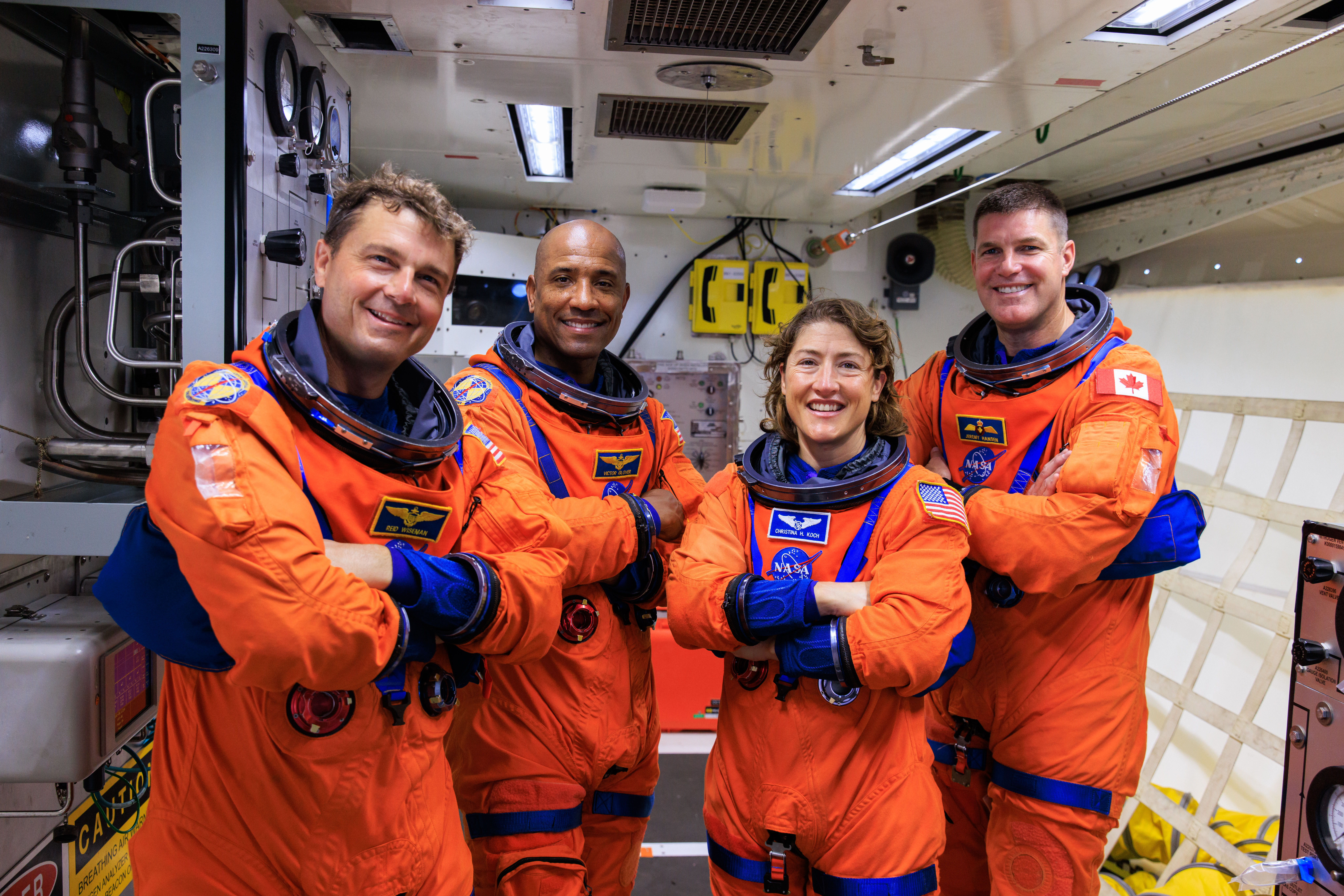
The Artemis II mission culminated in a successful splashdown in the Pacific Ocean off the California coast on April 10, 2026, returning Commander Reid Wiseman, Pilot Victor Glover, and Mission Specialists Christina Koch and Jeremy Hansen after ten days in deep space. A historic free-return flyby of the Moon, the first-time humans had left the lunar vicinity in over 53 years, was launched on April 1 at the Kennedy Space Center on the Space Launch System rocket and flown by a crew. The mission tested the life-support, propulsion, and communications systems of the Orion and achieved the human spaceflight distance record of 406, 771 kilometres (1,400 miles) of Earth orbit and 260 Mbps data rate laser communications. It has now cleared the way to the Artemis III which will land on the lunar surface later this decade.
A launch five decades in the making
On April 1, 2026, at 6:35 p.m. ET, the Space Launch System (SLS) rocket fired its four RS-25 engines and two solid rocket boosters, producing around 8.8 million pounds of thrust as it blasted off Pad 39B at NASA space center, Kennedy, Florida. People crowded the A. Max Brewer Bridge in Titusville to observe the launch, the first launch since the Apollo days that human astronauts were sent to the Moon by a rocket. To a world and a nation that was more than ever involved in geopolitical turbulence, the launch was something more than spectacle, it was the unquestioned success of science.
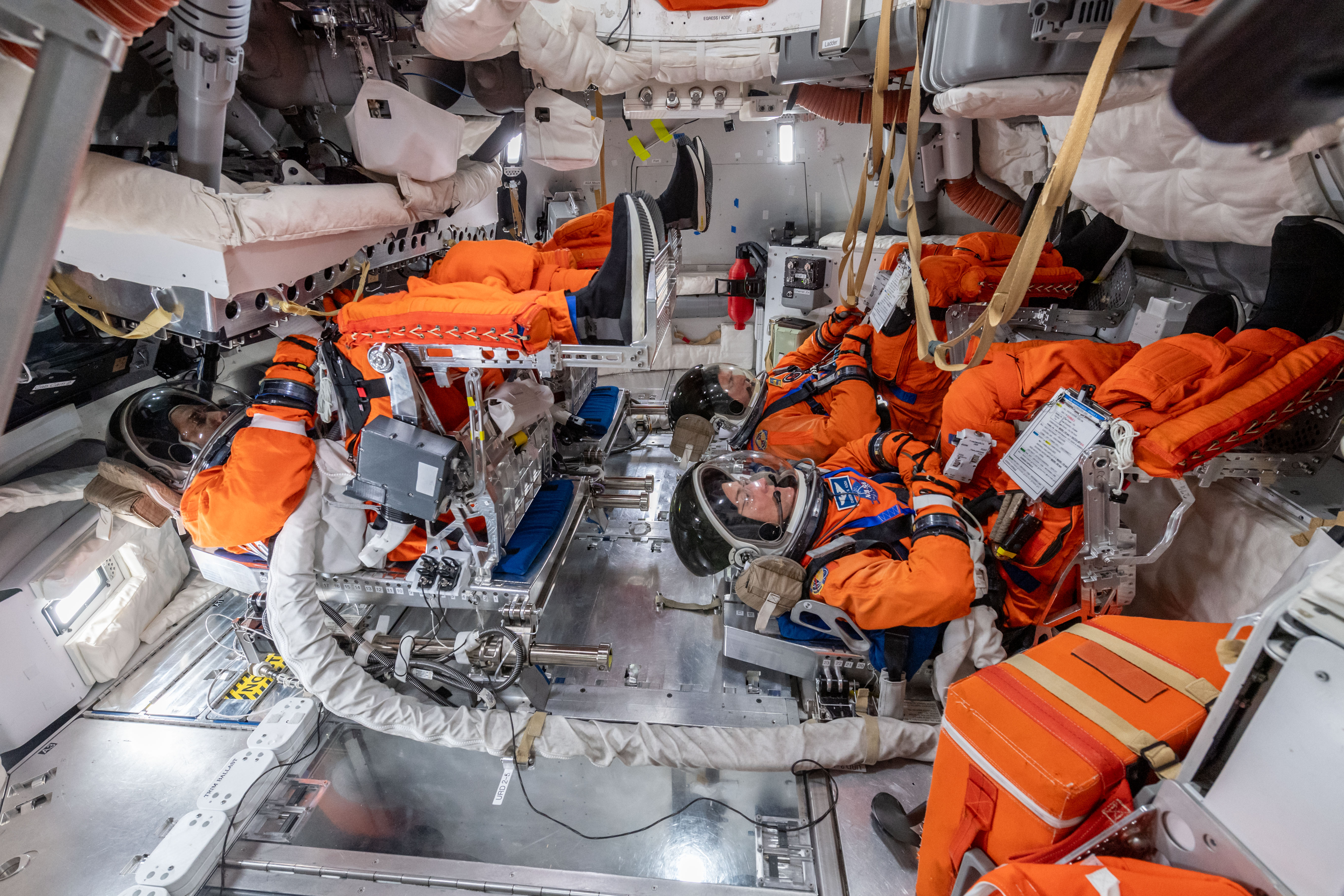
The mission was officially named Artemis II, with a single goal, which was to demonstrate, by the presence of four human lives on board, that the SLS and the Orion crew capsule, christened by the astronauts Integrity, could safely function in the deep-space environment above the low Earth orbit. In that purpose it was a complete success.
The crew
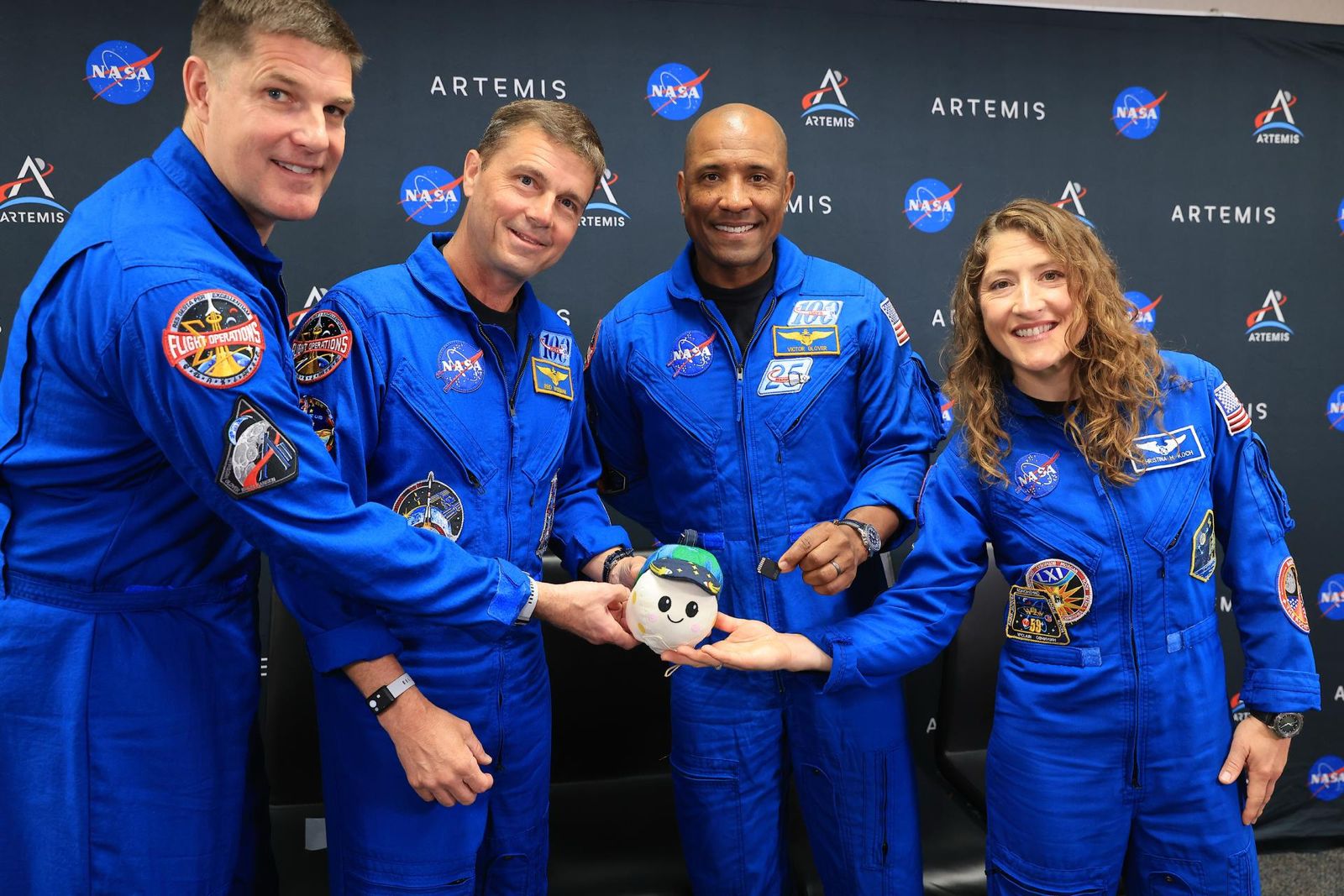
The four-member crew united a mix of military test-pilot discipline with high-level scientific knowledge, and in their makeup, was intended to be a deliberate break with the exclusively white, American, and male crews of the Apollo programme. All the members of the Artemis II crew were a type of astronaut who had not been to the Moon before.
The manual proximity operations which Glover, a U.S. Navy captain with more than 3,500 flight hours, did allowed Orion to reach within nine metres of the upper stage of the rocket, a critical rehearsal of future docking manoeuvres, were planned at the planned Lunar Gateway. Koch, who has the longest single space mission by a woman at 328 days, also came in handy once the Universal Waste Management System, a toilet estimated to cost 30 million dollars, of the crew failed just hours after lift-off. She developed the faulty component with the help of the Mission Control and fixed it, which reinstated the functionality of the spacecraft even before it left the gravitational neighbourhood of the Earth.
The way away out--and past all human beings
Following a systems-checkout loop in High Earth Orbit with an apogee of 74,000 kilometres, the European Service Module launched the Translunar Injection burn, launching the spacecraft in a four-day journey to the Moon. The free-return trajectory was selected to allow: in case primary propulsion had failed at some point, the Moon would bring the capsule back to Earth, without further engine burns.

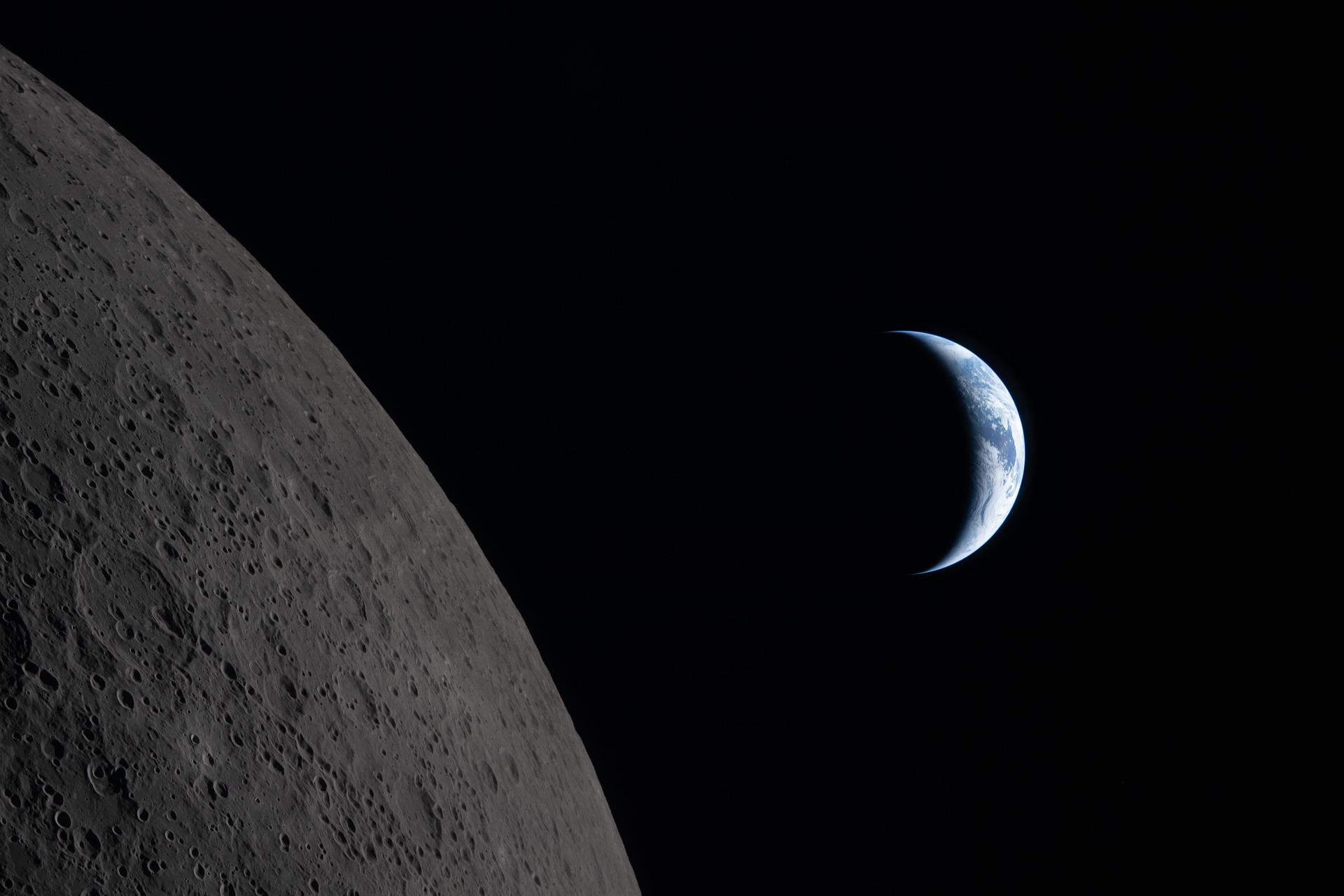
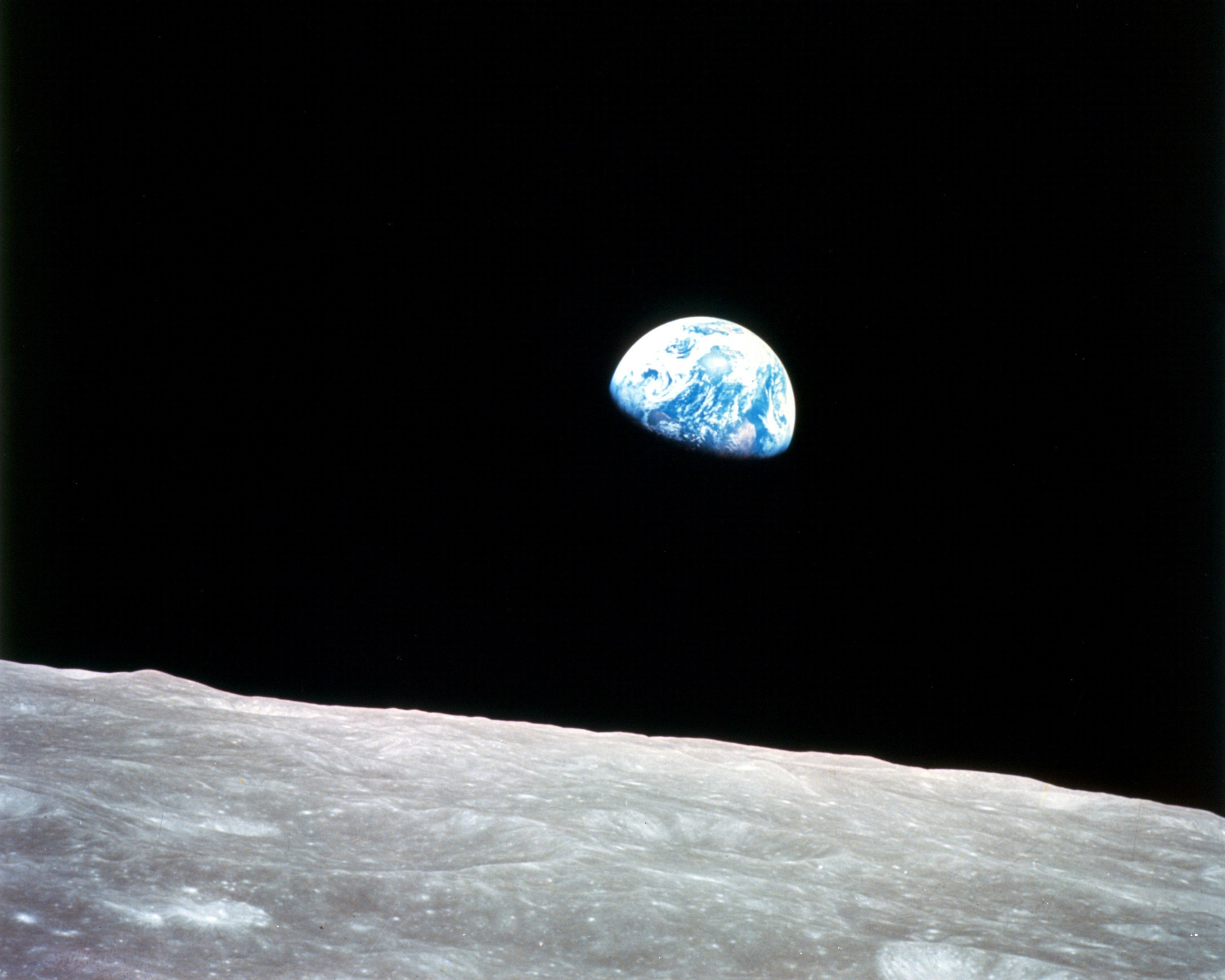
The spacecraft arrived at its nearest point to the moon (approximately 6,500 kilometres above the surface) on April 6, then swung around to the opposite side. The crew set a new distance record as Orion surpassed the previous record set by the troubled Apollo 13 mission of 1970, becoming the first spacecraft to reach a range of 406,771 kilometres (280,000 mi) above the Earth, by over 6,000 kilometres.
Higher it is impossible to describe, and it is wonderful to hear Victor Glover, who saw the flash of impacting meteorites on the surface of the moon and said: "Humans probably have not evolved to see what we are seeing it is really hard to believe what I am seeing now." The astronauts charted the surface features of the moon using handheld Nikon cameras and took more than 7,000 high-quality pictures. They saw the meteor impacts as bursts of light on the surface, the earliest humans had ever personally observed the impact of a meteor, and followed the changes in albedo as they would be studied on future surface missions. Another thing they documented is a solar eclipse as seen through the moon, a view that cannot be duplicated by any device on the Earth.

One of the milestones is a human moment
All the landmarks on the mission were not in kilometres or megabits. When the crew was about to begin their fly around of the far side, a Canadian astronaut, Jeremy Hansen, asked Mission Control to officially name a small, new crater after the late wife of Commander Wiseman, Carroll Taylor Wiseman, a neonatal nurse who passed away of cancer in 2020. The crew also suggested that a bigger crater should be named after their spacecraft, Integrity.
Wiseman was so much overwhelmed by feeling, that he could not speak. In reply, Mission Control replied: "Loud and clear." The names are still to be formally ratified by the International Astronomical Union, yet the moment had its own silent eloquence, a reminder that exploration, however technical in its structure, is in principle always a human activity.
Back to the real test--re-entry
The most technologically challenging event of the Artemis II mission was not during lunar orbit but on the trip home. After the unscrewed Artemis I test mission in 2022, engineers found that the ablative Avcoat material used as the heat shield of Orion had fractured unintentionally, due to the internal pressure buildup caused by the insufficiently vented gases in its peak heating state. NASA engineers changed the profile of the re-entry of Artemis II to a steep single-loft descent instead of a two-skip profile, so that the outer layer of char stayed at the temperatures needed to vent the gas properly during the fall.
The Orion capsule re-entered the atmosphere at a speed of about 39,000 kilometres per hour, and survived temperatures on its surface reaching 2,800 degrees Celsius. The heat shield worked as expected. No cracking was confirmed by post-splashdown inspections. The fix, which had been laboriously justified in three years of analysis, had been successful.
Integrity landed in the Pacific Ocean off the coast of San Diego at about 27 kilometres per hour at 5:07 p.m. PT on April 10. Minutes later recovery teams aboard the USS John P. Murtha were at the scene. The crew came out healthy enough--and in good spirits.

What comes next
Artemis II never was a destination, but a rehearsal. It was designed to demonstrate in real deep-space conditions that the systems and procedures to support future lunar landings were viable. By that standard, the mission was successful in almost every count - the life-support operations, the laser communications, the heat shield, the proximity operations and the human factors all were able to provide us with usable and generally positive data.
The first woman and the first person of colour to set foot on the Moon will be on board Artemis III, which is planned to land on the surface later this decade, with a human-rated SpaceX Starship lander flying in lunar orbit. The Lunar Gateway station will be assembled in cislunar space, and will act as a permanent staging point. The extended programme of the Artemis programme - a long-term human occupation of the Moon, and possibly Mars - now has, at last, a proven human-rated transport system to drive it.
In the meantime, though, there are four astronauts at home. And man again has been, though briefly, to the Moon.
Latest News
- ◆NSE's $2.3 Billion IPO Draws Over $10 Billion In Bids
- ◆India-New Zealand Free Trade Pact To Take Effect October 20
- ◆Tata Group Governance Feud Deepens Over Chandrasekaran's Term
- ◆India Reaffirms Push For Constructive Ties With Bangladesh
- ◆Teen Gang-Raped Near Delhi Temple, One Suspect Held In Encounter