
Hormuz on Line– Modi & Trump on the same Page on Strait’s Safety
During a 40-minute phone conversation, the two leaders indicated that they have a common interest in ensuring that the world's most important oil chokepoint remains open
Synopsis
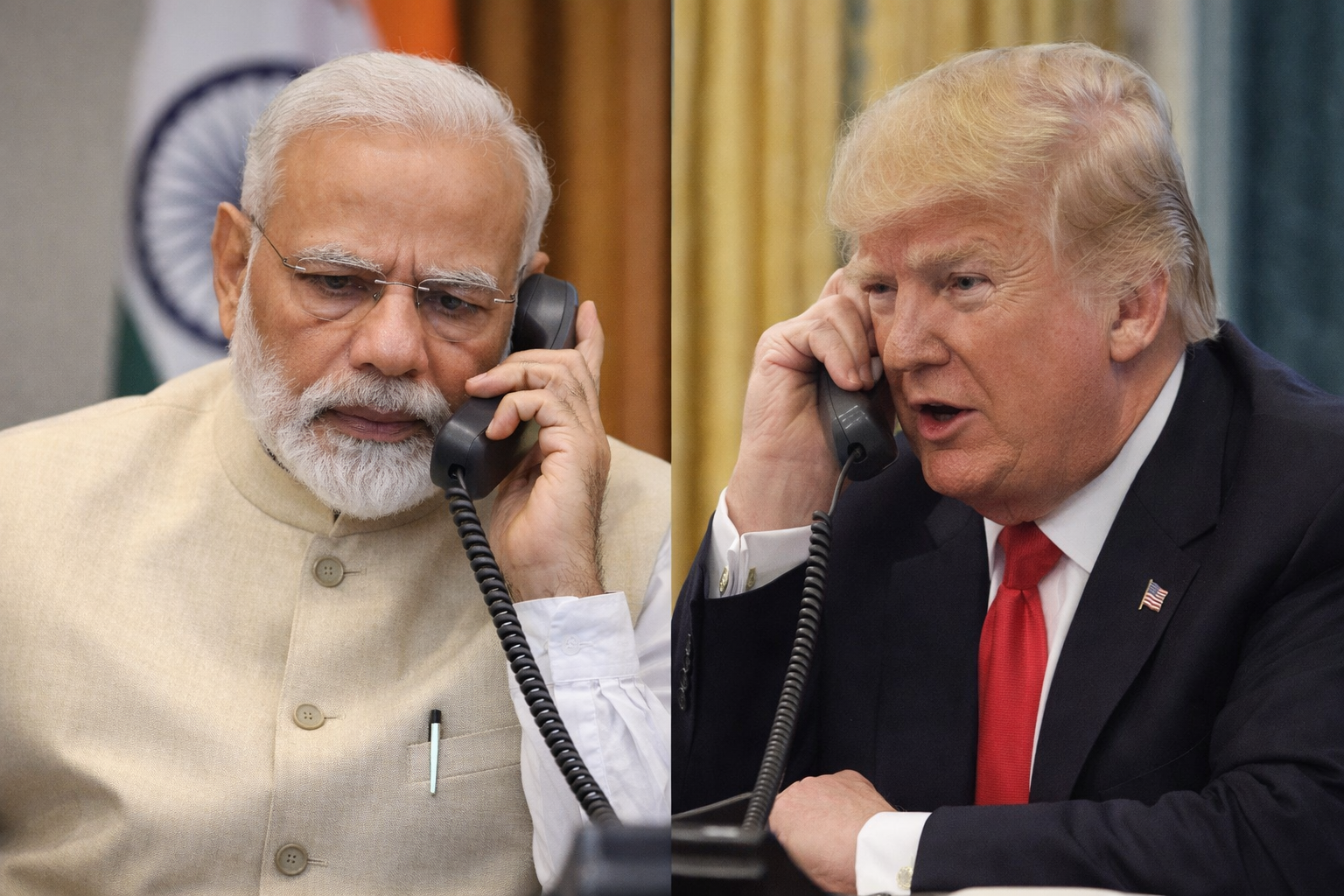
PM Modi and President Trump had a 40-minute conversation on April 14, during which they emphasized the necessity to maintain the Strait of Hormuz open in the face of West Asian conflict. Forty percent of the Indian crude oil imports flow through the strait and therefore its security is at the centre of the Indian energy and economic calculus.
Two of the most impactful leaders in the world almost talk almost 40 minutes, and each word is strategically important. On Tuesday, Prime Minister Narendra Modi and U.S. President Donald Trump did not just exchange diplomatic niceties, but placed the Strait of Hormuz in the middle of a conversation that indicates how interwoven the future of India’s economy is with the stability of West Asia.
A chokepoint that has its pay
The most crucial artery in the world energy markets is the Strait of Hormuz which is a narrow waterway between Iran and Oman. The crude oil imports in India pass through the corridor which is estimated at around 40 per cent. Any act of disruption, whether due to the military build-up, naval blockade, or damage of infrastructure creates instant shockwaves through the Indian import bill, fuel prices, and macroeconomy in general.
The current war in West Asia has already stretched supply chains around the globe. Air travel, maritime shipping, and gas supplies have not been spared and the strait has been mentioned severally as a flash point. To New Delhi, this is not a far-off geopolitical abstraction, but a immediate threat to the affordability of energy and economic viability.
The New Delhi-Washington strategic signal
In a post made on X following the call, Modi outlined a substantive review of bilateral collaboration in the context of multiple spheres and reiterated the desire to be committed to the Comprehensive Global Strategic Partnership. The explicit mention of Hormuz, however, was the strategic headline.
The fact that the two leaders also focus on ensuring that the strait remains open and safe is a strong diplomatic message to the actors in the region, especially Iran, that the two countries, Washington and New Delhi, are on the same page when it comes to requiring the passage to remain free. Interestingly, an official of the White House confirmed that the call had been made but made no additional remarks, indicating that the content of the conversation had been intentionally left to be recounted by the Indian side.
India's energy vulnerability
India is a large importer of crude oil, comprising approximately 85 per cent of its needs, much of which is obtained via the Gulf states who have no other option to export their products but via the Strait of Hormuz. Any sustained shutdown or militarisation of the waterway would compel India to resort to alternative sourcing which is expensive and would create inflationary pressure on transport fuels and would create a strain on the current account deficit.
An alliance with growing interests
Besides energy, the call is an indication of the growing richness of the India-U.S. relationship - one that has now moved into the realms of defence, technology, trade talks and geopolitical alignment. In the case of India, Hormuz alignment with Washington can also be interpreted as a desire to publicly assume positions on West Asian security which is a diplomatic posture that was historically more cautious.
The call comes at a time when India is negotiating a delicate foreign policy landscape: sustaining relationships with the Gulf states, coping with Russian energy dependence after Ukraine, and balancing its relations with Iran, all while in the process of enhancing strategic alignment with the United States.
Outlook
As West Asian tensions are yet to see any indication of a de-escalation, the Modi-Trump exchange will probably become the first of a series of high-level interactions on regional stability. In the case of India, energy security ceases to be a domestic policy issue in the country, but foreign policy in disguise.
Latest News
- ◆NSE's $2.3 Billion IPO Draws Over $10 Billion In Bids
- ◆India-New Zealand Free Trade Pact To Take Effect October 20
- ◆Tata Group Governance Feud Deepens Over Chandrasekaran's Term
- ◆India Reaffirms Push For Constructive Ties With Bangladesh
- ◆Teen Gang-Raped Near Delhi Temple, One Suspect Held In Encounter