
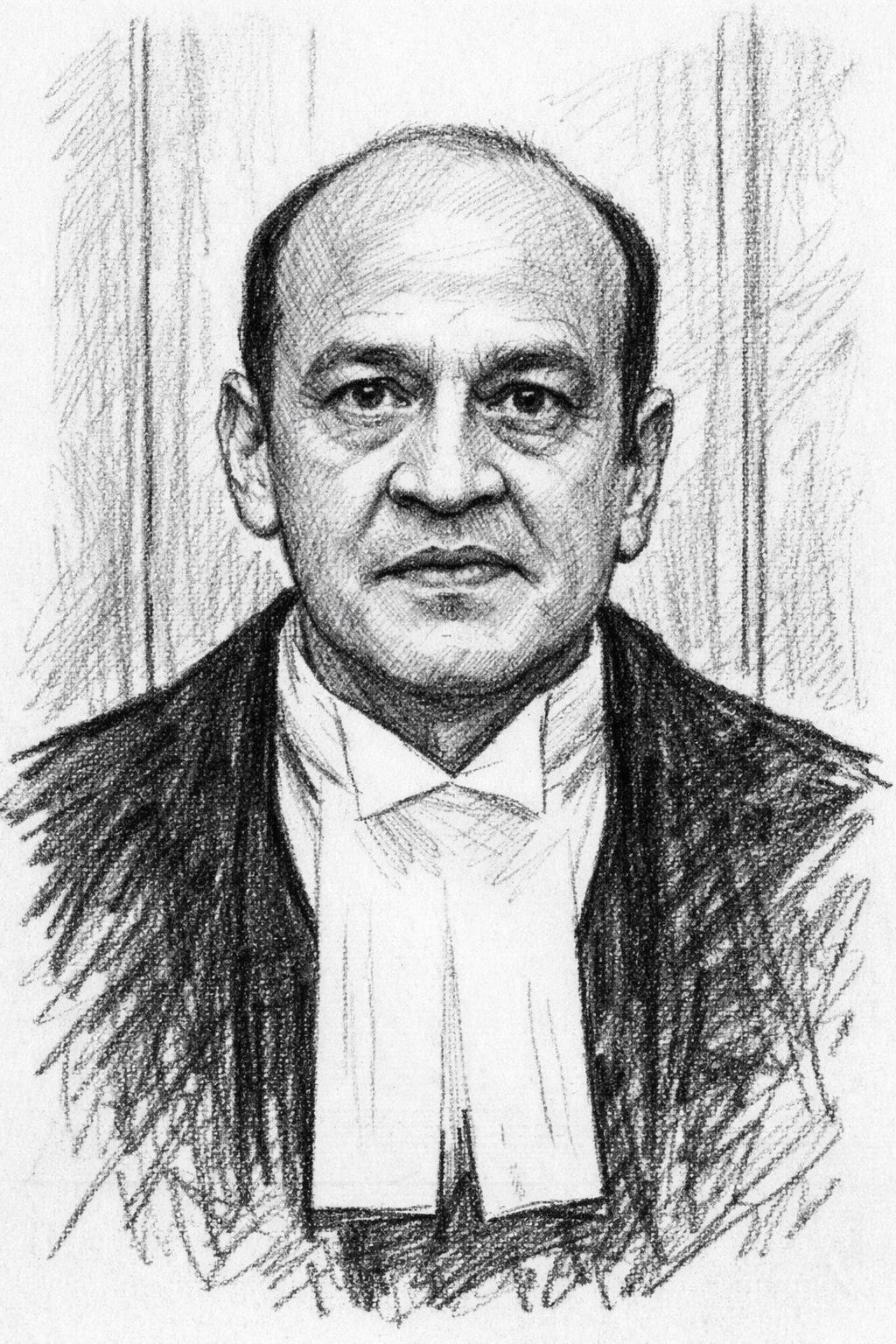
Justice Varma Resigns Before Impeachment Could Begin
Facing an indictment and denied what he called basic fairness, Justice Yashwant Varma exits the judiciary, but leaves behind unresolved questions about institutional accountability
Synopsis
Justice Yashwant Varma of the Allahabad High Court has retired with a controversial incident of burnt currency notes that were allegedly discovered at his Delhi home after a fire in March 2024. In a May 4 fact-finding report, he was indicted by a panel of three HC judges. Justice Varma resigned, and withdrew the impeachment, on April 9, 2026, in response to impeachment proceedings and being sent back to his parent court. He challenged the fairness of the inquiry in a 13-page letter, claiming that the burden of proof was reversed, the right to cross-examination was denied, and 27 out of 54 witnesses dropped without explanation. In his resignation, he seals the impeachment of parliament at the expense of raising questions on the transparency of internal judicial accountability systems.
Context: The fire that ignited a crisis
On the evening of March 14, 2024, firefighters responding to a blaze at Justice Varma's official residence in Delhi reportedly discovered what appeared to be large quantities of burnt currency notes at an outhouse on the property. A video circulating shortly thereafter purportedly showed bundles of cash burning in the fire— images that quickly became the axis of a judicial integrity controversy of considerable magnitude.
Justice Varma, then posted at the Delhi High Court, denied all allegations from the outset, characterising them as baseless. Nevertheless, the then Chief Justice of India (CJI) Sanjiv Khanna ordered an in-house probe— the judiciary's internal mechanism for examining allegations against sitting judges— setting in motion a sequence of events that would culminate in his resignation over a year later.
The Investigation and its results
A damning report a three-member panel In August last year, Lok Sabha Speaker Om Birla formed a three-member committee of High Court judges to investigate the corruption allegations against Justice Varma, and with a view to possibly triggering the constitutional procedure of removing Justice Varma. On May 4 the committee handed in its fact-finding report and its findings were unfavourable to Justice Varma.
CJI Khanna requested Justice Varma to step down or impeached him after the report. As he refused to resign, the report, including the reply given by Justice Varma, was sent to the President of India and the Prime Minister, in which he had been advised to remove him. His work in the judiciary was suspended and he was reprimanded to be taken back to his parent court in Allahabad High Court pending any further action.
Justice Varma's counter-narrative
Justice Varma challenged the findings in detail, instead of accepting them. In a letter to the Judges Inquiry Committee (April 9), the same day he resigned, he claimed he had not been given the most fundamental of fairness and due process during the inquiry. The litigation has been preoccupied nearly solely with making out the bare facts that there was a storeroom in the premises provided and that there was money in it. His letter argued that the heavy burden of proving a case had been shifted into reverse– those conclusions of guilt based simply on the existence of cash had been drawn with no underlying case against him having been proven. He also claimed that 27 out of the 54 witnesses who testified to the committee were dropped without reason, that no witness-examination was conducted in his presence, and that he was not allowed to cross-examine witnesses. The investigation, he said, was never really an inquiry after the truth but a motivation to verify an already determined conclusion.
The Stepping down and its implications
A door that shuts the door of one, opens the door of another Justice Varma submitted his resignation in a letter to the President, Droupadi Murmu on April 9, and at the same time pulled out of the impeachment process. His resigning prior to the election by Parliament of his impeachment, has, as a constitutional measure, precluded the regular impeachment line. In India, an impeachment of a judge of the High Court or Supreme Court must be addressed by a special majority of both Houses of Parliament as stipulated in Article 217 read with Article 124(4). The resignation of a sitting judge makes such a process moot.
This will either be a dodge of responsibility or an honourable escape in the face of controversial circumstances, and that is a matter that may not be resolved in the near future. What it tells us of in-house mechanisms.
The very reason why India has developed an in-house mechanism of responding to allegations against judges was to prevent politicisation of judicial removal. It is not publicly visible; it lacks any statutory support and has no formal process of appeal. The case of Justice Varma has put the secrecy of this process under greater scrutiny than it has received in recent times. His accusations, especially of witnesses being dropped, reversed burden of proof, and a failure to cross-examine, cast a valid question on whether the process affords the accused judge anything approaching natural justice. Meanwhile, the proponents of the in-house system will also mention that it is this very mechanism, rather than Parliament, rather than a criminal court that led to the discovery that virtually brought Justice Varma to the bench.
Conclusion: An Institutional Scrutiny
The fact that Justice Varma has left the bench does not put an end to the bigger issue which it has raised: whether or not the judiciary in India has sufficient, transparent, and procedurally fair system of investigating charges against its own members. The internalized process has acted as a safeguard to political interference in judicial appointments and removals– but has been, in a way, a deliberate shield to ensure that these processes are not subject to public and parliamentary scrutiny.
In a world where institutional credibility is low and the call of accountability is sharp, that cushioning can be revisited, not in order to weaken the independence of the judiciary, but so that the quest towards accountability in the courts is perceived to be, and is actually, just. A judge who resigns prior to impeachment can evade the decision of Parliament--but what really happened on the night of March 14 is the question--as is the ashes themselves--the question which does not go away.
Latest News
- ◆Delhi Police Detain 100 With Criminal Records Before Protest
- ◆Contempt Plea in Supreme Court Over Delhi Transit Shutdown
- ◆Jantar Mantar Protest: Permission Denied, Curbs Imposed Across Delhi
- ◆Delhi Police Detain CJP Founder, Top Leaders Before Protest
- ◆Dhruv Rathee Detained Ahead of Jantar Mantar Protest in Delhi