
Govt Defers FCRA Bill Amid Church-Led Protests
Facing a Tamil Nadu Assembly resolution and mass Mizoram rallies, the Centre opts to send the contentious Foreign Contribution Amendment Bill to a Joint Parliamentary Committee
Synopsis
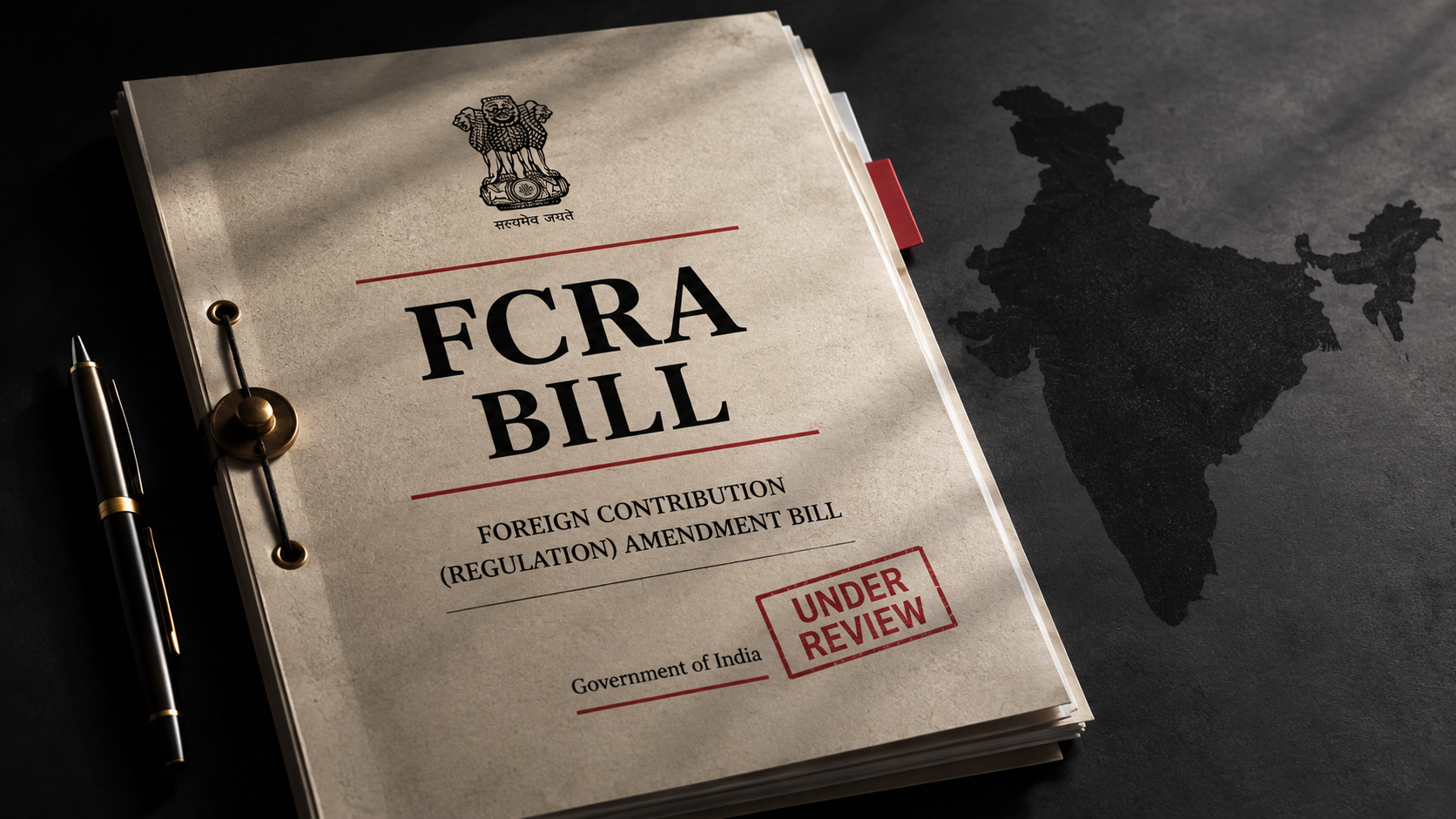
The Centre has indicated it will send the Foreign Contribution (Regulation) Amendment Bill, 2026, for consideration by the Joint Parliamentary Committee, pending a floor debate, as part of the efforts to appease Christian groups that have been protesting against it, while a Tamil Nadu Assembly resolution and political leaders in the Northeast have expressed worry about the impact of the Bill on faith-based institutions.
A Bill Under Siege
The Centre is ready to refer the controversial Foreign Contribution (Regulation) Amendment Bill, 2026 to a Joint Parliamentary Committee, a move that may help to break the Parliamentary deadlock on the Bill, which seeks to revamp the regime of foreign contributions and assets from such funding, were being sought.
The Bill aims to change the framework in respect of foreign contribution and assets linked to it, has been brought in the Lok Sabha on March 25. Earlier, it had been announced that the Bill would be up for consideration and passage on August 12 in the Lok Sabha but, so far, it has not been placed in the agenda of the Lok Sabha for consideration.
The actual content of the Bill
The law aims to give the government the power to designate an 'Authorities' to assume the control of the foreign assets and foreign contributions once the registration of the FCRA is cancelled, surrendered or lapses due to non-renewal of the FCRA. The Bill prescribes that the Authority maintain the religious character of assets that are a place of worship.
The proposed legislation would also separate to impose one year prison on a maximum of five years prison sentence for violations. On the FCRA portal, as of July 15, 2026, there are 14,449 active FCRA certificates, 22,498 cancelled and 15,212 deemed expired, which are the foundations for organisations that will be directly affected by the amendment.
The Opposition Coalesces
Concern has been raised by Christian organisations about the provisions relating to the vesting of the assets of organisations that have been the subject of lapses in FCRA registration, which the legislation has attracted strong opposition.
Recently, in a meeting with Union Home Minister Amit Shah at New Delhi, DMK MP P. Wilson presented a memorandum demanding withdrawal of the Bill or its referral to a parliamentary committee, along with a group of Church leaders.
Political pressure has been particularly prevalent in the Northeast. Mizoram Chief Minister Lalduhoma, who met with Shah to discuss his community's concerns, has been the President of the Mizoram Progressive Association, which staged protests throughout the region.
The Council of Churches in Mizoram staged a protest in Aizawl on August 11 against the Bill while the Nagaland Chief Minister Neiphiu Rio had urged the Centre to rethink the Bill and request for it to be thoroughly debated in Parliament with proper stakeholder consultations.
Lalduhoma, who had met with Shah on August 6, said that he had been told that the Bill would have no retrospective effect.
Parliamentary Manoeuvring on the matter
Sources in the ruling party said the Bill may be referred to the JPC by the middle of the current week as a number of Opposition parties like Congress and Trinamool Congress had called for withdrawal of the Bill.
The issue was discussed during the meeting of business advisory committee of the Rajya Sabha, where Union ministers Kiren Rijiju and JP Nadda from the government and Union Opposition Ministers Jairam Ramesh (Cong), Tiruchi Siva (DMK), Sasmit Patra (BJD) and Sanjay Jha (AAP) participated.
A government official said the Centre had no objections to the proposed amendments and had no reason to doubt that the law was not targeted at any specific community.
What is the significance of the Route to a JPC?
It is a tried and tested legislative safety valve that the government uses in India to give concessions to stakeholders, even though it does not outright abandon the bill, but can have it referred to a Joint Parliamentary Committee.
The JPC path also provides an avenue for public hearings, which may help reduce provisions that Church groups consider an existential threat to the autonomy of their institutions in a law involving their finances.
The Road Ahead
The fate of the Bill now depends on the composition and schedule of the JPC which have not yet been officially announced and is set to end on August 13 this Monsoon Session. With so many active FCRA registrations to date impacted, and the precedent set by other committees to take months to report, the amendments are likely to not be in effect until the Winter Session at earliest.