
How India Became the World's Pharmacy
With generic medicine supply, vaccine production and a record $31 billion in exports, India's pharmaceutical sector now underpins global public health access
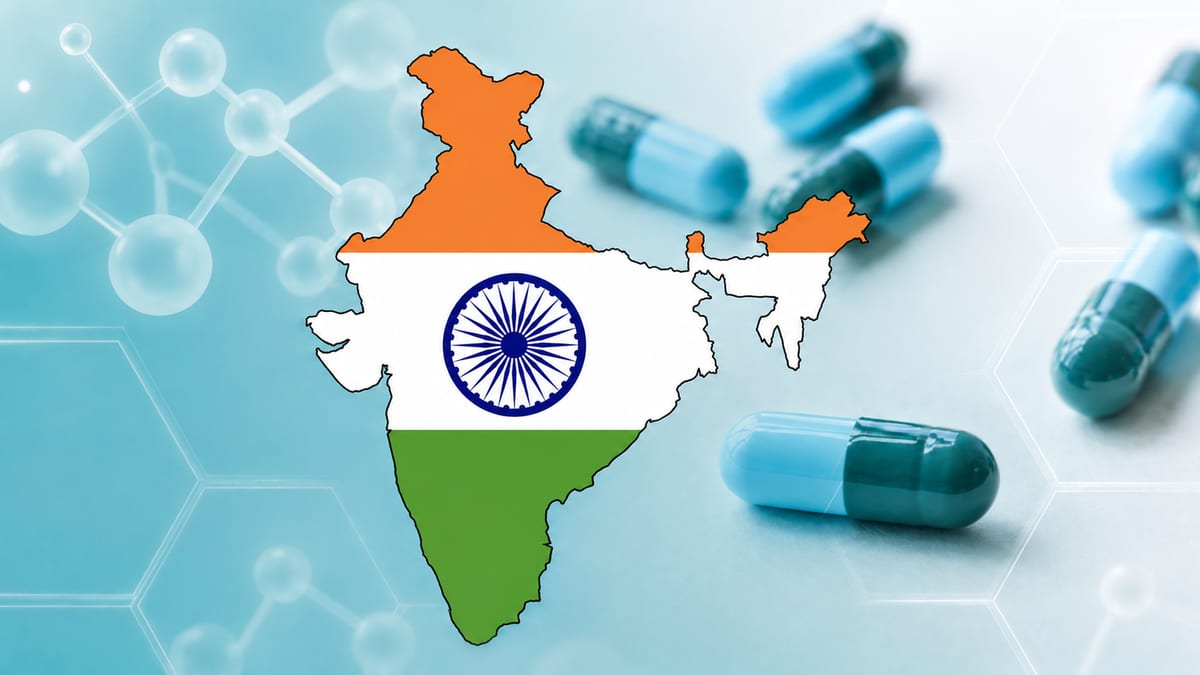
India's pharmaceutical exports peaked at a record $31.12 billion in FY26, accounting for about one-fifth of the world's export of generic medicines, while its exports of vaccines met around 60 per cent of the global demand, government and industry sources say. This article traces back the history of India's “pharmacy of the world” and then examines the current size of the industry and the structural dependencies, especially in raw material imports
The title has been earned after more than 30 years
Pharma companies provide a great example of India's post-liberalisation journey. In the decades following the economic liberalization in 1991, India has emerged as the world's pharmacy by mastering reverse engineering, process chemistry and cheap generic manufacturing.
In that process, Indian companies eventually developed the ability to copy patented drug molecules using different chemical methods (or under India's previous process patent system) after the expiration of patents, or in cases where patents had not yet expired, at a much lower cost than western companies while ensuring that their products met international quality standards.
Explore the scale of the industry today
The number of people in these locations by volume is not easily matched anywhere else. India is a leading exporter of medicines to over 200 countries, and exports approximately 20 per cent of the world's demand for generic medicines, around 60 per cent of the global demand for vaccines and has the highest number of USFDA approved manufacturing plants outside the United States.
Pharmaceutical exports reached a new high of $31.12 billion in FY26, continuing the consistent trend of trade surpluses in the sector.
The government's trade promotion data from Invest India further adds colour, with 9 of the world's top 25 generic drug manufacturers being Indian companies and the exports from the industry are at $30.4 billion and imports are $8.9 billion, providing a trade surplus of $21.5 billion in FY25, making India an active player in the global pharmaceutical market.
The backbone of global health is the vaccine
There is hardly any other fact that can be held up as more significant for India's role in the manufacture of vaccines than the designation "the pharmacy of the world"? According to data from IBEF, India has been contributing 55-60 per cent of vaccines to UNICEF, 99 per cent of DPT vaccine requirement to WHO and 52 per cent of BCG vaccine demand and 45 per cent of measles vaccine demand in the world till May 2025.
This comes at a time when India has been testing it at an unprecedented scale during the COVID-19 pandemic: India exported 5.84 crore vaccine doses to 70 countries till March 2021 and later much more as the vaccination drives kicked into gear across the world.
The Ministry of Commerce's handbook Pharmexcil, prepared in collaboration with the Government of India, detailed the extent to which such a mobilisation occurred, including domestic manufacturers like the Serum Institute of India, which signed international procurement contracts to raise vaccines in low-income countries, which was then dubbed as India's "vaccine diplomacy".
How to access HIV care is a question
Apart from vaccines, India's generic industry has made a difference in terms of accessibility to the treatment of chronic and infectious diseases in the developing world. According to the data collected by the Indian Business Ethics Foundation (IBEF), more than eight in 10 of the world's total HIV/AIDS drugs are supplied by Indian pharmaceutical companies with India's generic competition leading to a reduction in the price by 99.99 per cent compared to the pricing of the originator companies when these drugs entered the market.
This price drop, in particular, from Indian generic companies has been one of the most obvious instances of how manufacturing capacity could transform treatment access in more than 30 countries.
Tackling investment challenges and the path to 2047
Foreign investment in the sector has been following the export growth. In the FY26 up to September, the Drugs and Pharmaceuticals industry is among the top ten sectors that have attracted foreign investment in India, as per a Press Information Bureau release, which valued foreign investment in the industry at ₹13,193 crore.
The industry's $450 billion target for the pharmaceutical market by 2047 — India's 100th Independence Day — is ambitious enough to see the sector grow beyond the export-led generics business model to higher-value biologics and biosimilars and the development of original drugs.
If you are feeling worried, this book is for you
The industry's size provides a cover that hides a structural weakness in the industry that has been recognised by policy makers many times in recent years: India's dependence on China for bulk drugs, also known as Active Pharmaceutical Ingredients (APIs), which are the basic chemical ingredients used to manufacture finished medicines.
Although Indian pharma firms have been producing finished generics in large quantities, there has been a significant reliance on imported raw API inputs over the years which got highlighted during supply shortages during the pandemic and has now been the reason for introduction of incentive schemes by the government to increase domestic API manufacturing.
Conclusion of this Article
The Indian pharmaceutical industry has evolved from just a low-cost manufacturing hub to an integral part of the world's public health infrastructure, playing a pivotal role in providing vaccines for children around the globe and ensuring access to HIV treatment in the very corners of the world.
The recent export volumes in FY26 are indicative of the trend but the industry's coming-of-age in terms of being self-reliant with respect to raw material sourcing and its progression towards higher value biologics and original research will determine whether the title of "pharmacy of the world" will shift to true self-reliance or remain at its heart, an "assembly and formulation strength" that relies on external inputs.