
U.S. Debt Crosses $40 Trillion for the First Time Ever
U.S. on the verge of a fiscal crisis as costs continue to rise
Synopsis
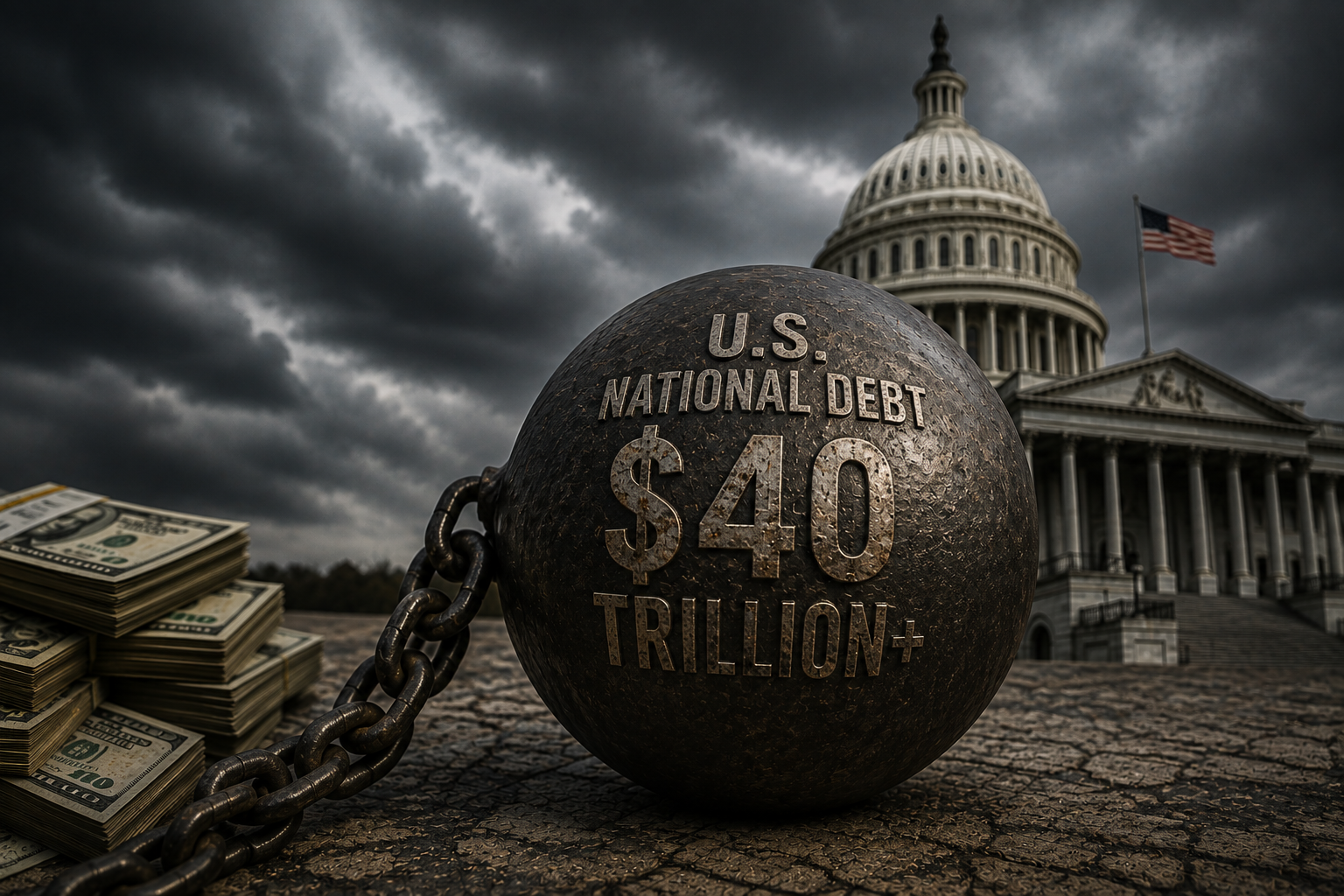
On Wednesday, August 20, 2026, data released by the Treasury Department showed that as of August 18, 2026, the gross national debt reached a whopping $40,047,425,768,420.22.
The Current Scenario
The U.S. national debt surpassed another historic milestone, reaching $40 trillion for the first time amid persistent federal budget shortfalls that continue to drive it higher.
The $40 trillion milestone comes after the federal government’s debt burden crossed the $39 trillion mark about five months ago, in March 2026, following the $38 trillion mark in October 2025.
America’s national debt is rapidly growing due to the booming interest costs, which in turn are rising due to a larger debt burden and higher interest rates, as well as growth in federal spending on Social Security and Medicare amid the ageing population of the U.S.
The Estimated Surge
The Nonpartisan Congressional Budget Office (CBO) estimated in March 2026 that the gross national debt will rise to $63 trillion in 2036, with annual budget deficits increasing from about $2.1 trillion, the agency's estimate for the current fiscal year, to $3.1 trillion a year a decade from now.
A measure that economists prefer to use to compare a nation’s debt to the size of its economy is the debt held by the public, which reached $31.27 trillion in late March and topped the $31.22 trillion in Gross Domestic Product (GDP), thereby marking the first time in about 80 years that the public debt was larger than the economy.
The debt held by the public is projected to break the record of 106% of GDP that was set in 1946, when the U.S. was in the process of demobilisation after the war ended, in the next few years, before rising to an estimated 120% of GDP in 2036, per the CBO's estimate.

Will There be Accountability?
CEO of the Peter G. Peterson Foundation, Michael A. Peterson, said, "For the millions concerned about affordability, let's start by asking Washington to take notice that the national debt just hit $40 trillion," adding that the debt has doubled in under 10 years and that "we must change course."
He further added, "The more debt we take on, the more interest costs we have to bear, which now even exceed the cost of national defence. And every trillion we add to our debt contributes to higher interest rates and inflation, increasing the mortgages, car loans and credit card bills of all Americans. At the same time, debt harms economic growth, slowing wage increases while the cost of living continues to rise."
The Question of Economic Growth
The CBO’s budget estimate from this spring noted that the debt held by the public is expected to grow faster than the U.S. GDP in the upcoming years, which could result in slowing economic growth and a reduction in private investment, while causing interest costs to increase further.
CBO warned that it could also increase the risk of a fiscal crisis, in which investors lose confidence in the value of the U.S. government’s debt, leading to abrupt interest rate rises and other economic and financial problems.
Latest News
- ◆Case Filed Against CJP Supporters over Unauthorised Shivaji Park Gathering
- ◆Israeli Strike on Gaza City Apartment Block Kills Five, Officials Say
- ◆India's Forex Reserves Fall $18.3 Billion in Record Weekly Drop
- ◆Kharge Urges Modi to Release ₹3,705 Crore Drought Aid for Karnataka
- ◆Voter-Roll Protests: Delhi Police Detain Hundreds, Register Three FIRs