
₹3.25 Lakh Crore and 114 Rafales; India's Largest-Ever Fighter Aircraft Deal
India's Defence Procurement Board has cleared the acquisition of 114 Rafale jets from France's Dassault Aviation, with 30% indigenous content rising to 60%, but limited access to the aircraft's source code remains a significant strategic constraint.
Synopsis
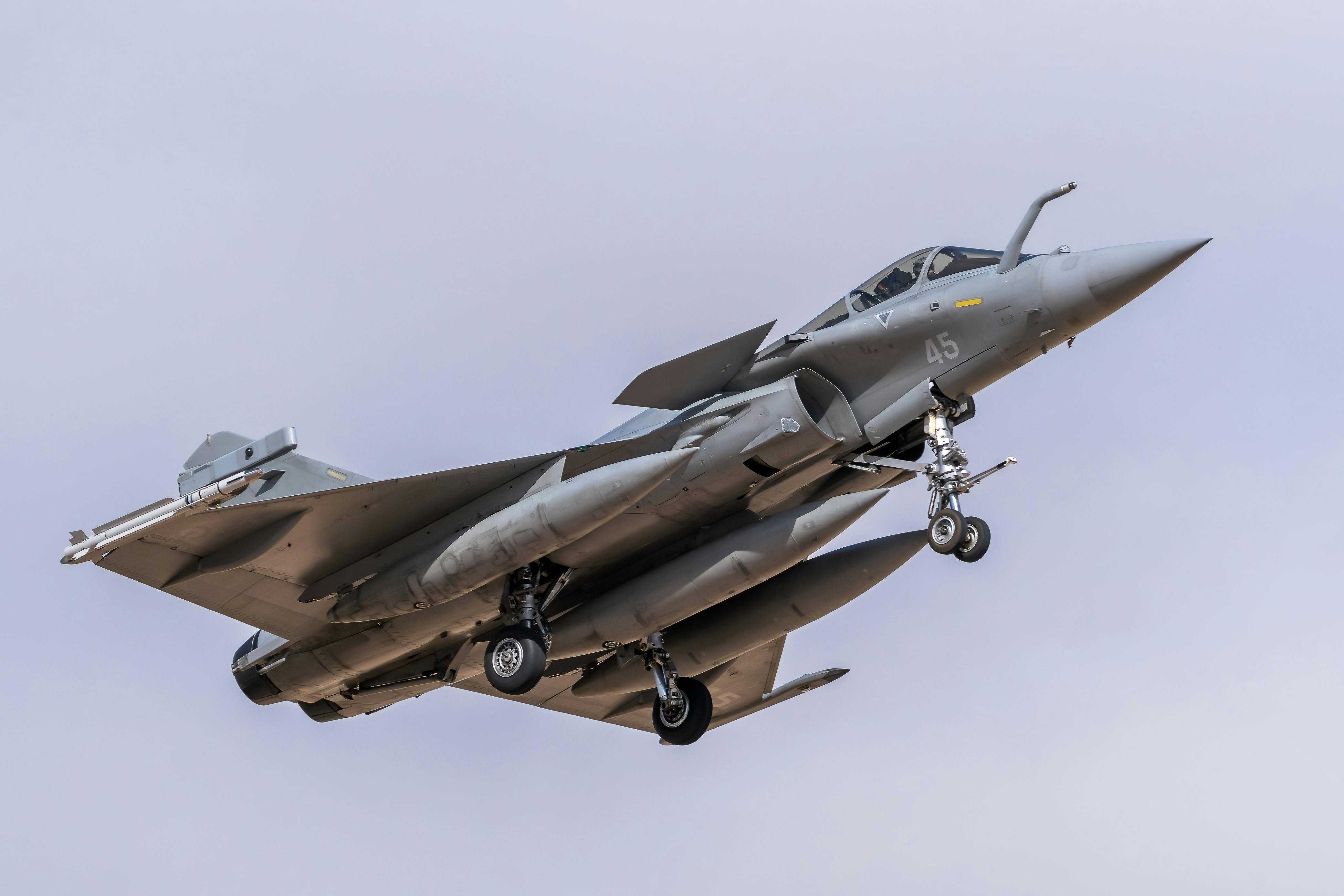
The Defence Procurement Board of India has cleared the purchase of 114 Rafale fighter aircraft in what would become the country's single largest-ever defence acquisition. The deal, estimated at ₹3.25 lakh crore, includes significant indigenous manufacturing commitments and new maintenance infrastructure — but France retains ownership of the aircraft's source code, limiting India's ability to modify the jets independently. The acquisition must still clear the Defence Acquisition Council and the Cabinet Committee on Security before it is final.
The Scale of the Deal: Bigger Than Anything Before
The Defence Procurement Board of India has given clearance to the acquisition of 114 Rafale aircraft in a deal that eclipses every previous fighter procurement in the country's history. The proposal will be brought before the Defence Acquisition Council, chaired by Defence Minister Rajnath Singh, and subsequently before the Cabinet Committee on Security (CCS) for final approval.
Before this, the largest-ever fighter aircraft deal was India's order for 97 Tejas Mk1A aircraft from Hindustan Aeronautics Limited. The reported estimated cost of the Rafale deal is approximately ₹3.25 lakh crore, making it not just India's biggest fighter deal but one of the largest arms acquisitions in the world in recent years. Source: Press Information Bureau, Ministry of Defence — pib.gov.in | Defence Acquisition Council Secretariat
The Source Code Question: A Strategic Concession
An important nuance in the deal is that the source code of the aircraft will remain with France. This severely restricts India's ability to independently modify or upgrade the aircraft's software systems in future — including integration of new indigenous weapons systems — without the involvement of Dassault Aviation.
This constraint has been a recurring point of contention in India-France defence negotiations. When India received its first batch of 36 Rafales under the inter-governmental agreement of 2016, similar source code limitations applied. For a country aspiring to indigenise its defence ecosystem, this is a structural dependency that does not disappear with domestic assembly.
"Source code is the soul of a modern combat aircraft. Without access to it, integration of new weapons or sensors requires going back to the OEM — that is not indigenisation, that is managed dependence." — Lt. Gen. (Retd.) D.S. Hooda, former Northern Army Commander Source: IDSA Policy Brief on Defence Indigenisation — idsa.in | The Hindu National Security coverage
The 'Make in India' Commitment: 30% Rising to 60%
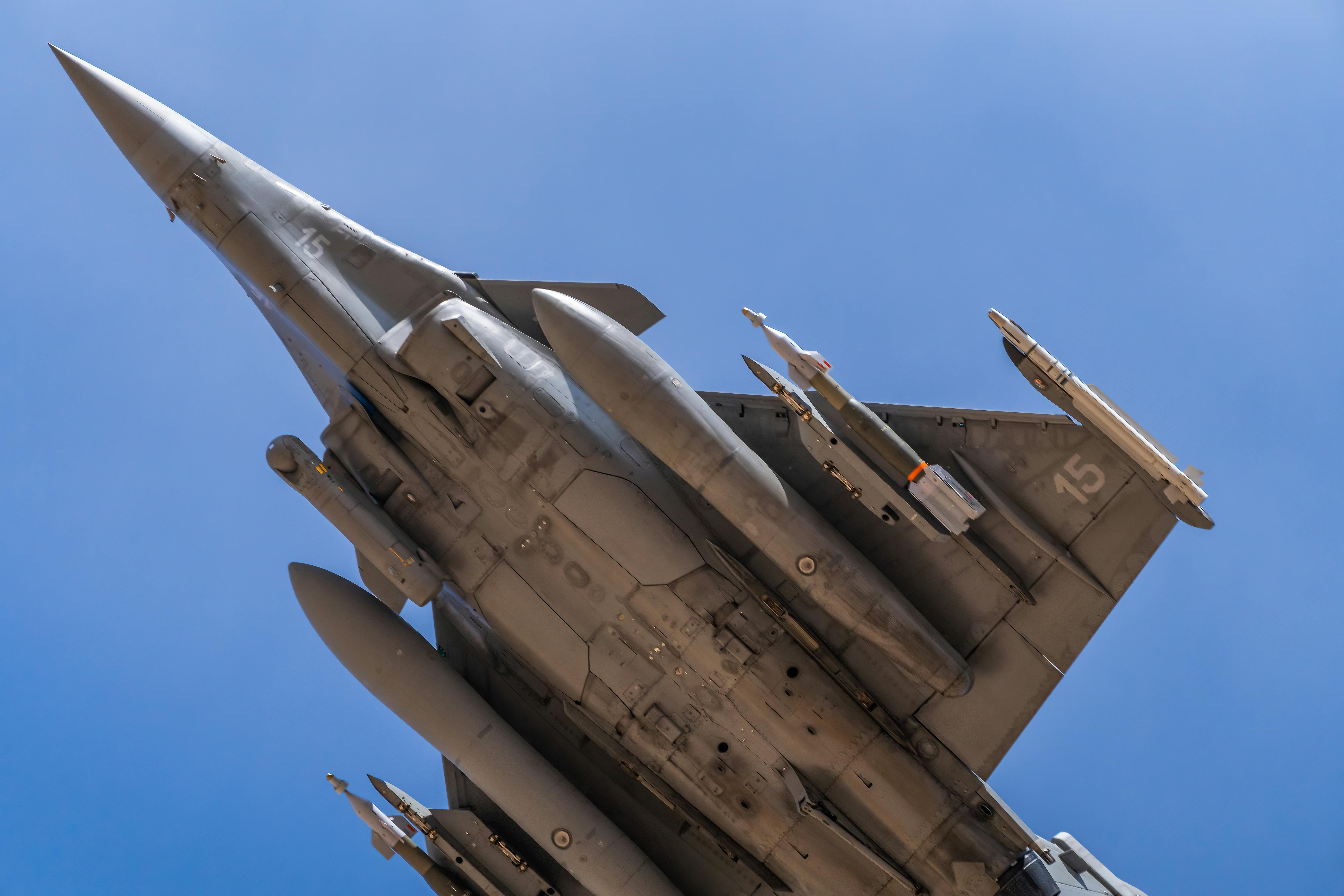
The focus, nevertheless, is on manufacturing the bulk of the aircraft across India, with 30% indigenous components from the outset, rising to 60% over the programme's lifetime. This aligns with the government's vision to exponentially grow the domestic defence manufacturing industry under the 'Make in India' and 'Aatmanirbhar Bharat' frameworks.
The deal includes 12–18 aircraft to be delivered in fly-away condition directly from France, with the remainder to be manufactured domestically. A production line and maintenance infrastructure are to be established across the country, creating a significant industrial footprint. Source: Ministry of Defence, Defence Production Policy 2020 — mod.gov.in | SIDM Annual Report 2023 — siamindia.com
Tata, Hyderabad, and Jewar: The Industrial Architecture
In June of last year, India's Tata Advanced Systems Limited (TASL) signed an agreement with France's Dassault Aviation to manufacture Rafale fuselages in India — a landmark step in bringing complex aerospace manufacturing capability to the private domestic sector.
The deal also includes parallel infrastructure projects: an engine production facility in Hyderabad and a Maintenance, Repair and Overhaul (MRO) hub at Jewar in Uttar Pradesh — which will also host the upcoming Noida International Airport. These facilities are expected to raise the share of Indian components from 30% initially to 60% over time.
"The Rafale deal gives Indian industry exposure to world-class manufacturing standards. Even if the source code stays in France, building fuselages and MRO capacity will transform TASL into a genuinely global aerospace supplier." — S.N. Mitra, aerospace industry consultant, Bengaluru Source: Tata Advanced Systems Limited — tataadvancedsystems.com | Dassault Aviation India — dassault-aviation.com
Strategic Context: Supplementing a Shrinking IAF Fleet
If given final approval by the CCS, the deal will become the country's largest-ever defence acquisition. It would also add to the Indian Air Force's total fleet of Rafales — which currently stands at 36, delivered under the 2016 inter-governmental agreement — as well as the Indian Navy's order for 26 naval variants placed last year.
The acquisition is strategically driven by the IAF's declining squadron strength, which has fallen well below its authorised 42-squadron structure. The service has been losing squadrons faster than domestic programmes can fill the gap, with successive waves of MiG-21 retirements leaving an operational vacuum. Source: Air Power Asia (airpowerasia.com) | IISS Military Balance 2024 — iiss.org
The Broader Reckoning
The 114-Rafale deal encapsulates a fundamental tension in India's defence policy: the aspiration for self-reliance versus the operational urgency of filling capability gaps today. Every Rafale acquired is, in one sense, an acknowledgment that domestic programmes have not yet delivered at the required pace or scale.
If the Tejas Mk1A had been delivered on time and in quantity, the strategic and fiscal justification for this purchase would have been considerably reduced. As India moves forward, the Rafale deal must be seen not as a long-term solution but as a bridging measure — one that must be matched, in parallel, by a genuine acceleration of indigenous capability.
Latest News
- ◆Delhi Approves DURGA Scheme for 1,300 Pink E-Autos for Women, Transgender Drivers
- ◆Black Sea Disruptions Push Bangladesh Back to Indian Wheat After Four-Year Gap
- ◆Microsoft's Hyderabad Cloud Region Opens as Telangana Targets 5 GW of Datacentres
- ◆Gold Slips in India as Firm Dollar and Fed Rate-Hike Bets Weigh
- ◆Rupee Slips to One-Week Low as Oil Rally Revives Global Rate-Hike Fears