
Delhi Moves to Try Saeed Without His Presence
Mumbai Police invoke BNSS Section 356 to prosecute Hafiz Saeed and five other Pakistan-based accused in the 2008 Mumbai attacks case
Synopsis
The special court in the Mumbai terror attacks case on in absentia trial has begun trial proceedings against six Pakistan-based accused, including Lashkar-e-Taiba founder Hafiz Saeed. The decision was taken under Section 356 of Bharatiya Nagarik Suraksha Sanhita, which has been in effect for decades, after a number of years of unsuccessful attempts to extradite the accused. The Ministry of External Affairs has supported the ongoing proceedings, stating that it is “unacceptable” to tolerate the freedom of the accused in Pakistan.
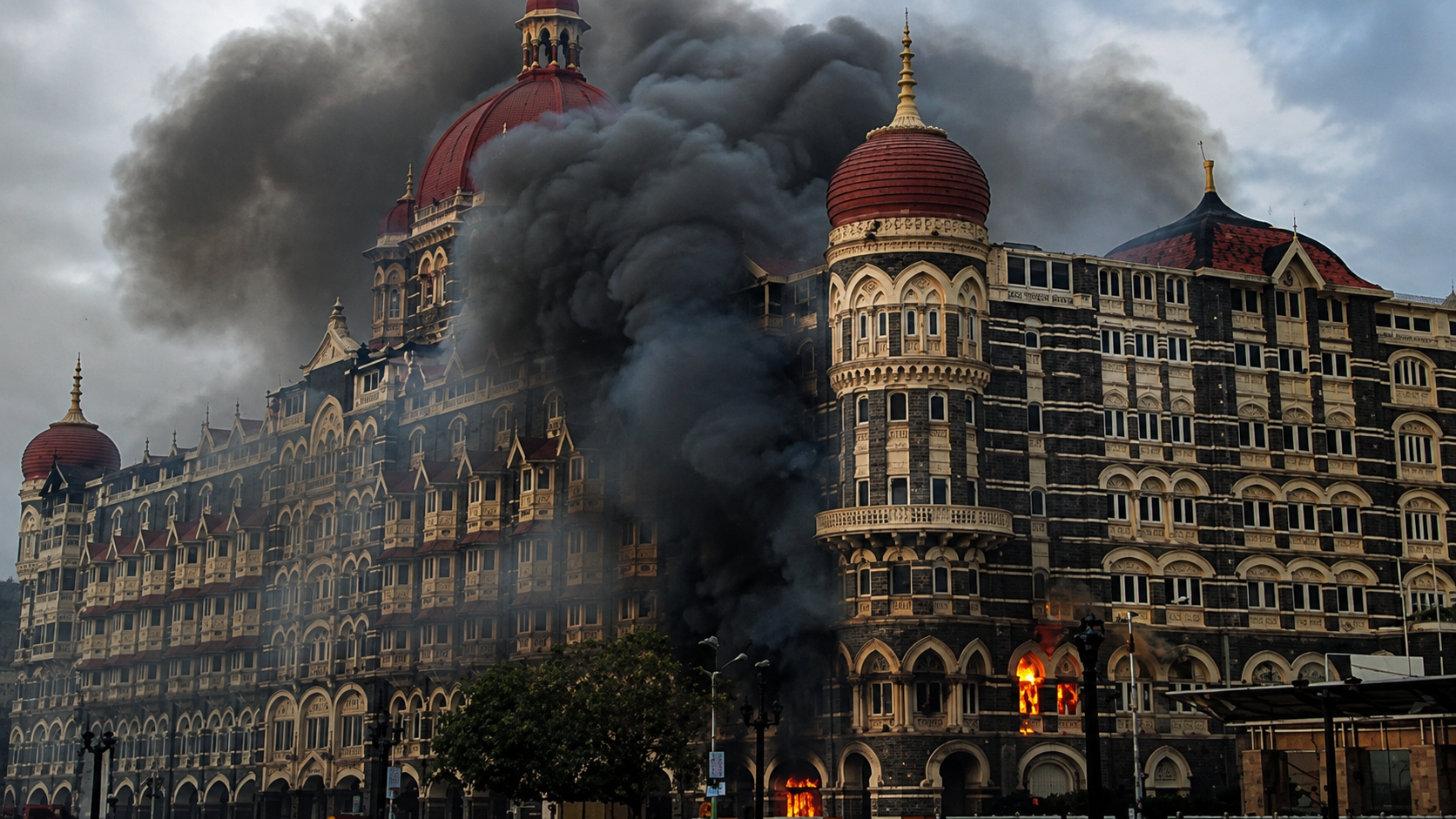
Nearly 18 years after ten gunmen brought Mumbai to a standstill, India has taken a step that lawyers say has not been taken in a terror case in its size.
Mumbai Police has launched proceedings to try six accused persons in absentia, the first in a terror case, under Bharatiya Nagarik Suraksha Sanhita (BNSS). The accused named include the founder of Lashkar-e-Taiba, Hafiz Saeed, Zaki-ur-Rehman Lakhvi, Sajid Mir, Abu Alqama, Asim alias Abu Qahafa and Major Abdur Rehman Pasha, who are all believed to be living in Pakistan.
The real meaning of Section 356
Mumbai Police has written to Special Public Prosecutor Ujjwal Nikam for trial of certain proclaimed offenders in their absence as per Section 356 of the BNSS, 2023. The provision provides a legal remedy for those who deliberately avoid court appearance after a special court has issued a proclamation for them to report by Aug. 18, ahead of which six men are expected to appear.
Nikam stated that formal proceedings will be instituted once a report confirming the same is submitted in the court and the trial court has issued a proclamation against all the six accused.
The important thing to remember is that the development does not constitute the six having been found guilty, merely the setting up of the legal framework that must be followed before an in-absentia trial can begin, and it is the court's responsibility to ensure that the legal procedure outlined in Section 356 is complied with.
The case isn't made up of assumptions, investigators say. Prosecutors claim that there is plenty of material against the accused, such as evidence collected during investigation and statements during the prosecution of Ajmal Kasab, the lone alive attacker.
Reaching Beyond Borders
The six men are not covered under India's jurisdiction, and now enforcement is dependent on international cooperation. Mumbai Police have requested Union Home Ministry to help them serve proclamation orders from the courts, through Interpol on absconding Pakistani nationals.
The process for India to prosecute the six Pakistan-based accused in absentia for the 26/11 Mumbai terror strikes has commenced.
New Delhi's Position
The Ministry of External Affairs has put the step in the broad context of counter-terrorism. In reply to queries regarding the proceedings, MEA spokesman Randhir Jaiswal said India expected the international community to take note of the seriousness of terrorism and intensify joint action to deal with it.
Jaiswal added that New Delhi will "take any action" it deems "necessary" to eradicate terrorism, which has taken a toll on India.
It is not the first time that this year, lawsuits were launched against Saeed. A non-bailable warrant was issued against him in July in the case of terror attack in Pahalgam, wherein 26 people, majority civilians, lost their lives in April 2025, following his naming as a mastermind in a supplementary chargesheet released by the National Investigation Agency (NIA).
The case has been languishing for nearly 20 years
The 26/11 attacks started on 26th November, 2008 when nine terrorists from the LeT with a tenth in the midst, arrived in Mumbai via sea and perpetrated coordinated attacks in various locations across the city, killing 166 people and injuring about 300. India had repeatedly asked for Saeed's extradition, to no avail over the years, as he was detained and then let go in Pakistan.
Saeed, a central figure in the planning of the attacks, was the founder of Lashkar-e-Taiba, a group that the UN has declared a terrorist organisation in 2005, because of its links to Al-Qaeda and the Taliban, and the United States has named Saeed a global terrorist in 2008.
The Way Forward
The proceeding doesn't necessarily ensure a quick resolution. Proclamations through Interpol have always been intractable on such persons hiding under the cover of Pakistan's security establishment.
If a conviction can be obtained without the presence of the accused on the dock, it would depend on what the future holds with respect to custody and extradition or if Islamabad eventually changes its tune.
The symbolic and legal impact, for the moment, is that the loophole that the BNSS was meant to close, that of an indefinite absence of the accused, is closed in India.