
LPG Shortage Exposes India’s Dangerous Import Dependence
As the Ministry of Petroleum insists supplies are 'fully secure,' long queues for LPG cylinder refills, surging commercial costs, and migrant workers returning home tell a different and more urgent story.
Synopsis
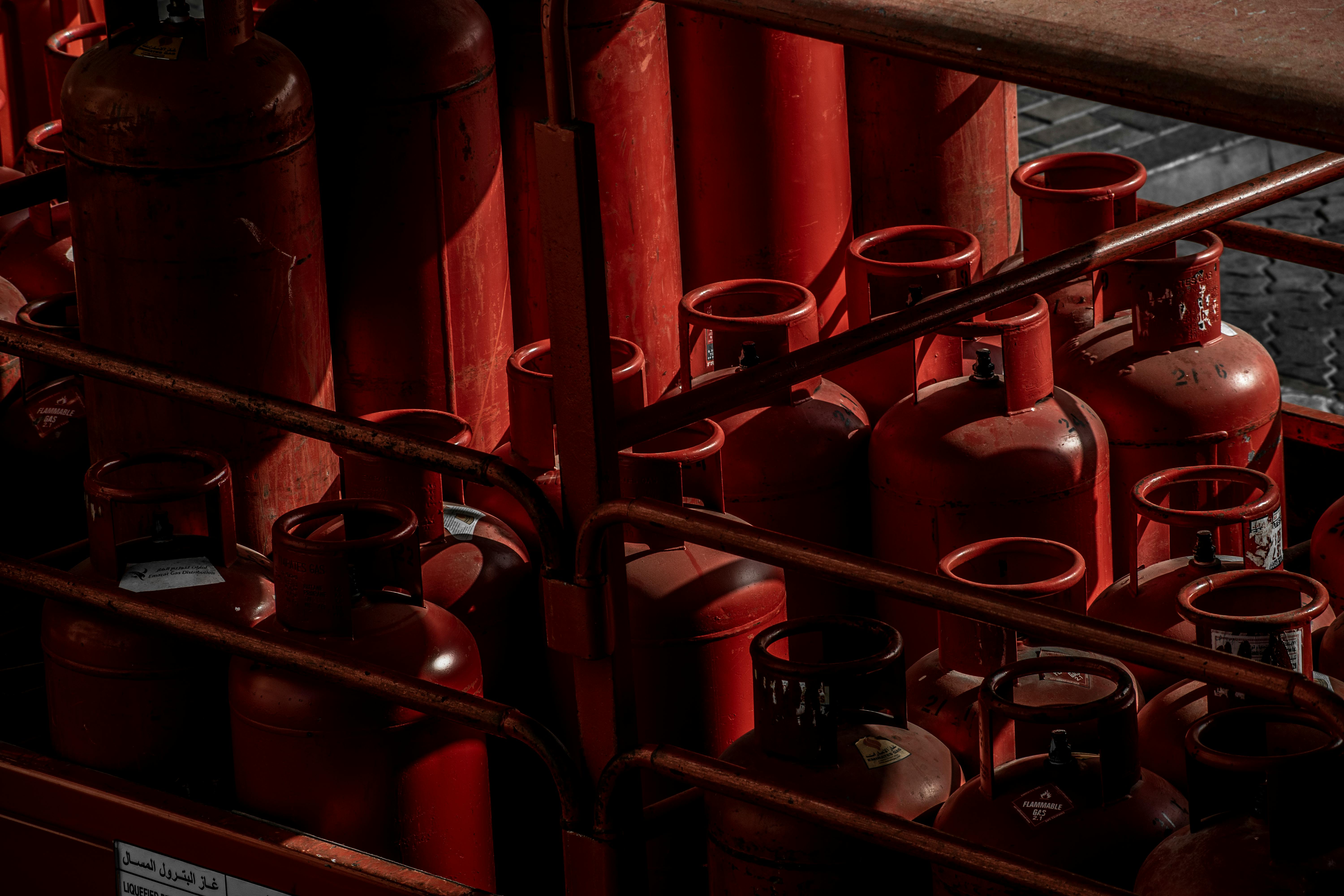
India is grappling with a Liquefied Petroleum Gas (LPG) shortage triggered by geopolitical disruptions to Middle East supply chains. While the Ministry of Petroleum maintains that petroleum and LPG supplies are 'fully secure,' the ground reality is starkly different: long refill queues, dramatic price increases, black market activity, and the government's own admission that supply 'continues to be affected due to the prevailing geopolitical situation.' With nearly 90% of India's LPG passing through the Strait of Hormuz, the crisis has exposed a dangerous structural dependency.
The Official Line and the Reality Beneath It
The Ministry of Petroleum and Natural Gas has claimed in a recent press release that 'India's petroleum and LPG supply situation is fully secure and under control. All retail fuel outlets have enough supplies. There is no shortage of petrol, diesel, or LPG anywhere in the country.' Meanwhile, India is grappling with an LPG shortage that has persisted for several weeks as a consequence of geopolitical disruptions.
The Centre itself subsequently notified that supply 'continues to be affected due to the prevailing geopolitical situation' — an acknowledgment that directly contradicts the reassurance offered just days earlier. The government is pushing households and commercial users to switch to piped natural gas (PNG) as a 'more convenient alternative that is both domestically produced and sourced through diversified supply chains.' The message is well-intentioned; for the millions who do not yet have PNG access, it is irrelevant. Source: Ministry of Petroleum and Natural Gas press release — petroleum.nic.in | Petroleum Planning and Analysis Cell (PPAC) — ppac.gov.in
The Price Shock: Households and Small Businesses Squeezed
The shortage has produced predictable consequences: long queues for refills, rising commercial costs, and a resurgence of panic buying. Small eateries — the backbone of India's informal food economy — are struggling with surging input costs. Migrant workers, who rely on LPG for basic cooking in urban settlements, face severe hardship due to black-market prices and are, in some cases, choosing to return to their home states.
The price of non-subsidised 14.2-kg domestic LPG cylinders has been increased by ₹60, reaching approximately ₹913 in Delhi. Commercial cylinders (19 kg) saw an even steeper increase of over ₹114.50, directly impacting hotels, restaurants, and small food businesses that operate on thin margins.
"I run a small dhaba. The commercial cylinder now costs almost ₹2,400. My margins are gone. I cannot pass this to the customer — they will simply stop coming." — Ramkhelawan Yadav, dhaba owner, Patparganj, East Delhi. Source: PPAC LPG pricing data — ppac.gov.in | IOC retail pricing update, 2026 — iocl.com
The Strait of Hormuz: A Chokepoint That Governs India's Kitchen
The conflict in the Middle East has affected global supplies of crude oil, LPG, and LNG, pushing up international prices and constricting the supply chains that India depends on. Given India's heavy dependence on LPG imports — with nearly 90% of imports passing through the Strait of Hormuz — the government has prioritised domestic consumers and taken calibrated steps to manage supply stability.
The Strait of Hormuz is one of the world's most critical energy chokepoints, through which approximately 21 million barrels of oil pass daily. India's exposure to this chokepoint for its cooking fuel supply represents a structural vulnerability that has been known for years and has been inadequately addressed through domestic supply diversification. Source: U.S. Energy Information Administration, Strait of Hormuz data — eia.gov | Ministry of Petroleum annual report — petroleum.nic.in
The PNG Pivot: Sensible Policy, Patchy Reality
The government has mandated that LPG supply to households will be discontinued within three months of notice if consumers fail to switch to piped natural gas where connectivity is available. This is a structurally sound long-term policy — PNG is domestically produced, safer, and more affordable in the long run.
The implementation reality, however, is uneven. While 16.5 million households have PNG connections, 6.2 million of these are inactive — they have meters but no gas. In many urban areas, the main pipeline exists in the street but the 'last-mile' connection to individual kitchens has not been completed. The mandate to switch is being issued before the infrastructure to switch to is fully operational. Source: Petroleum and Natural Gas Regulatory Board (PNGRB) — pngrb.gov.in | Ministry of Petroleum, CGD rollout data — petroleum.nic.in
When Government Data Diverges from Daily Reality
The deeper problem exposed by this crisis is a communications and accountability gap. When the Ministry of Petroleum issues a press release asserting 'no shortage anywhere in the country' while citizens queue for hours and small businesses face bankruptcy, the credibility of government communications is damaged — not just on energy, but more broadly.
Official press releases may accurately reflect warehouse inventory. But statistics do not cook meals or sustain small businesses. When government data diverges so sharply from the daily reality of citizens, the phrase 'adequate stock' becomes a hollow administrative construct. The true measure of an energy policy is not found in a warehouse report, but in the ability of the average person to sustain their livelihood without fear of the next shortage. Source: PPAC supply data — ppac.gov.in | Parliamentary Standing Committee on Petroleum and Natural Gas — sansad.in
The Path Forward: Diversification, Infrastructure, and Honesty
India's long-term energy security requires a multi-pronged strategy: accelerating the PNG last-mile connectivity programme to eliminate the 6.2 million inactive connections; diversifying LPG import sources beyond the Gulf; building strategic LPG reserves analogous to the Strategic Petroleum Reserves maintained for crude oil; and establishing an honest, real-time public communication mechanism for supply disruptions.
The Strait of Hormuz will not remain stable indefinitely, and India's kitchen cannot remain hostage to geopolitical volatility in the Gulf. The government's policy direction is correct; its execution speed and its willingness to communicate honestly with citizens about supply constraints must improve dramatically before the next crisis arrives.
Latest News
- ◆Delhi Approves DURGA Scheme for 1,300 Pink E-Autos for Women, Transgender Drivers
- ◆Black Sea Disruptions Push Bangladesh Back to Indian Wheat After Four-Year Gap
- ◆Microsoft's Hyderabad Cloud Region Opens as Telangana Targets 5 GW of Datacentres
- ◆Gold Slips in India as Firm Dollar and Fed Rate-Hike Bets Weigh
- ◆Rupee Slips to One-Week Low as Oil Rally Revives Global Rate-Hike Fears