
Next Phase Needs Private Investment; Higher R&D Spend: Sitharaman
Calls on the private sector to lead the investment cycle
Synopsis
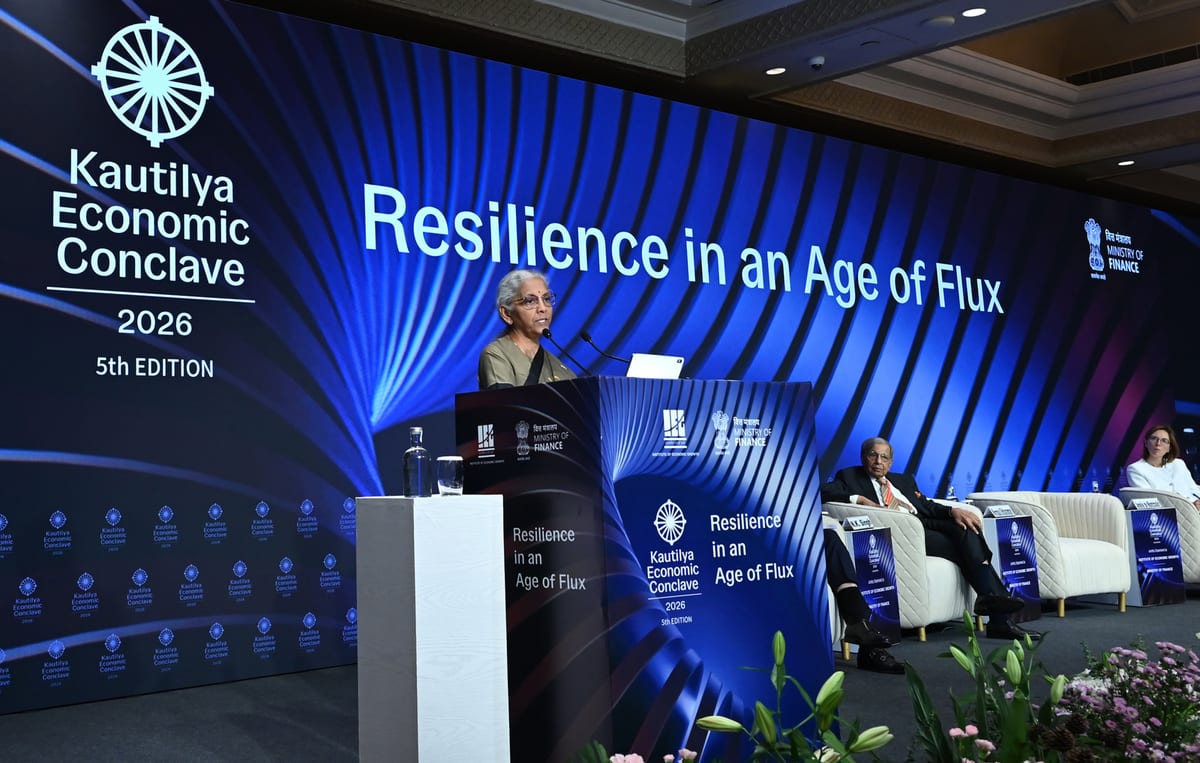
Amid increasing geopolitical vulnerabilities, Finance Minister Nirmala Sitharaman on Saturday, October 3, 2026, underlined the need for India to continue building its economic resilience. At the Kautilya Economic Conclave 2026, she said, "For India, resilience means building upon the structural foundations laid over the past decade to accelerate and broaden growth."
Sitharaman’s Views
The test of the coming years will again be partly invisible: the shocks India absorbs without disrupting households and enterprises, she said, adding that this record is as much a measure of sound economic management as any growth figure.
With uncertainty now 'a standing condition' of the global economy, the finance minister said policies must be designed to deal with it. She said, "We need to keep building resilience as we go along; it is not a one-time exercise.”
While India approached the coming decades from a position of strength, she also listed several priorities, including strategic resource security, which sits at the centre of macroeconomic policy.
Calling Upon Private Sectors
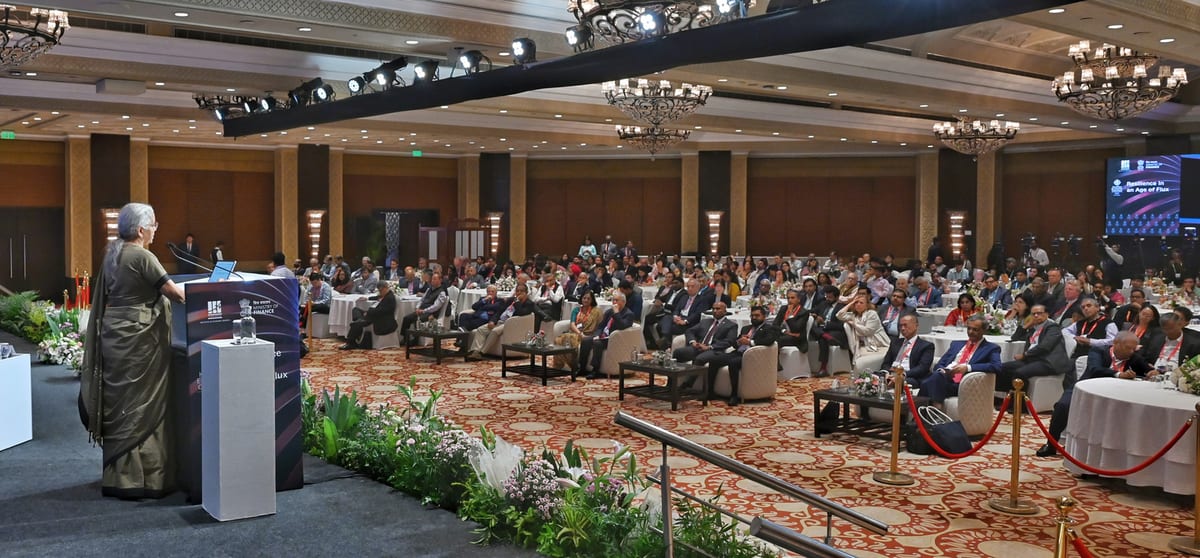
She also called upon the private sector to lead the investment cycle, including in research and innovation. "India’s expenditure on R&D stands at 0.83% of GDP, compared with 2.7% for the OECD, while the private sector contributes only 36% of India’s total R&D expenditure, she said, adding that raising both the scale of investment and private sector participation is essential to strengthening our innovation capacity.
A Global Perspective
She also said that global openness remains important and global economic relationships must also remain open, predictable, and rules-based. The finance minister said, "A more resilient global economy will require countries to diversify partnerships, keep markets open, honour commitments, and work together to keep the movement of goods, services, energy and capital as stable and predictable as possible.”
She also highlighted the need for skill development to prepare people for a changing world of work. She also noted that since 2014, the government has been taking various measures to build economic resilience and stability. Fiscal prudence has given continuity to our development commitments.
Latest News
- ◆Israeli Strike on Gaza City Apartment Block Kills Five, Officials Say
- ◆India's Forex Reserves Fall $18.3 Billion in Record Weekly Drop
- ◆Kharge Urges Modi to Release ₹3,705 Crore Drought Aid for Karnataka
- ◆Voter-Roll Protests: Delhi Police Detain Hundreds, Register Three FIRs
- ◆Next Phase Needs Private Investment; Higher R&D Spend: Sitharaman