
Pakistan Commemorates One Year Since Operation Sindoor
Islamabad's military marks the first anniversary of the May 2025 India-Pakistan conflict with formal ceremonies and vows of stronger retaliatory resolve
Synopsis
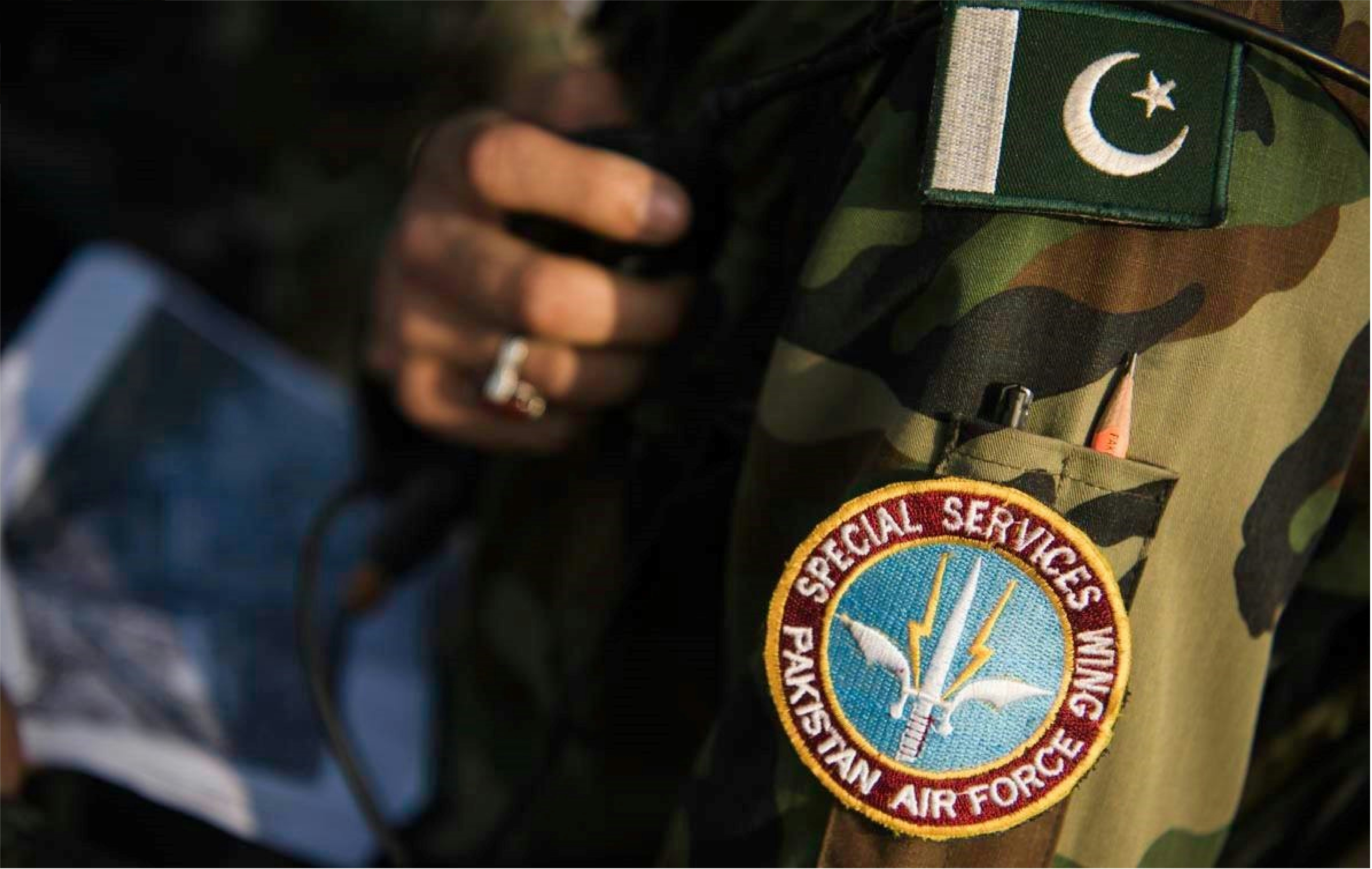
The Pakistan military has officially observed the first anniversary of the armed conflict with India following the cross border attacks under Operation Sindoor by Indian forces in Kashmir after the terrorist attack on Pahalgam on May 7, 2025. Formal declarations promised a more robust military response in the event of future aggression by India were made during the commemorative ceremonies. Pakistan is celebrating the anniversary at a time when its reputation has been rising due to its role in US-Iran negotiations.
The First Anniversary of an Unanticipated Confrontation
Indian military forces executed a series of precision 'Operation Sindoor' strikes on May 7, 2025, against militant infrastructure in Pakistani territory and Pakistan-administered Kashmir. Indian armed forces conducted a series of precision strikes, 'Operation Sindoor', on May 7, 2025 in Pakistani territory and Pakistan-administered Kashmir against militant infrastructure. The strikes were in response to a serious terrorist attack in Pahalgam, Kashmir where several lives were lost and had brought the nation to its feet in India, prompting New Delhi to invoke its policy of cross-border punishment for attacks by terrorists on Indian civilians.
A year later Pakistan's military has staged official ceremonies and released official statements which reiterate the country's doctrine of retaliatory deterrence. The Inter-Services Public Relations (ISPR) directorate has released statements that have called the May 2025 clash an "episode of unprovoked Indian aggression" and that any future action anywhere along the Line of Control or international border would be responded to "in greater scale and intensity".
The attack on Pahalgam was what caused the change in the calculus. It was the attack on Pahalgam, which caused the change in the calculus.
The chain of events that led to the 2025 war had started with the Pahalgam terrorist attack, which took place in the picturesque Kashmir valley and unquestionably caused a lot of controversy amongst various political parties in India. The attack, alleged to be by militant groups based in Pakistan, put the Indian government under immense political pressure to act with tangible military action, as opposed to its more measured stance in the past.
The Operation Sindoor was India's biggest cross-border military strike since Kargil war of 1999. Though India has claimed it was "targeted" and "time-bound", the operation, by its own admission, was a step that has traditionally been considered a major escalatory red line in India's nuclear-armed security complex. The military of Pakistan, suffering casualties in some targeted installations, retaliated with counterattacks and air strikes, which amounted to an armed struggle between two nuclear-armed countries, albeit not for long.
The country's Strategic Narrative is not only victim but also a victor. The country's Strategic Narrative is the story of a victim and a victor.
Since the very initiation of the conflict, Pakistan's official narrative has been carefully planned out. Islamabad has been repeating the events as "unprovoked Indian aggression", highlighting civilian casualties in targeted areas and describing Pakistan's reaction as a legitimate use of international law's "right to self-defence. Islamabad has been repeating the episode as an "unprovoked Indian aggression" and civilian casualties in the targeted areas and the response as a legitimate exercise of the "right to self-defence" under the international law. Senior military officials have also reiterated this line of thinking in memorial rhetoric.
The posture of Pakistan for commemorations also demonstrates that it has made a real change in its international identity. Islamabad's role as a mediator in the US-Iran conflict has been a boon to Pakistan's diplomatic capital as it has served as a bridge for direct talks between the two nuclear powers in April 2026 and as a platform for further dialogue. Islamabad has also become a welcome addition in Pakistan's diplomatic capital as it facilitated the first-ever direct talks between the two nuclear powers in April 2026 and served as a platform for ongoing negotiations. Pakistani armed forces have firm resolve on national sovereignty and territorial integrity, the response to any future aggression will be much greater.
"Any future aggression will be met with a far stronger response. Pakistan's armed forces stand resolute in their commitment to national sovereignty and territorial integrity." — Pakistan Inter-Services Public Relations (ISPR), as reported by Arab News PK
The U.S.-Pakistan Relationship: A Recalibrated Alliance
The US-Pakistani relationship is now faring a lot better, according to analysts at the International Institute for Strategic Studies (IISS), who have observed this in the wake of the conflict of May 2025. The country's willingness to assist in the various counterterrorism efforts of the United States, its status as a gateway in the United States-Iranian discussions and the changes in Washington's priorities in the region have all contributed to Islamabad's rise in Washington's eyes, leading to discomfort in New Delhi.
India has kept a close eye on the ups and downs of India-Pakistan relations, which has always been a hurdle in the way of US-India interaction. Washington's shift towards Islamabad is, in part, the perception of some pieces in the Indian strategic chessboard that the US is back again “tilting” towards Islamabad; that is, developing the friendship in a manner that might be detrimental to Indian security interests.
The Military Balance: Status and Implications
Both armies were able to provide analysts with data points on how they actually performed during the 2025 conflict, which was geographically confined and of limited duration. Precision strike is reportedly proven in Operation Sindoor and the performance of the Indian forces was judged positively by Western defence analysts. The offensive and defensive response of Pakistan, including the aerial engagements, suggested that the country's air defence and strike capabilities have been kept at an operational level that is in line with the Country's policy of deterrence.
Both countries then conducted military doctrine, force posture and equipment assessment reviews. The pace of defence procurement in India increased, with a focus on air defence systems, precision munitions and counter-drone technologies. Pakistan also reconnected with China on weapons systems to build momentum for the advanced weapons and wanted to strengthen its operational advantage in the spheres where the conflict had exposed the Pakistanis' vulnerabilities.
The Nuclear Shadow: Stability and Its Fragility
The most important thing to be learned from the conflict of 2025, from the perspective of the strategic studies community, is the fact that the two nuclear-armed states have almost reached a state where conventional warfare could have escalated into nuclear warfare under certain circumstances of command and communication. That although the conflict never reached the nuclear stage, it could have helped reduce the "barrier" to the next stage of conventional conflict, the implicit "rules" of which were that a "limited conventional war" was 'manageable' and could encourage further "marginal" risk-taking.
Some analysts consider the anniversary celebrations by Pakistan along with the military's repeated promises of a more aggressive response as a message for internal politics than for external deterrence. One year after the events which had strained the resolve of both countries' security forces, the subcontinent is still a region whose people must cope with the consequences of the management of military signalling which, by definition, extend well beyond the bilateral.
Latest News
- ◆Delhi Approves DURGA Scheme for 1,300 Pink E-Autos for Women, Transgender Drivers
- ◆Black Sea Disruptions Push Bangladesh Back to Indian Wheat After Four-Year Gap
- ◆Microsoft's Hyderabad Cloud Region Opens as Telangana Targets 5 GW of Datacentres
- ◆Gold Slips in India as Firm Dollar and Fed Rate-Hike Bets Weigh
- ◆Rupee Slips to One-Week Low as Oil Rally Revives Global Rate-Hike Fears