
Jharkhand Shuts Down Over Police Crackdown
BJP enforces state-wide bandh after water cannons and tear gas were used on job aspirants marching to the Assembly
Synopsis
On Tuesday, a day after police used water cannons, tear gas and batons to break up a large group of job aspirants who had come to the state Assembly to protest against alleged irregularities in the Jharkhand Public Service Commission (JPSC) and Jharkhand Sub-Ordinate Service Selection Board (JSSC) recruitment exams, a BJP-led bandh hit parts of Jharkhand. Schools closed and the Opposition called for an independent investigation of the examination system.
Bandh Brings Ranchi to a Standstill
A Bharatiya Janata Party (BJP) state-wide bandh, which was called by its workers a day earlier in protest against the police raid on job aspirants, disrupted normal life across large parts of the state of Jharkhand on Tuesday.
There was a significant drop in the movement of vehicles in the state capital Ranchi and other select cities, as most of the schools and business were closed. Essential services were exempt from this shutdown and the party was observing it from 8am till midnight, BJP state president Aditya Sahu said.
In the areas of Kishorganj, Argora and Kanke in the city of Ranchi, BJP workers blocked roads and set ablaze tyres at Harmu Chowk and Kishorganj Chowk, a senior police officer said. New Kerala
What caused the shutdown?
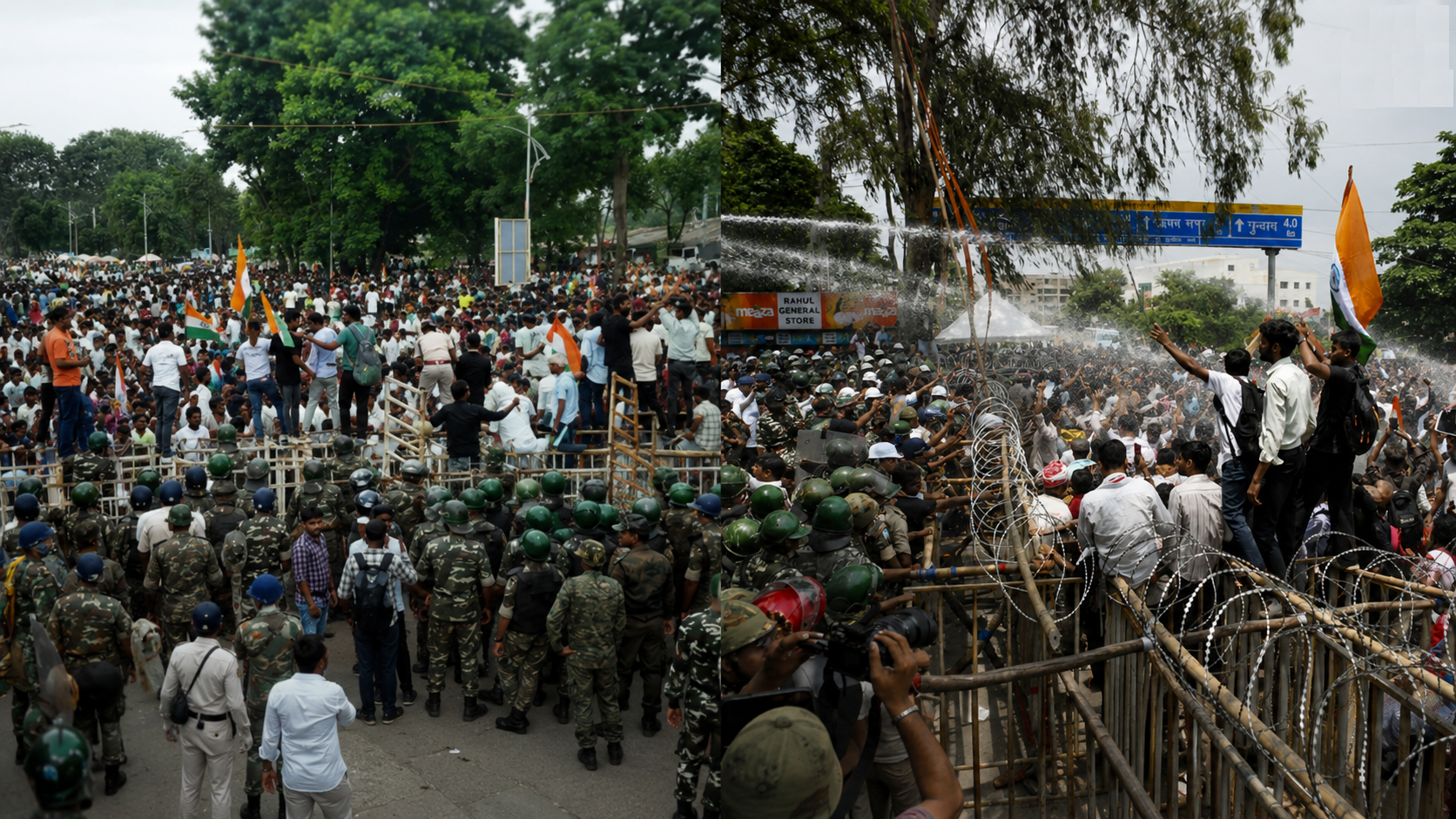
The bandh came after a riotous (aggressive and violent) day in Ranchi. After 17 days of the protest, the security forces fired water cannons and teargas at the protesters as they moved towards the Jharkhand Assembly where the monsoon session was in progress after they broke barricades.
According to several protesters, they were injured but Ranchi police stated 14 police officers were injured in the protests. Police fired tear gas shells and used water cannons in the vicinity of Jagannathpur Temple as protesters started moving towards the Assembly.
As BJP sends Bandh workers to shut down roads in parts of Jharkhand, normal life comes to a standstill over police action against job seekers.
The students and job aspirants have been protesting since 25 July, asking for transparency in the recruitment exams, changes in the functioning of the Jharkhand Public Service Commission (JPSC) and Jharkhand Staff Selection Commission (JSSC), cancellation of some exams and an independent investigation by the CBI or a panel of retired High Court judges from outside Jharkhand
The movement was given a sense of urgency when a protest leader's health scare occurred. The health of the JLKM leader Devendra Nath Mahto, who had been on a nine-day hunger strike and had lost 10.5 kg, deteriorated to the point where he had to be admitted to a hospital in Ranchi.
Ongoing Political Fallout
The BJP unequivocally shifted focus on the ruling alliance. The party said that the police said "atrocities" against the students and blamed the Jharkhand Mukti Morcha (JMM)-led government for resorting to force rather than resolving their concerns. BJP state president Aditya Sahu claimed hundreds of students were injured and the government treated them as criminals.
Interestingly, Congress — which is a coalition partner of the JMM-led government at the Centre-Opposition level — came out of the police action. While the Congress is a part of the Jharkhand government under JMM, Congress leader of the opposition in Lok Sabha Rahul Gandhi called for a peaceful protest rather than the police action.
The Akhil Bharatiya Vidyarthi Parishad (ABVP) that condemned the alleged excesses by the police on students staged a 'Vidhan Sabha March' from the old Vidhan Sabha to the new 'Vidhan Sabha' premises.
Why This Matter is Concerning
It highlights a chronic problem among Indian states: the uncertainty over public-sector exams for recruitment, whereby the postponement or rumors of leaks or procedural errors can easily turn to street protests.
As Jharkhand's monsoon session of the Assembly gets underway, the political ramifications of the standoff will influence what happens in the rest of the session and will feature demands for an independent, judicially-managed investigation.
Latest News
- ◆Delhi Approves DURGA Scheme for 1,300 Pink E-Autos for Women, Transgender Drivers
- ◆Black Sea Disruptions Push Bangladesh Back to Indian Wheat After Four-Year Gap
- ◆Microsoft's Hyderabad Cloud Region Opens as Telangana Targets 5 GW of Datacentres
- ◆Gold Slips in India as Firm Dollar and Fed Rate-Hike Bets Weigh
- ◆Rupee Slips to One-Week Low as Oil Rally Revives Global Rate-Hike Fears