
Tejas Mk1A Held Under Crisis; Engine Delays & More
India's most ambitious domestic fighter programme faces supply chain bottlenecks and overdue deliveries, raising urgent questions about accountability in the defence industrial complex
Synopsis
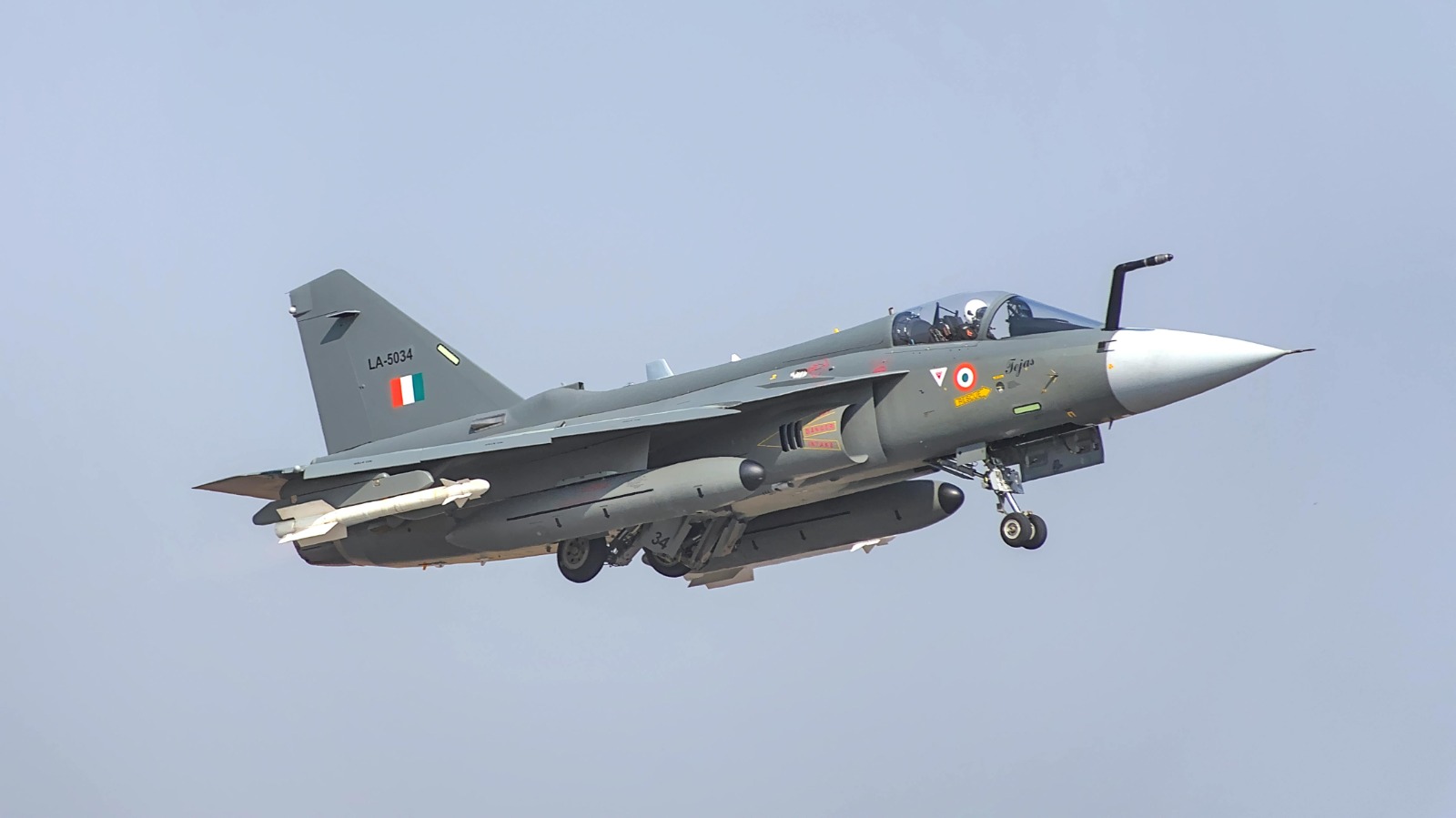
The Indian Air Force's order for 83 — and subsequently 97 more — Tejas Mk1A aircraft represents the country's boldest defence indigenisation bet. Yet years after original delivery timelines, not a single Mk1A has been handed over to the IAF. A shortage of GE F404 engines and integration delays have stalled the programme, even as HAL proceeds with airframe assembly. The crisis has real consequences: it strengthens the case for foreign acquisitions like the Rafale and raises concerns about the trajectory of the Tejas Mk2.
A Programme Burdened by High Expectations
The path that India is following in its defence indigenisation has hit a critical point. With the Indian Air Force (IAF) making strenuous efforts to modernise its fleet, the LCA Tejas Mk1A undertaking has received increasing criticism over delays that have persisted despite repeated assurances from Hindustan Aeronautics Limited (HAL) and the Defence Research and Development Organisation (DRDO).
For any military establishment, operational readiness — having the right platform at the right time — is a non-negotiable priority. Native platforms are strategically desirable as they provide long-term sustainability, easier weapons integration, and independence from foreign OEM leverage. The Tejas was meant to be the answer to all of these requirements. Source: Ministry of Defence, Government of India — mod.gov.in | HAL Annual Report 2023-24
The Delayed Promise: 83 Aircraft, Zero Deliveries
The supply faces a crisis. Even after an initial order for 83 Tejas Mk1A aircraft — followed by a further order of 97 more — the IAF has not received a single aircraft against the first contract, whose deliveries were originally scheduled two years earlier. The delay has pushed the IAF towards expensive foreign acquisitions, making the Rafale a compulsory strategic requirement rather than a luxury supplement.
Air Marshal (Retd.) Anil Chopra, Director General of the Centre for Air Power Studies, has noted that 'the IAF's squadron strength is declining every year as older MiG-21 variants retire. Tejas deliveries simply cannot come fast enough — and when they don't, the government has no choice but to look abroad.' Source: Centre for Air Power Studies, India — capsindia.org | Standing Committee on Defence, Lok Sabha, Report 2023-24
"The IAF has been very transparent about its frustrations. Ordering 97 more aircraft before the first 83 are delivered is a statement of faith — but faith must be backed by performance." — Air Marshal (Retd.) Anil Chopra, Centre for Air Power Studies
The Engine Crunch: GE F404 at the Heart of the Bottleneck
The main challenge confronting the Tejas Mk1A is the supply of GE F404 engines. HAL currently has five engines in stock — the bare minimum required to complete delivery of the first aircraft. However, problems with integration and missile-launch trials have pushed the target delivery date to March 2026.
GE Aerospace initially committed to supplying 24 engines per year. This figure has since been revised downward to 20, exacerbating an already tight production schedule. The revision compounds a structural vulnerability in HAL's supply chain: dependence on a single foreign supplier for a critical component undermines the very indigenisation goal the programme is meant to advance. Source: GE Aerospace India engagement — geaerospace.com | Ministry of Defence procurement updates, 2024
HAL's Quiet Workaround: Airframes Ready and Waiting
HAL has responded to the engine shortage with a pragmatic, if imperfect, strategy. Rather than halting all production activity, the organisation has continued assembling airframes. The shells of the aircraft are being built and brought to a state of readiness so that once engines arrive, installation and final flight clearance can be completed within two weeks.
This 'bodies-first' approach mirrors production strategies used by Airbus and Boeing during supply chain disruptions. While it keeps the workforce employed and maintains institutional momentum, it also exposes HAL to carrying costs and risks obsolescence if specifications change during the engine wait. Source: Indian Defence Review — indiandefencereview.com | Defence Acquisition Council proceedings summary, 2024
"HAL is doing the right thing by not stopping the line. But the real accountability question is why the engine delivery schedule was not stress-tested before contracts were signed." — Commodore (Retd.) Srikant Kesnur, defence analyst
Lessons for the Tejas Mk2: Stop-and-Go Must Not Repeat
The stop-and-go nature of the Mk1A programme carries an urgent warning for the Tejas Mk2. Bottlenecks in decision-making — such as delays in acquiring engines after a production line has been temporarily idled — have led to the current stagnation. Analysts insist that the deal for F414 engines for the Mk2, along with the first-flight schedule, must be managed with far greater rigour.
If the Tejas Mk1A had been delivered on time and in quantities, the strategic rationale for additional Rafale purchases would have been considerably weaker. The needs of the IAF in terms of sheer numbers cannot be deferred indefinitely; if domestic industry cannot deliver at scale, the government will be compelled to source externally. Source: Parliamentary Standing Committee on Defence Report, 17th Lok Sabha — sansad.in
A Foundation Still Worth Building
The Tejas is not merely a single aircraft programme — it is the foundation of an entire Indian aerospace ecosystem, encompassing materials science, avionics software, systems integration, and the development of a domestic defence supply chain. The delays are damaging, but the programme's long-term strategic value is not in dispute.
The combination of the IAF's assertive operational demands and HAL's continued production efforts is slowly yielding a more robust, if hard-tested, defence industry. With the March 2026 delivery milestone now in view, India stands at the threshold of demonstrating that self-reliance in defence can translate from aspiration to operational reality.

Latest News
- ◆Delhi Approves DURGA Scheme for 1,300 Pink E-Autos for Women, Transgender Drivers
- ◆Black Sea Disruptions Push Bangladesh Back to Indian Wheat After Four-Year Gap
- ◆Microsoft's Hyderabad Cloud Region Opens as Telangana Targets 5 GW of Datacentres
- ◆Gold Slips in India as Firm Dollar and Fed Rate-Hike Bets Weigh
- ◆Rupee Slips to One-Week Low as Oil Rally Revives Global Rate-Hike Fears