
Trump–Xi summit on September 24 draws close watch from Indian markets
The Washington meeting is expected to steady a fragile trade truce; oil, rare earths and a Fed rate hike form the backdrop for Indian investors
Synopsis
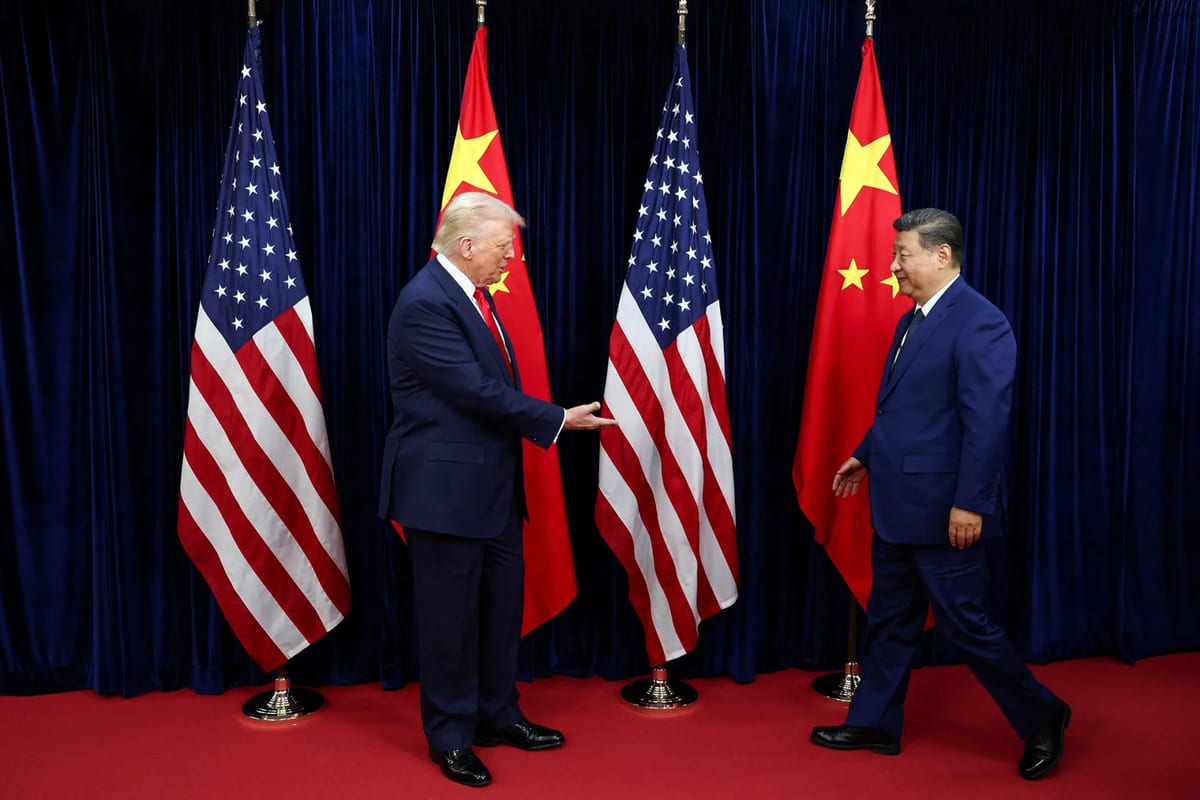
The second meeting between the leaders of the United States and China this year will take place on September 24 in Washington, where US President Donald Trump will welcome Chinese President Xi Jinping. Analysts believe talks will be aimed at stabilizing a shaky trade truce that will expire in November, but won't result in a grand bargain. Rare earths, technology, Taiwan and Iran will be on the agenda. Indian stocks, on the other hand, start the week after a Federal Reserve rate hike, as the rupee continues to weaken and West Texas Intermediate crude drops to around $100 a barrel.
President Donald Trump will welcome Chinese General Secretary Xi Jinping on Sept. 24 to Washington for their second summit of 2026 following their May gathering in Beijing. The date was first rumoured in July when Trump was talking about the construction of a White House ballroom, saying that a possible trip by the Chinese leader was among the reasons to make it a reality, media reported. Indian investors are closely watching the up-coming.
A ceasefire that is not permanent
Both sides are under pressure to continue the truce from the 2025 Busan summit, which ends in November, and to lift the curbs on key tariff escalation and rare-earth exports.
The World Economic Forum says the meeting is unlikely to bring about a “grand reset” but aims to set a more stable tone for a fragile trade détente. Scott Kennedy from the Center for Strategic and International Studies also says it will likely contribute to the current stability but adds that there is “a vacuum in global leadership” in between “scattered ambitions” and “rising challenges” around the world
The summit will not be marked by many notable breaks, and it should be assessed by what has actually been accomplished in the implementation of the pledges made during previous gatherings, not by the number of new agreements, writes Andrew Harding of the Washington think tank The Heritage Foundation.
He writes that in May it was reported that China was in disarray over a deal for Chinese purchases of Boeing aircraft, and that soybean buying only began in recent weeks.
The agenda
In August, China's exports increased 25 per cent year on year and its trade surplus stood at $119 billion. A separate Board of Investment has languished, while the two sides are negotiating a Board of Trade on some $30 billion in non-sensitive products, with approximately 10 product categories up for discussion.
One possibility is that each side would agree to cut tariffs on $30 billion worth of non-strategic goods, Treasury Secretary Scott Bessent has hinted. US-China Business Council president Sean Stein said he hadn't seen any evidence that the investment board would be “a significant product” yet.
Minerals and technology. China wants to be sure that export restrictions will not be applied as a blunt weapon, and the US wants to be certain of secure access to rare earths. The summit is expected to feature discussions on the safety of AI, a topic Trump has said he'd prefer to slow the technology, which would help the Chinese.
Flashpoints. Meanwhile, the Telegraph said that China threatened to cancel the summit if the United States approves new arms for the island of Taiwan. China's companies may be caught up in Washington's secondary sanctions against Iran's "enablers".
A Taiwan arms package valued at more than $14 billion remains stuck in a White House review, while Xi is said to be making a big business delegation, Harding says. The Heritage Foundation is currently a member of the World Economic Forum (WEF).
Why Indian markets are watching
The background is dark. The Federal Reserve gave the first rate increase since 2023 on Sept. 16, with the majority of officials forecasting at least one more rate increase this year. US 10-year yield edged up to 4.96 per cent while the rupee traded at 95.79 against the dollar.
During the previous week, Brent hit a new low of $109.68 but then subsided after Saudi Arabia announced a gradual resumption of an alternative export pipeline. The retail inflation rate was at 4.82 per cent in August, the highest since December 2024 and wholesale inflation was at 9.92 per cent. The same report says that the announcements on agricultural goods, energy, sanctions and rare earths are the ones to watch.
A Chinese soybean order can just take the place of the Brazilian order and an LNG order from the USA can replace one from Qatar. Rare earths: Will the material be able to get out of China on time? What may be good for one steel producer is the bad news for another, the oil company, the auto maker, and the paint company.
A matter of timing
The Indian session ends at 3.30 pm IST, which is around 6 am in Washington, meaning that the announcements made on the American day will be seen by Indians on Friday, September 25. NSE is also planning on listing its own shares the same Thursday. India's flash PMI's are scheduled on Wednesday.
What to watch
The next window for them to meet is during the APEC leaders' meeting in Shenzhen on Nov. 18-19, and it remains unclear whether the leaders will extend the truce beyond 2026. Chad Bown, Yeling Tan and Adam Posen will discuss at the Peterson Institute for International Economics on September 22.
No matter what happens on Thursday, the calendar suggests the next test for the pledges will be in Shenzhen.
"The world cannot have a China with a $1.2 trillion trade surplus." — Treasury Secretary Scott Bessent
Latest News
- ◆Trump–Xi summit on September 24 draws close watch from Indian markets
- ◆NSE's ₹22,562-crore IPO closes 5.7 times subscribed, led by institutions
- ◆Delhi HC defers Umar Khalid, Sharjeel Imam bail pleas to September 30
- ◆India Joins “Partners for Multilateralism” Forum at UN
- ◆Asian Games Begin in Nagoya With 469 Medal Events and Housing Complaints