
18th BRICS DELHI SUMMIT 2026: Members Adopt Declaration Amid Deep Global Rifts
Eleven-nation bloc concludes 18th summit in New Delhi with a consensus text on governance reform, even as members remained split over Iran and Ukraine
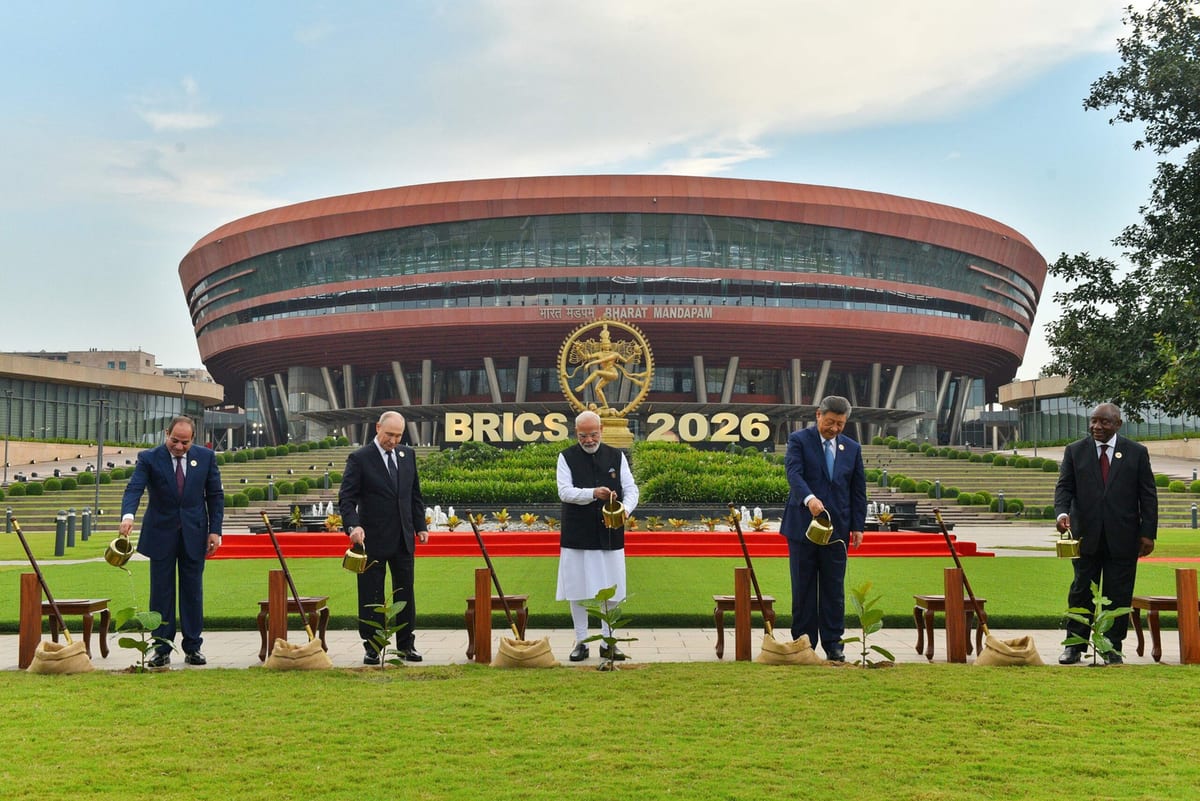
Synopsis
The BRICS Summit 2018 was held at the Bharat Mandapam in New Delhi on 13th September and member countries unanimously approved the New Delhi Declaration. The eleven-nation bloc was clearly split on the Ukraine war and recent strikes in the Gulf region as leaders, such as Xi Jinping and Vladimir Putin, discussed global governance reform, trade tensions and Middle East conflicts.
A Bloc of Convenience, Caused by Necessity
The origins of BRICS go back to a meeting in 2006 of the foreign ministers of the four countries on the sidelines of the UN General Assembly, which led to the formation of an acronym initially being used to describe the four fast-growing economies of Brazil, Russia, India and China.
The first summit was held in Russia in 2009 and after South Africa joined in 2010, they went by the name BRICS. Since then, the bloc has experienced its greatest change: At the Johannesburg summit in 2023, members have accepted Argentina, Iran, Saudi Arabia, Ethiopia and Egypt, but Argentina is now refusing admission.
The 2026 Chairship and its Priorities
India's theme for taking over the BRICS chairship in 2026 is ‘Building for Resilience, Innovation, Cooperation and Sustainability'. The 18th summit took place on 12-13 September at Bharat Mandapam in New Delhi with the participation of the members of the BRICS countries, partner countries, invitees and international organisations. In January, External Affairs Minister S. Jaishankar had earlier unveiled the logo and website of the chairship.
What Happened at the Summit
A call for structural change was the first item on the agenda in the closed door plenary on 12 September. Prime Minister Narendra Modi reminded the delegates that the current global institutional structure looked like a pyramid, and it should be restructured as a platform of equal stakeholders, his comments focussed on the need to make reforms in the UN Security Council and multilateral lending institutions in terms of representation, responsiveness and rule-making.
According to the summits official record, Modi said the Global South was "now the front foot of global crises" with "the back seat of decision making".
On the first day, leaders of the 18 countries voted unanimously to approve a joint statement over the wars in Iran and Ukraine.
The New Delhi Declaration urged moderation in the Middle East but did not condemn the strikes blamed on U.S. and Israeli war planes or Iran's retaliatory strikes against Gulf states. The text condemned the global trade war ongoing, but did not mention the U.S. by name.
The Ukraine Fault Line
Russia's membership, as a founding member, has long posed challenges to the consensus among BRICS on the Ukraine conflict. The declaration was a universal call to solve conflicts through dialogue, consultation, diplomacy, without any reference to Ukraine. It did, however, adopt a tougher stance on sanctions, saying it wanted to see sanctions lifted, not imposed without the authority of the United Nations Security Council.
Why It Matters
Analysts see the summit as a sign of realignment rather than as a point for immediate policy changes. In an environment marked by growing tension in relations between Europe and the US, the summit was an opportunity for Russia's president to demonstrate his connections to the world's main Global South powerhouses, and for Russia and China to woo nations wary of uncertain Western trade or security policies, said the distinguished fellow at the German Marshall Fund of the United States.