
Heavy Rain Brings Delhi Its Cleanest October Air Day in Four Years
An AQI of 60 on October 30 was the lowest October reading since 2022, before rising to 117 the next day
Synopsis
The Air Quality Index (AQI) dropped to 60 on October 30 following 61.4 mm of rain in the previous 24 hours, the lowest reading for the month in October since 44 on October 10, 2022. Reported AQI for the month was also the lowest for October since 2015, at 167. On Wednesday, October 31, air quality deteriorated to the moderate level, and is forecasted as poor to very poor for the coming week.
A rain-washed reading
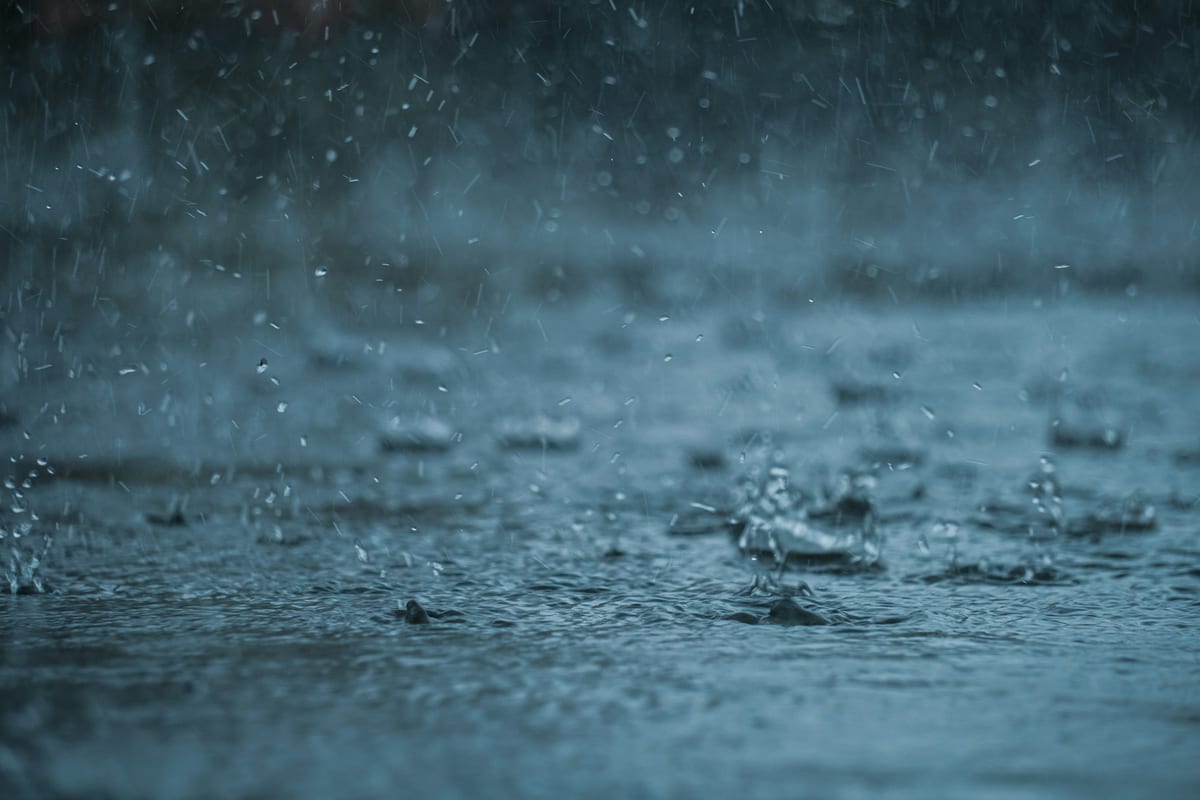
Friday, October 30, Delhi's air quality index (AQI) fell into the “satisfactory” category at 60.Delhi's air quality index (AQI) was in the “satisfactory” category with a reading of 60 on Friday, October 30. This was the driest October day since October 10, 2022, when the index was 44. The reading coincided with the wettest October day in four years and the sixth wettest since 1951 at Safdarjung with 61.4 mm of rain in last 24 hours till 8.30 am.
The numbers for the month
October ended with the highest rainfall of 123.3 mm as of 8.30 am on October 30, which is the highest rainfall for October in 4 years. The month’s average AQI was 167, against 223 in October 2025, 234 in 2024, 219 in 2023, 210 in 2022 and 264 in 2015.
The highest daily AQI for the month was 245, the lowest maximum daily AQI since 2015. Delhi had recorded three “satisfactory” and 22 “moderate” days till October 30, and three “poor” days in the first half of October since 2015, with five of them falling under “poor” category on October 21.
Before the Graded Response Action Plan (GRAP), the AQI had already been “relatively low”, said Manoj Kumar of Centre for Research on Energy and Clean Air (CREA). He noted that throughout October the average was 1.5 times that of September, as well.
The respite ends
The AQI on Saturday climbed to the “moderate” level of 117. Out of 58 monitoring stations, 24 had “satisfactory” air, 32 were “moderate” and two were “poor”, with Jahangirpuri having the worst with a reading of 243 followed by Punjabi Bagh at 212.
The Air Quality Early Warning System forecasts that air quality will stay in the "moderate" range on Sunday, but could turn to the “moderate to poor” range and remain in “poor” to “very poor” conditions for the next six days. The stubble burning was responsible for 19.1 per cent of the pollution in the city, while transport and residential sources were responsible for 16.3 per cent and 4.1 per cent respectively, according to the Decision Support System.
Weather and policy
CREA's reading correlates to the improvement in rainfall and a drop in temperature. Another clean air day was credited to “policy, enforcement and teamwork” by Environment Minister Manjinder Singh Sirsa last October.
The Delhi government said back then that the weather was no longer the only determining factor for improvements. According to CPCB categories 101-200 are “moderate” and 201-300 are “poor”.The 51-100 range is “satisfactory”, 101-200 is “moderate” and 201-300 is “poor”, according to the CPCB categories.
Latest News
- ◆PM-KISAN’s 24th Instalment Sends ₹18,690 Crore to 9.34 Crore Farmers
- ◆Heavy Rain Brings Delhi Its Cleanest October Air Day in Four Years
- ◆Reliance Industries Posts Record Quarterly Profit of ₹29,550 Crore on Refining Strength
- ◆Jio Platforms Reports 13.7% Profit Growth in First Results After Listing
- ◆Brent Crude Settles at Six-Month High of $117.64 After Hormuz Tanker Attack
Read More
Delhi’s Winter Air Quality Remains Poor Despite GRAP Measures
What Is Cyclone Arnab and How Is It Affecting India?