AI in Fashion: Who Owns the Face in the Digital Clone Era?
Clones, face swaps, digital twins : fashion’s new face is a bit fake and a little too flawless

Synopsis
Fashion has always sold its audience a fantasy, a fantasy where you imagine yourself in the place of that model, where those clothes, walking that runaway. But now that fantasy can be cloned, face-swapped and posted before the model has even finished their coffee. AI is now conquering the fashion scene too. It’s reshaping campaigns, runaways and shopping carts with digital ‘twins’ that never tire of working, face swaps that blur consent, virtual try-ons that make online shopping less of a gamble while also bringing up the thorny question of who owns the face.
The Model Who Never Needs a Lunch Break
Meet a digital model : a scanned, furnished, flawless and an endlessly patient version of a real model. They can shoot a winter campaign in Milan, in the morning and then be ready for a beach shoot in Thailand on the same afternoon without jet lag, a makeup team, a green room or a single complaint. Brands, of course love it because just one scan can lead to thousands of images in hundred different angles with the budget line shrinking with each scan.
The clever bit is that this may work for models too. A model may be sleeping in their bed while their clone does the heavy lifting of their job. But the word 'can’ is to be highlighted here because whether the model sees any of the extra money depends entirely on the contract which is exactly where the drama lives.
Swap Faces, Not Paychecks
Face swapping started off as a fun party trick, something an avid AI user would be doing from the comfort of their homes, just because. But now it has became a production tool. Brands can now put one face onto another’s body, localise a campaign meant for a particular market and also test which look sells best without losing any money or conducting multiple reshoots. It’s efficient and also bit magical, like Photoshop that went to school and actually did good there.
The surprising part is that your favourite ‘natural’ face campaign may have been tweaked, swapped or composited more than any of your vacation photos. But here the serious part comes in play, consent. A swap done with the permission of the model or a person is a creative choice, but a swap down without consent is a illegal with a pretty filter on the top. The fashion industry is still new to the use of AI in its campaign so they are still writing and revising as to where to draw the line in real time.
Try Before You Buy, Minus the Changing Room
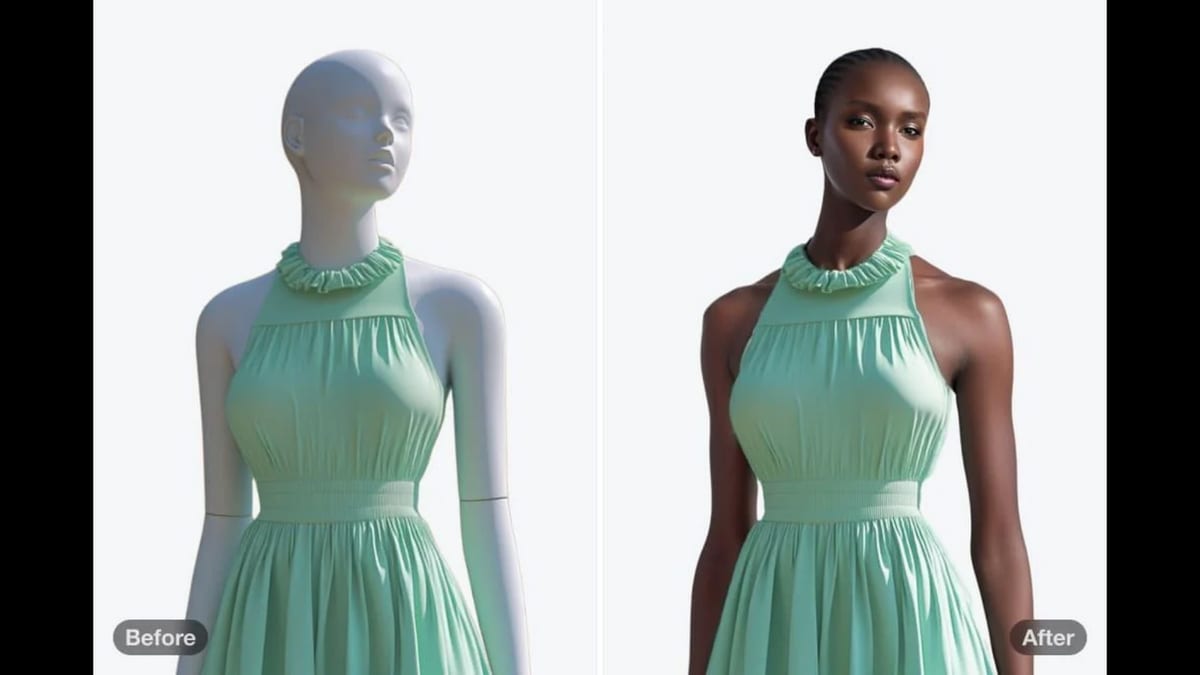
Enough about how AI in fashion industry would help the givers, lets talk about the receivers. Here’s the something that might actually win shoppers over : virtual try-ons. Upload a photo of yourself, see the dress on your body and skip the ritual of ordering three different sizes and returning two. Anything that helps both the retailers and the customers guess the right fit and size the first time is gold.
It’s also quietly more inclusive when done well, because clothes pictured on your own body type always beats clothes imagined on a mannequin. There is catch though, accuracy. If the digital you like looks suspiciously airbrushed just know that you’ve just replaced your one fantasy with another. The tech is only useful if we are honest about it. It they are honest about the fit and the fabric and not just focus on it being flattering.
What Brands are Already in it
The fitting-room-free future is not hypothetical. Several big names have already tried it. Brands like Diesel, Calvin Klein and L’Oreal have detailed proposed terms for AI created alterations and future use of such images. Walmart launched its “be Your Own Model” in 2022, using tech that allowed shoppers to see their now photo or a model close to their own size. Amazon then went for the footwear, where you could just keep your phone pointed at the floor and try on sneakers without committing to anything. The common thread is less about novelty and more about the humble goal of getting people to stop returning things.
Not every experiment landed gracefully, though, which is where it gets interesting. Levi’s tested AI-generated models to show its clothes on more body types, and critics promptly asked why it didn’t simply hire more real ones. The tech was the easy part; the optics were the problem. H&M took a gentler route, talking up digital twins of real models while the models kept ownership of their likeness, which is the template everyone else should probably borrow. The lesson from all of them is the same: AI can make fashion more inclusive and less wasteful, but only if brands treat real people as partners and not as raw material.
Who Owns a Face, and Why Real Still Wins
Once a face can be copied, ownership gets awkward - fast. If a brand scans a model for one shoot, can it reuse that likeness next season? Next year? That too in a campaign the model never agreed to. Fashion contracts are written for photographers and fittings not for digital doubles that would outlive the model and the job someday. Model, unions and lawyers are still pushing for informed consent, defined usage, limits on the duration of usage and fair pay when the clone is working overtime. The rules and regulations would always keep evolving but the sensible rule of thumb would be : if your face is on the product, you should read the fine print and get paid for every re-use.
Here’s the main twist though, the more perfect and easily available AI imagery becomes the more precious the real stuff would get. A slightly imperfect smile, a backstage moment and a designers actual hand pinning the fabric would feel like a luxurious sight not many would be able to see then. Fashion survived the camera, the catwalk era and the influencers. It’ll live through the clone times too, as long as we remember who the actual clothes are meant for.
Latest News
- ◆PM-KISAN’s 24th Instalment Sends ₹18,690 Crore to 9.34 Crore Farmers
- ◆Heavy Rain Brings Delhi Its Cleanest October Air Day in Four Years
- ◆Reliance Industries Posts Record Quarterly Profit of ₹29,550 Crore on Refining Strength
- ◆Jio Platforms Reports 13.7% Profit Growth in First Results After Listing
- ◆Brent Crude Settles at Six-Month High of $117.64 After Hormuz Tanker Attack