
CBSE OSM Controversy Explained
Understanding the Student Complaints and Board Response
Synopsis
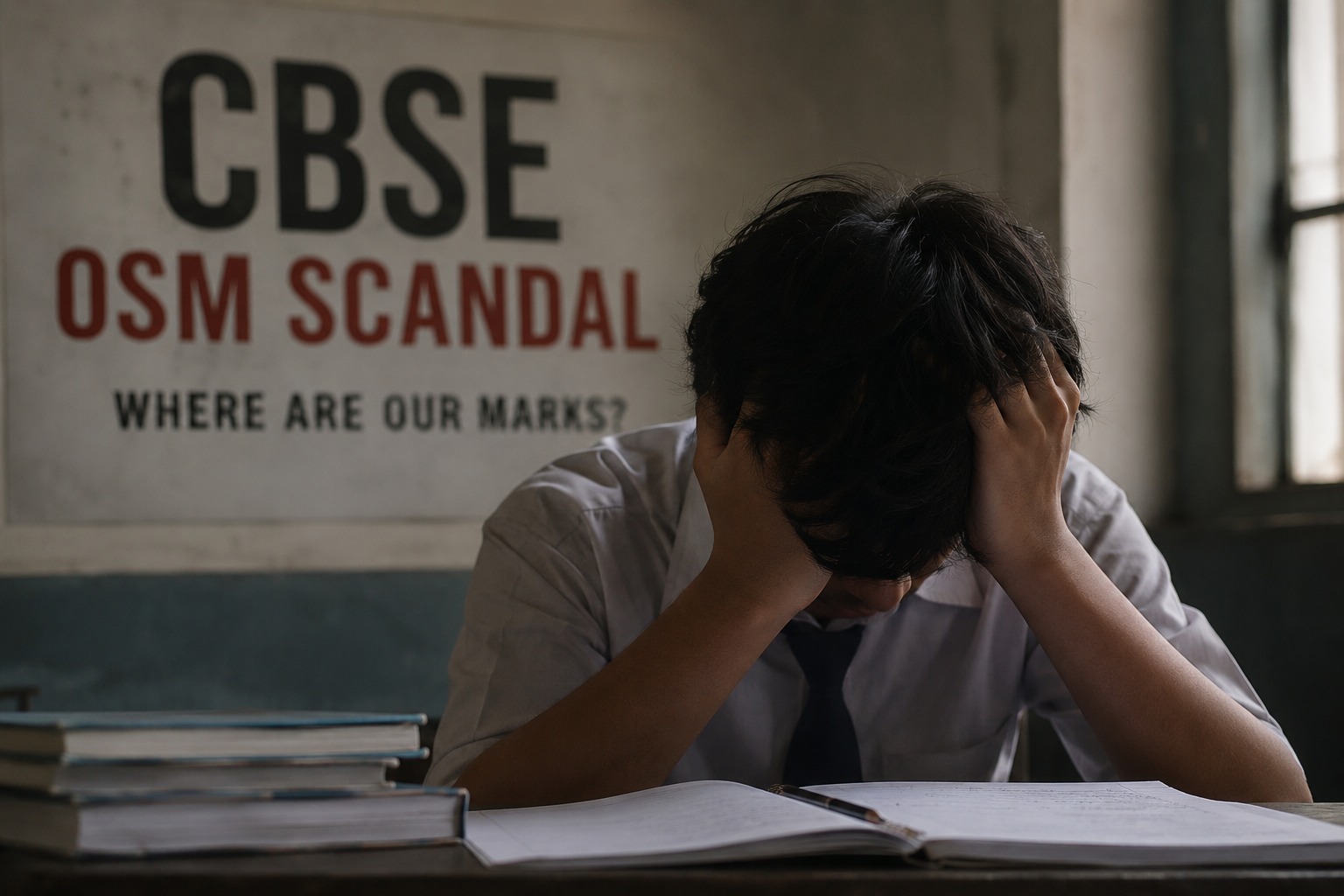
CBSE's On-Screen Marking system was introduced to fast-track the evaluation process and reduce human errors. However, the alleged answer books were mismatches and concerns for cybersecurity have sparked widespread criticism from students and teachers. Although the Board defends the digital transition and initiates a review mechanism, many students are now asking: Has an entire year of preparation been reduced to nothing more than a show for CBSE?
What is CBSE’s On-Screen Marking system?
On–Screen marking, a blinded evaluation wherein the student's details are masked to ensure unbiased marking, is a process in which physical answer sheets are scanned and graded by examiners on a computer without the use of pen and paper.
Innovates Digital grading, teachers read the answers on screen, and use digital tools to tick or cross, software automatically sums and calculates the final score, which helps in preventing manual addition mistakes.
Why CBSE Adopted OSM: faster results, fewer errors?
The CBSE, which is affiliated with more than 30,000 schools and Serving nearly 17 lakh students. To enhance efficiency and transparency, the Board introduced the On-Screen Marking system to evaluate millions of answer sheets in 2026 examination.
It was to modernise and streamline the evaluation process. Tends to generate faster results than the traditional paper- based method. OSM also reduces the transportation time and costs associated with the movement of answer scripts, it tends to reduce the manpower, and minimises the need for post-result rechecking of marks. Moreover, it allows every school to contribute to the assessment process.
Why are students questioning CBSE’s OSM?
“They are liars and a corrupt bunch of people taking our lives, our future hostage.” More than 17.7 lakh students sat in the CBSE exams this year.
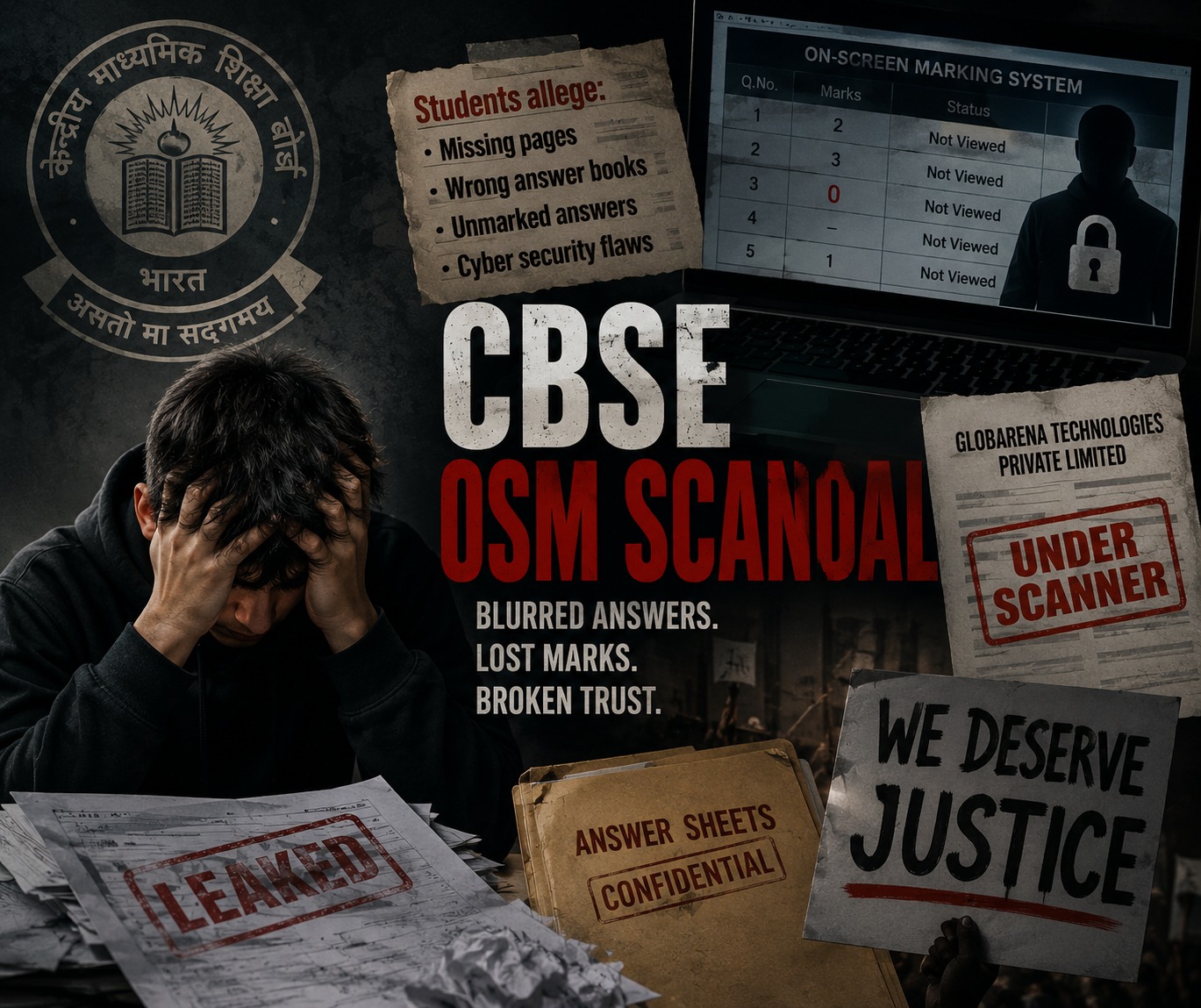
Over the past weeks, students across India have reported missing scanned pages, blurred answer sheets, unmarked answers and, in some cases, entirely swapped answer books, which impact the futures of millions of students.
The controversy triggered outrage and demands for an independent review of the system. Allegations are also on the company named Globarena Technologies Private Limited, which changed its name to Coempt Edu Teck after the public backlash and won the bid for the annual CBSE.
Vedant Srivastava, a teenager who commented on X and requested CBSE to allow him to review his answer sheets, posted photos on social media, showing that the scanned copy shared by the CBSE board was not his. A whole year's preparation has become nothing more than a show for CBSE.
Another teenager, Ehtical hacker, Nisarga Adhikary has discovered several vulnerabilities in the CBSE’s On-Screen Marking portal and claimed that he was able to enter the system as an examiner and edit markings, This shows how weak the cybersecurity of the portal is, considering it stores the marks of millions of students.
What is CBSE’s Response: Re-evaluation and Verification?
Students are asked to apply within the designated board schedules, followed by the result announcements. A nominal fee is standardised, structure applies for each step (typically ₹100 to ₹700 depending on the step and requirement). Fees are refunded if marks are successfully corrected in your favour.
Teachers Raise concerns over OSM
Teachers reported struggling with the new On-Screen Marking software and constant Technical glitches. Many answer sheets were severely blurred, pages appeared blank, or supplementary sheets were entirely uncounted.
Evaluators warned CBSE internally against rolling out the massive digital evaluation without a preliminary pilot test, but their concerns were reportedly ignored.
Teachers felt immense pressure to grade quickly using unfamiliar software, they were unable to access more than 20 answer sheets in a day, which further led to delay in the result and pressure bulding , leading to calculation errors and missed step-marking.
How the Ministry of Education Responded to the OSM Crisis?
Amidst widespread outrage over blurred answer sheets, incorrect marks, and data errors, the Centre removed the CBSE Chairperson and Secretary, reassigning them to other departments.
Education Minister Dharmendra Pradhan personally took responsibility for the initial discrepancies, but continued to defend the new On-Screen Marking (OSM) system as a globally accepted and transparent transition.
A team of technology and server experts from IIT Madras was brought in to check the integrity of the evaluation portals and database security following hacking and mix-up allegations.
The Ministry and the CBSE directed all genuine complaints to be reviewed by subject experts, while extending deadlines for re-evaluation and lowering the verification fees.
Digital Evaluation: Reform, Accountability and Trust
India has a bigger problem than the examination scandal; it is an incompetency of the system to govern an examination. The controversy of the On-Screen Marking system has highlighted both the opportunities and challenges of digitising large-scale examinations.
The technology was introduced to accelerate result processing, but complaints from students and teachers have raised concerns about its implementation. The success of OSM will ultimately depend on its ability to ensure accuracy, transparency and public confidence.
Latest News
- ◆NSE's $2.3 Billion IPO Draws Over $10 Billion In Bids
- ◆India-New Zealand Free Trade Pact To Take Effect October 20
- ◆Tata Group Governance Feud Deepens Over Chandrasekaran's Term
- ◆India Reaffirms Push For Constructive Ties With Bangladesh
- ◆Teen Gang-Raped Near Delhi Temple, One Suspect Held In Encounter