
Yamuna Nears Danger Mark as Delhi Records Highest August Rain in 15 Years
Incessant rainfall has triggered waterlogging, tree falls and structural collapses across the capital, with the IMD forecasting more heavy showers through the weekend
Synopsis
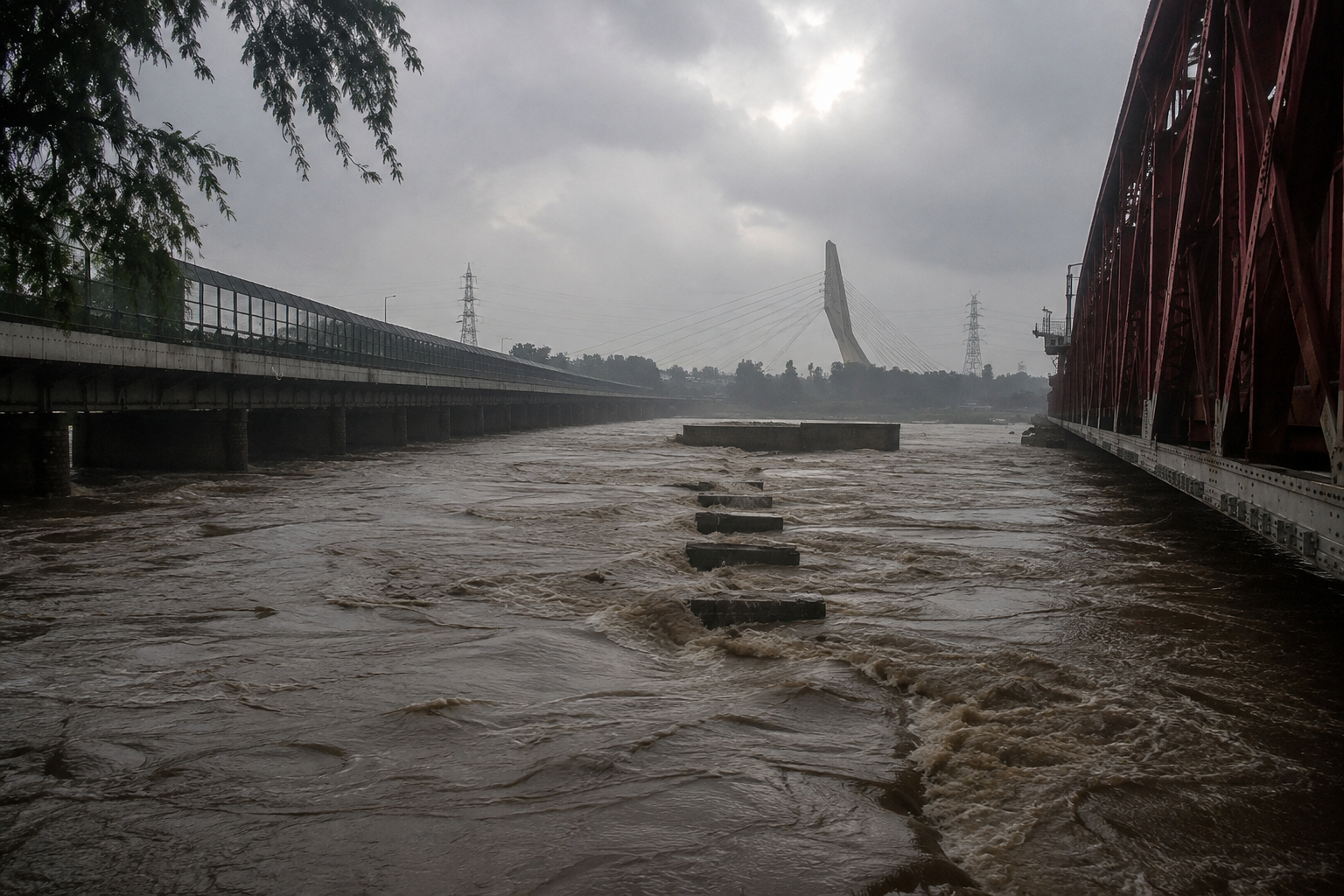
Heavy monsoon rains have pushed the Yamana river in Delhi close to the flood warning levels, while the city is seeing its biggest rainfall in the month of August in 15 years. The traffic jams, water-logging and structural failures have been reported in several localities. The IMDT has warned of continued heavy rainfall with a yellow alert, and authorities are keeping a check on the levels of barrage discharges which affect the river's course in New Delhi.
The city of New Delhi got 127 mm of rainfall in just the first week of August 2026, ending the city's ten-year-plus-long record of experiencing its highest rainfall in the month in that one week. On Friday, the heavy rains flooded the city and caused huge traffic jams in the city's major areas such as Kapashera and Badarpur.
The Municipal Corp of Delhi had received complaints of water logging in three locations and the New Delhi Municipal Council had received 15 complaints, including Gadaipur, Karol Bagh and Karmapura. At least sixteen trees were down and this also hindered traffic flow, while there was a report of collapse of houses and boundary walls.
In an advisory issued with the Municipal Corporation, the Delhi Traffic Police said traffic was being monitored before its commuters travelled as the pictures from ITO and Loha Pul showed the river level rising near to its historical landmarks.
The mechanics behind the Rising River
The behaviour of the Yamuna in Delhi is not influenced by rainfall but by discharge from the Hathnikund Barrage in Haryana about 240 km upstream. The surge in the river is often a lag effect of rain in the catchment areas of the Himalayas in Himachal Pradesh and Uttarakhand and reaches the capital after 48 to 50 hours of the release of water from the barrage.
The three decision points are at 204.50 metres (warning level), 205.33 metres (danger level) and 206 metres (evacuation level) at the Old Railway Bridge. Penalties against these marks in the past have resulted in closure of the bridge and the eviction of people living in the lower lying areas like Yamuna Bazaar and Monastery Market to relief camps in the vicinity of Mayur Vihar.
Viewers in the other parts of North India are also able to witness a significant change in the weather conditions
The India Meteorological Department (IMD) has predicted heavy to very heavy rainfall across all parts of northwestern, central, eastern and north-eastern regions of the country with thunderstorms and gusty winds to follow it. Himachal Pradesh, Uttarakhand, Haryana, Chandigarh and Delhi are continuing to get rainfall while Odisha has been warned to expect a very heavy rainfall. As the eastern arm of the monsoon is active, Bihar and West Bengal are also in the list of high alert zone of IMD.
The department warned in its advisory that the IMD had issued a yellow alert in various areas of the city, while authorities in the National Capital Region keep an eye on the level and capacity of the rivers and drains over the weekend.
Subsequent follow-ups of the current situation
The monsoon continues to be on in the upper catchment, and the few days ahead will tell the outcome of the floods Delhi has seen in previous seasons, when the river reached its highest level ever.
So far, civic organisations have opened pumping stations and made traffic diversions to keep flooded sections of the riverbank under observation, and residents are living on the banks are on advisory watch.
Latest News
- ◆NSE's $2.3 Billion IPO Draws Over $10 Billion In Bids
- ◆India-New Zealand Free Trade Pact To Take Effect October 20
- ◆Tata Group Governance Feud Deepens Over Chandrasekaran's Term
- ◆India Reaffirms Push For Constructive Ties With Bangladesh
- ◆Teen Gang-Raped Near Delhi Temple, One Suspect Held In Encounter