
CJI Surya Kant Retracts 'Parasites' Remark, Hails Youth
Chief Justice of India clarifies controversial remarks, stating that the nation's young people are its pillars, not a burden, amid wide public and legal community reaction
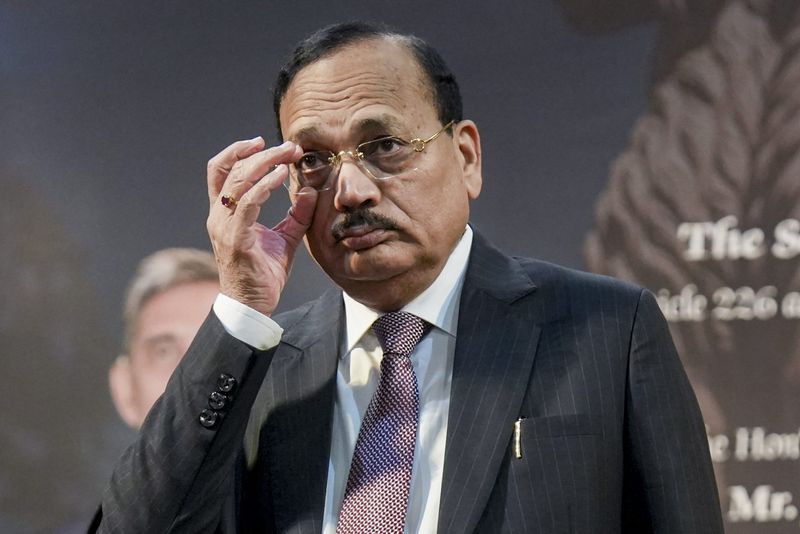
Synopsis
Chief Justice of India Surya Kant was in the news a lot when he reportedly used the word ‘parasites' in his contextual explanation referring to the youth, in his remarks.Chief Justice of India Surya Kant drew a lot of attention from people when he used the word ‘parasites' in a contextual explanation to the youth during his remarks. The Chief Justice had then clarified his remarks: "Youth are the pillars of the country's future in India. The episode has brought back the discussion on the role of the judiciary in language, youth unemployment, and institutional trust.
Words That Travelled Beyond the Hall
The Chief Justice's words were reported and they struck the junior advocates' attention, particularly in the crowded corridors of Delhi High Court Bar Association, where junior lawyers are waiting for their first brief for years.
In May 2025, Chief Justice of India Surya Kant came under intense public scrutiny for his comments about youth (or a particular section of the youth) in an official address, where the word ‘parasites’ was used in its ‘contextual framing'. In May 2025, the Chief Justice of India Surya Kant made a controversial remark in an official speech, using the term 'parasites' within its 'contextual framing' (about youth or a part of them) that sparked intense reactions from across the legal profession, social media, and civil society organisations.
What Was Said and What Was Clarified
The Chief Justice later issued a clarification emphasizing the fact that the comment was misinterpreted or taken out of context in its communication. In his clarification, Justice Surya Kant had made it clear that the youth of India are the backbone of the Nation and that his purpose was not to throw shade on the youth of India as a whole.
The public relations office of the Supreme Court confirmed that the original remarks were made in a specific institutional and ceremonial context and that the Chief Justice's clarification was aimed at "clarifying a particular interpretation" of his words.
The context is Youth and Aspiration in contemporary India
At a time when the issue of youth employment and social participation is at the very centre of debate and active debate in the Indian public discourse. India is one of the youngest countries in the world: around 600 million Indians were under the age of 25 on the day of the Census in 2011. A United Nations Population Fund (UNFPA) projection indicates that maximum youth demographic dividend is expected in India around 2030.
But the link between demographic advantage and economic opportunity has not been even. Labour Market Update, released by the Centre for Monitoring Indian Economy (CMIE) in April 2025, put the urban youth unemployment rate at about 17.8 per cent, which has been structurally high since contracting from 2020-21 during the pandemic.
Despite the overall economic growth, the share of youth not in employment, education or training (NEET) is a major policy issue in India as identified by the International Labour Organisation (ILO) in its 2024 World Employment and Social Outlook report.
The Judiciary and the Weight of Institutional Language
The position of the Chief Justice of India in India's constitution is very special as he is the head of the institution for the protection of the fundamental rights of all citizens such as the right to dignity, equality, etc. The Chief Justice's formal utterances have institutional context which goes beyond personal content.
In each edition of the years, lawyers and the legal profession have grappled with the extent to which senior judicial officers should be cautious in their public interactions, especially when addressing matters involving social categories, like age, class, or economics.
The problem of institutional trust among youth
The response to the Chief Justice's original comments and the rapidity with which the clarification was sought and received suggests a social landscape in modern India: young, technologically savvy, and quick to keep an eye on and react to comments by those in power.
This drop in trust comes from a Lokniti-CSDS survey released in The Hindu in 2024, which found that 61 per cent of 18- to 25-year-olds were less confident of formal institutions – such as the judiciary – as a source of redress for their concerns. Some of the reasons for the gap cited in the report are: the distance of communication and the sense of elitism.
This clarification by Chief Justice Suryakant should clarify the confusion currently being faced by the petitioner. It may reflect a change in tone of mind, especially among young lawyers and students who saw the comments as a sign of a greater lack of engagement within the system, questions that go beyond this speech.