
Congress: Islamabad MOU a Setback for Modi's Foreign Policy
The opposition says the US-Iran deal named after Islamabad vindicates Pakistan's diplomatic rise and exposes the limits of India's West Asia strategy
Synopsis
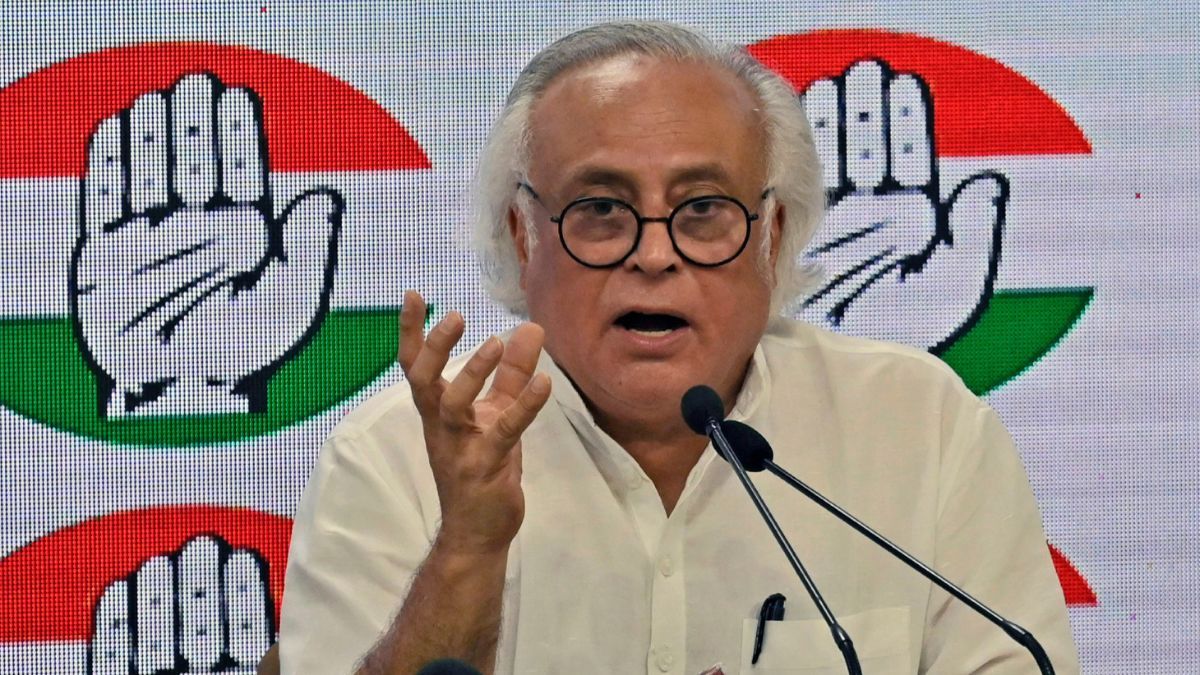
The Congress party on June 18, 2026, issued a sharp criticism at the back of the Islamabad Memorandum of Understanding (MoU) between the United States and Iran, regarding the foreign policy of the Modi government. Congress general secretary Jairam Ramesh called MOU a ‘severe setback' to India's policy as Pakistan had played a ‘central role in mediation', which was written in the very name of the agreement. The remarks come at a time when China-Pakistan strategic relations are increasingly building up and India's profile has been seen as treading towards alignment with Israel in West Asia.
The Name Says It All, Congress Argues
The United States and Iran did not refer to the ceasefire accord as the Washington Accord or the Geneva Protocol. It was the Islamabad Memorandum of Understanding, which has pointed diplomatic meaning for Jairam Ramesh.
The Pakistan’s newfound regional stature and global influence is highlighted by the fact that it is named the Islamabad MOU, Ramesh said, adding that Pakistan is "more deeply entrenched in the geopolitical and security framework of west Asia with important implications for India.
Ramesh, Congress general secretary (communications), made the speech after the formal presentation of the text of the 14-point MOU on June 17. He termed the development "a bad news for both the content and the grand style of the foreign policy of Prime Minister Modi.
The criticism is directly aimed at the time line of Pakistan's diplomatic rehabilitation. After successfully isolating Pakistan from the region and the world after the Mumbai attacks, now it appears that Pakistan has a new influence in the region and beyond, Ramesh said. This, along with the fact that China has got a firm grip in Pakistan's strategic setup, is a serious geopolitical threat to India's foreign policy.
The isolation strategy was based on two decades of evidence
The Congress argument is based on a long trajectory of Indian foreign policy that began post November 29, 2008 attacks in Mumbai by terrorists allegedly affiliated to the Pakistan-based group Lashkar-e-Taiba who killed 166 people in coordinated strikes across various venues.
The group had claimed to be linked with the Pakistan's Inter-Services Intelligence agency and both India and the United States blamed the attack on that group.
Various Indian governments, both Congress and the BJP, have poured money into creating an international narrative linking Pakistan to terrorist armed groups to limit the influence that Islamabad has on international bodies and key partners.
Throughout the 2010s, analysts highlighted some negative consequences for Pakistan's reputation and investments.
It is now, at least in the party's view, that the hard work of that patient man has been lost with one diplomatic coup. Michael Kugelman, a senior fellow on South Asia at the Atlantic Council told Al Jazeera: India's policy of undercutting, and even, isolating Pakistan regionally and internationally, has obviously failed in spectacular fashion.
This is not the first time that Pakistan's Army Chief Asim Munir or Prime Minister Shehbaz Sharif have been to see Trump at the White House in a year. Throughout the war, Islamabad acted as a main interlocutor between the US and Iran, and Trump has repeatedly called for the Pakistani leadership in this capacity.
Other commentators have had a different, richer interpretation. Manohar Parrikar Institute for Defence Studies and Analyses (MPIDSA) evaluated Pakistan's mediation efforts in April 2026 as more of a policy of "geopolitical survival through diplomatic utility" as opposed to strategic weight due to the country's inherent economic vulnerabilities and geographical relevance.
Modi's Israel Alignment: A liability, Congress claims
Ramesh's criticism was not limited to Pakistan, but also included his belief that Prime Minister Modi was not critical about Israeli Prime Minister Benjamin Netanyahu. The MOU was a "definite defeat," he said, for Netanyahu, who now finds himself "isolated internationally," even as Trump was "frustrated.
Ramesh said that only Modi showed "steadfastness" in supporting Netanyahu's operations in Lebanon, in Gaza and in the occupied West Bank, and that this "blind devotion" has been "costing our country dearly.
He also said the war in the Middle East had started mere two days after Modi's visit to Israel, and India's economy, which has been beset by a depreciating rupee, a widening dollar demand-supply imbalance and sluggish private investment, had been worsened by the conflict.
Congress leader Rahul Gandhi had earlier in March 2026 made a similar claim: "India's mediation is a most damning indictment of the substance and the cowardice of Prime Minister Modi's diplomacy, which has been full of bombast.
The government's Response and the Way Forward for New Delhi
On the other hand, PM Modi welcomed the peace deal. These are "essential to regional stability and the global economy" and the agreement would help to restore "stability and freedom of navigation," he said. The government has not officially responded to the Congress criticism over the Islamabad nomenclature.
Ramesh said that the MOU, "if it is implemented in spirit as well as in letter, is a major step towards ensuring regional stability," but added it could also be a "Memorandum of Misunderstanding. Over the next 60 days, he said, would be a very critical time.
In India, the time is right for a diplomatic shift in the region of West Asia, as the two countries are also facing a larger strategic challenge, with China and Pakistan expanding their security relationship, Trump yet to visit New Delhi after visiting Beijing and committing to visit Islamabad, and Islamabad MOU with a name that has more of a strategic significance than India would like to recall.
Latest News
- ◆NSE's $2.3 Billion IPO Draws Over $10 Billion In Bids
- ◆India-New Zealand Free Trade Pact To Take Effect October 20
- ◆Tata Group Governance Feud Deepens Over Chandrasekaran's Term
- ◆India Reaffirms Push For Constructive Ties With Bangladesh
- ◆Teen Gang-Raped Near Delhi Temple, One Suspect Held In Encounter