
Death Toll Continues to Rise in Nepal Amidst Himalayan Flood
More than 1,000 people were missing in the Himalayan country and in China
Synopsis
On Thursday, 27 August 2026, rescuers are on a mission to search for survivors in the debris-scattered valleys and hillsides of Nepal after a huge wall of ice, mud and rock collapsed into a mountain river, triggering a disastrous flash flood that destroyed homes and took hundreds of lives.
What Triggered the Flash Flood?
At 8.37 a.m. on Wednesday, August 26, 2026, a massive section of a glacier in the Himalayas collapsed and crashed onto the valley floor in Nepal’s Langtang National Park, about 35 miles (60km) north of the capital, Kathmandu, near the mountainous Nepal-Tibet border.
It was initially reported as an earthquake of magnitude 4.4. The U.S. Geological Survey later reported that the tremor was caused by glacial rock and ice collapsing, registering a magnitude of 5.2.
The collapse led to a huge release of water, mud, rock, and ice that flooded down valleys and swept down the Lhende, Bhotekoshi, and Trishuli rivers. The high-speed flash floods ran towards northern Nepalese towns, including areas popular with mountaineering tourists and pilgrims, thereby leading to the huge disaster.
The Current Situation
Authorities and rescue forces in Nepal are moving around in helicopters in search of survivors and providing aid and emergency supplies to the people in the cut-off towns and valleys.
Local media has informed that there have been 359 deaths, with dozens of bodies that have been swept down into the plains, from where they are now being recovered.
Nepal Home Minister Sudhan Gurung said the focus remained on finding survivors as rescue teams identified 100 missing Indian visitors, mostly pilgrims, and 25 Chinese workers in the worst-hit region around Trishuli.
The Red Cross informed that entire villages had been wiped out and impassable roads and bridges had left communities cut off. It further added that the full scale of the disaster remains unclear. More than 650 foreign nationals still could not be tracked, while Nepali authorities were yet to determine the number of who are locals missing.
Possibility of Another Flood?
Nepal's disaster management authority had warned of a potential new flood risk along the Bhotekoshi River after satellite images and preliminary analysis indicated that the river had been blocked and a lake had formed at the site of Wednesday's flood.
The authority said that the lake is rising and could burst, urging residents and rescuers along the lower banks of the river to evacuate and move to safe areas away from the river.
A Shock for China
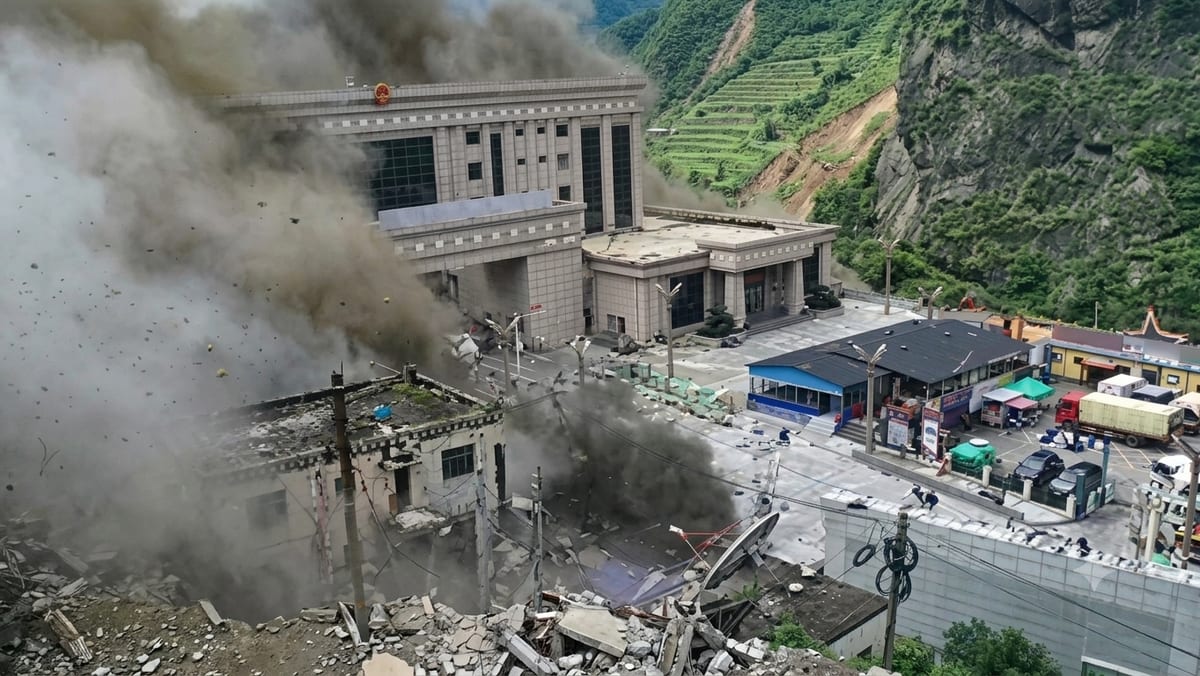
On Thursday, 27 August, 2026, in the afternoon, Chinese Premier Li Qiang, the country’s No. 2 official, arrived at the disastrous site in Gyirong. The surprise visit, which had not been announced in advance, clearly signified that Beijing is treating the disaster as a matter of the highest national priority.
Chinese government geologist Guo Zhaocheng said the ice-avalanche debris flow that caused the mudslide traveled at about 50 meters per second, leaving people little time to react, and extended for more than 20 km, causing severe losses.
Guo said a high-altitude ice avalanche triggered the debris flow, which picked up glacial moraine as it moved down a channel before becoming a mudslide that struck port facilities and areas on both sides of the China-Nepal border.
The Deadly Massacre
The administrator of Chitwan district, Ganesh Aryal, said authorities had recovered 103 bodies from the river system in his district, whichis about 100 kilometers away in the plains from the worst-hit region of Trishuli.
He further added that with local hospitals unable to accommodate all the bodies, district authorities were setting up tents and also making arrangements for families that were expected to arrive to claim their dead relatives.
He went on to say that bodies that cannot be identified would be sent for DNA tests. Emergency supplies have been provided by the neighbouring country, India.
On Thursday, 27 August 2026, more than 5,000 army and police rescue personnel joined the effort that retrieved 125 people, including 20 foreigners.
Latest News
- ◆Allahabad High Court Quashes Dowry FIR, Cautions Against Criminalising Failed Marriages
- ◆Nifty Snaps Eight-Week Losing Streak as Equities Rebound; 200-Week Average in Focus
- ◆Riyadh Airport Attack Kills 12, Deepens Saudi–Houthi Conflict; Trump Weighs US Role
- ◆Northern Railway Restores 214 Passenger Trains; 30 Still Cancelled After Delhi Protest
- ◆Supreme Court Bars Illegal Detention of Peaceful Protesters, Orders Normal Delhi Transit