
Supreme Court Bars Illegal Detention of Peaceful Protesters, Orders Normal Delhi Transit
A special Sunday bench said detentions must follow the procedure established by law and that Metro, rail and internet services must run normally
Synopsis
A special bench of the Supreme Court has said that peaceful and unarmed protesters in the city of Delhi can be arrested only after following the process laid down by law. It also stated that Metro, rail and internet services should be resumed unless there is a public order requirement. The order came following petitions, which complained against the illegal detentions and failure to adhere to its directions issued on October 9 in connection with the protests calling for the resignation of the Chief Election Commissioner. The Centre, Delhi Police and Delhi Metro Rail Corporation were given notices. The issue is to be resubmitted on Tuesday.
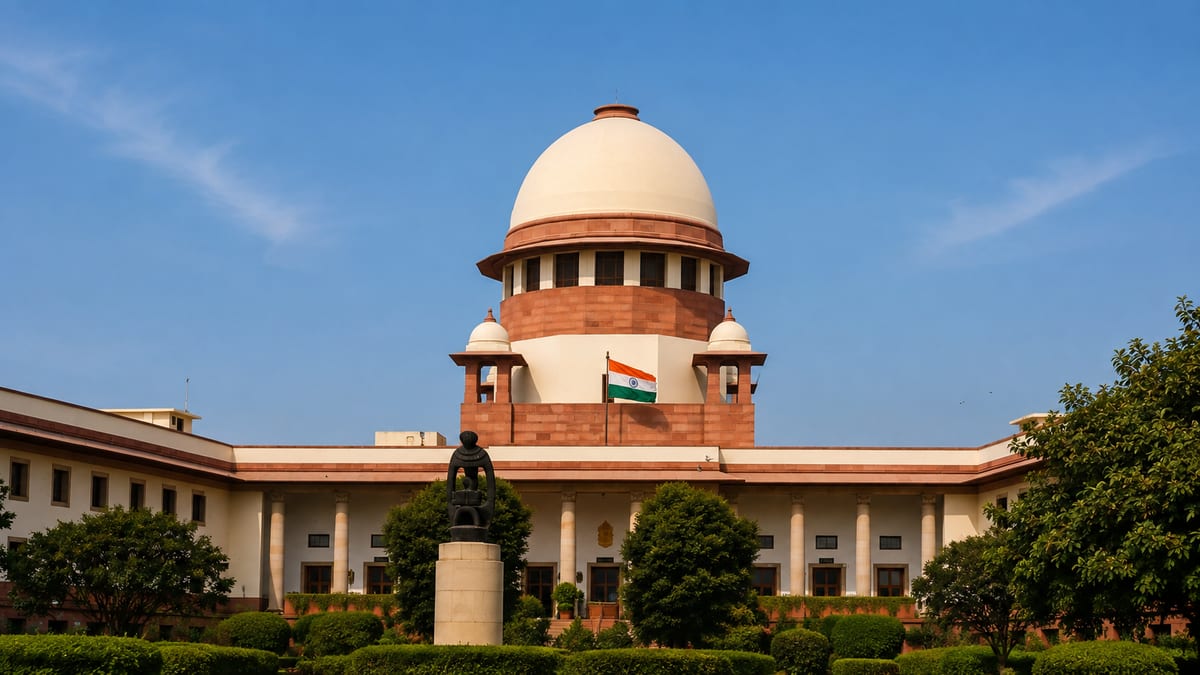
The Supreme Court on Sunday said that peaceful and unarmed protesters in the capital region can be detained only after following the procedure as laid down in the law. It also requested that authorities maintain essential services such as Metro, rail and internet services without interruption, unless there is a public-order situation.
The Justices Joymalya Bagchi and V. Mohana were sitting on a holiday. It received petitions which came up in light of the protest held on Saturday demanding the resignation of Chief Election Commissioner Gyanesh Kumar over alleged irregularities in the Special Intensive Revision of electoral rolls (SIR).
The Court's ruling
The direction specifically pertains to the areas where prohibitory orders are not in effect under Section 163 of Bharatiya Nagarik Suraksha Sanhita (BNSS), Business Today reported. The bench urged authorities to look at barricades in the context of law and order and traffic needs. It also wanted a map from the Delhi Metro Rail Corporation (DMRC) of which stations were closed down and which remained open.
The Court also directed the removal of the notice of restrictions around the Supreme Court and other court complexes as lawyers are not hindered in their work by the restrictions. The Union Home Secretary, Delhi Police Commissioner and the chairperson of DMRC were served a notice for contempt on a plea filed by advocate Shailendra Mani Tripathi.
The petitions on the bench
The contempt plea says the Court's October 9th order demanding a blanket ban on Metro and rail operations has been violated. Ms Guruswamy has filed another petition for release on bail, alleging that the detention of political leaders is wrong.
According to Ms Guruswamy, who appeared before the bench, 45 such detention centres had been opened and about 7,000 persons, including the opposition leaders, detained. Senior advocate Kapil Sibal had said that the citizens have the right to peacefully protest and they were being prevented from coming to the designated area at Jantar Mantar. As per media reports, as shared by Gujarat Samachar, he claimed that persons were picked up from the trains and at locations outside the four-kilometre radius of the site.
The Centre’s position
All Metro stations were open by 10 pm on Saturday and internet connectivity was restored, told the Court by Solicitor General Tushar Mehta. He submitted the Court that only 45 of the 303 stations allowed restricted entry/ exit, which is approximately 15 per cent of all stations. He also said that he had not inquired about a permit for the protest.
The right to protest was not at issue, but its exercise had to be in line with the law, Justice Bagchi said. He made it clear that freedom of life and life liberty is equally important”.
The order of the numbers is important
The right to assemble peaceably and without arms is guaranteed under Article 19(1)(b) of the Constitution which also provides for reasonable restrictions. The hearing was to present two questions to the Court. The first question is whether the mass preventive measures, like transit closures and detentions, remain within those parameters. The second is whether the previous judicial orders were obeyed.
It has since garnered international attention. The United Nations was concerned at mass detentions, report the business standard in Indian English and the Bombay Samachar for the day reports that India responded with a rejection of the UN concerns as misplaced.
What comes next
The matter is set for Tuesday, October 13 when authorities will submit short affidavits and compliance reports, said Bombay Samachar. The Court has stated that the Government must respond to the allegations of unlawful arrest and excessive force. Tuesday's hearing will resolve the extent to which Saturday's restrictions were in line with what the law allows.
Latest News
- ◆Allahabad High Court Quashes Dowry FIR, Cautions Against Criminalising Failed Marriages
- ◆Nifty Snaps Eight-Week Losing Streak as Equities Rebound; 200-Week Average in Focus
- ◆Riyadh Airport Attack Kills 12, Deepens Saudi–Houthi Conflict; Trump Weighs US Role
- ◆Northern Railway Restores 214 Passenger Trains; 30 Still Cancelled After Delhi Protest
- ◆Supreme Court Bars Illegal Detention of Peaceful Protesters, Orders Normal Delhi Transit