
How Tele-MANAS is Re-writing the Mental Health Story
Bridging the Silent Divide Changing Mental Health Story in India Among Rural Communities
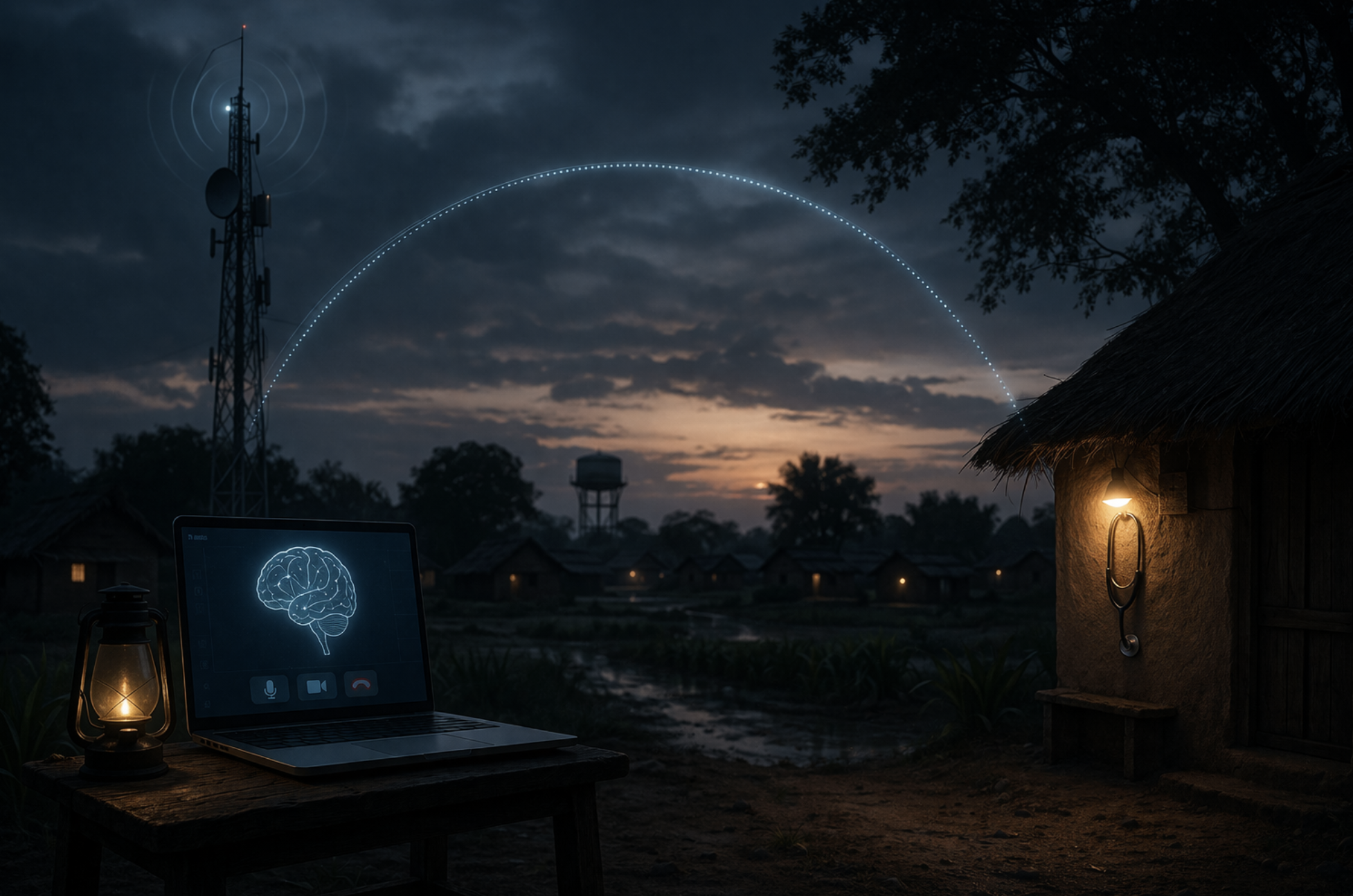
There is a silent crisis in the heartlands of India with about 65 percent of the population dwelling in small towns and villages. In such communities, mental illness is not often discussed in a clinical context; rather, it is often explained in the context of supernatural causation, moral transgression, or a failure to honour family. To millions of people, a mental illness does not seem like a medical emergency, but an insult to the so-called izzat (family honour), which creates a culture of secrecy.
The Stigma and Superstition of the Shadow
In most rural areas, when severe conditions, like psychosis or schizophrenia appears it is caused by malevolent spirits, the evil eye, or bad karma in a previous life. This is a mental health literacy deficit; the research, as done in a district like Udupi, Karnataka, finds out that although 60 to per cent of the population might have heard about mental illness, their perception is completely superficial. In these collectivist cultures, the presence of mental illness elicits courtesy stigma in which there is a social isolation of family members. A diagnosis can taint a pedigree, reduce the likelihood of marriage among brothers and sisters, and degrade young women whose social value tends to be associated with housewifery and alleged mental chastity. Thus, emotional sufferings have been repressed, hence, contributing to a tragic increase in suicide rates in the rural areas.
The infrastructure gap: a statistical desert
The crisis of physical infrastructure presents an existential scarcity of digital intervention, which is urgent. The number of psychiatrists per 100,000 is 0.75; this is much smaller than the recommended 3 per 100,000 by the World Health Organization. Such contrast generates a treatment gap. The difference is also measured by a Gini coefficient of 0.779 in Madhya Pradesh. Although the city of Indore is populated with 1.92 psychiatrists per 100,000 people, adjacent rural areas, i.e., Burhanpur and Alirajpur, lack such specialists.
Tele-MANAS: The Digital Lifeline
Tele Mental Health Assistance and Networking Across States (also known as Tele-MANAS) was introduced on 10 10 October 2022 and has become the most crucial institutional bridge to rural poor. It is able to overcome social barriers of stigma by tapping into the anonymity of mobile networks.
The program is strategic and based on Two-Tier Service Framework: Tier 1 (First Response): The callers call 14416 or 1 800 891 4416. An Interactive Voice Response System provides 20 regional languages where call is diverted to State Cells where trained counsellors offer psychological first aid services. Tier 2 (Specialized Care): Cases and patients who may attempt suicide are moved to psychiatrists and clinical psychologists to make video calls and e-prescriptions, and have auto-calls scheduled to avoid dropouts. This influence is noticeable: 68 per cent of callers are between 18 and 45. In rural community, a 16-year-old boy can talk about his/her addiction or a girl teenage can talk about her/his menstrual problem distress and is not afraid that it will be reported to the family.
The Future highway: Integration and Investment
The government has customized Tele-MANAS with more than 1.81 lakh Ayushman Arogya Mandirs in order to maintain this pace. Importantly, ASHA workers serve as the human network; as trusted cultural insiders are able to move through village sensitivities. Nevertheless, there still are financial difficulties. Tele-MANAS FY 2025-26 budget is INR 80 crore which is a significant drop compared to INR 134 crore in FY 2023-24. In addition, the amount spent on it in FY 2023-24 constituted only 25 per cent of the amount allocated, which speaks of administrative scaling defects.
To be able to close the gap fully, Tele-MANAS has to make sure that the Indian digital arm is backed by strong fiscal dedication and administrative effectiveness to make sure that no citizen is left to languish in silence.