
Welfare Dilemma; Uncovering The Freebie culture in India
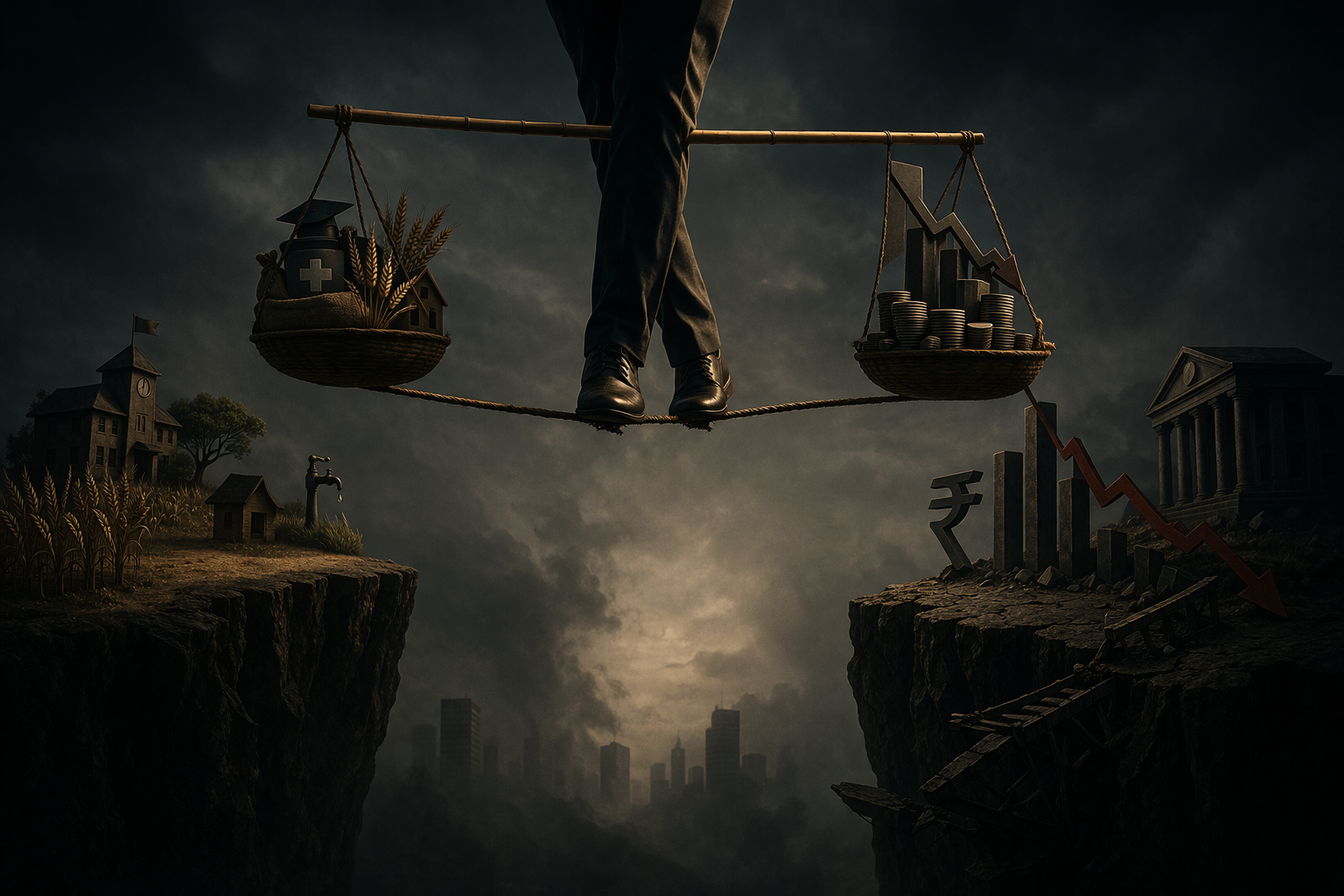
The identity of the Indian state is irreducibly connected with the fact that the Indian state is a welfare-oriented entity. The state is anchored on the Directive Principles of State Policy (DPSP) under Part IV of the constitution that is, Articles 38, 39 and 41 which stipulates that a social order should be guaranteed by the state which encourages a just distribution of resources. These principles are not legally binding but they serve as the moral compass of the governance.
Nonetheless, due to the proximity of 2026, the shift towards the delivery of public goods (education and healthcare) to the system of direct material distribution and cash transfers, with the COVID-19 pandemic accelerating its pace, has sparked a raging debate surrounding the difference between the issues of welfare and freebies.
The court interpretation: Welfare vs. Populism
The Supreme Court ruled in favour of the Public Interest Litigation (PIL) filed by Ashwini Kumar Upadhyay in a landmark decision this month under the leadership of the Chief Justice, Surya Kant. The petition argued that unreasonable freebies were bribery, and their violation of the constitutional requirement to use public funds to serve its own purposes.
The Court thus found the important distinction:
• Welfare Schemes: The long-term investments in human capital (e.g. MGNREGA, social health) that are directed at socio-economic development.
• Freebies: Temporal, populist giving of non-merit goods (electronics, loan waivers) that is meant to gain electoral benefits but is not paid off in a long-term, financially planned manner.
The Court did not make any legislation on its own, but suggested the establishment of an expert consortium, composed of the RBI, NITI Aayog and the Election Commission to evaluate the economic consequences of populist promises.
The Fiscal Fault Lines: Two State Tale
The Economic Survey 2025 26 is heralding the appearance of the increasing fiscal fault lines. Although deficit is being consolidated by the central government, state finances are becoming worse. In March 2025, the aggregate outstanding liabilities of states were 28 per cent of GDP, which is much higher than the target of 20 per cent set by the FRBM Committee. This was met only by Gujarat (17 %), Maharashtra (18 %), and Odisha (15 %).
Punjab: The Cautionary Tale
The GDP of Punjab in India declined to 2.6 in 1990 91, compared to 3.7 in 1990 91. The state has a debt-to-GSDP ratio of 46, and it spends 107 of its revenue receipts on obligatory expenditures like salaries, pensions, and power subsidies, the latter taking 99 of its spending on subsidies. This type of expenditure inflexibility forces Punjab to borrow only to fund day to day activities.
Karnataka: The High Stakes Gamble
On the other hand, Karnataka unveiled its own program, Five Guarantees, allocating 51,034 crore in the 2025-26 budget. Chief Minister Siddaramaiah believes that the plans induce spending since they offer ₹10,000 in monthly benefit per family, but the CAG cautions that this can become counterproductive to nature. Infrastructure capital expenditure decreased by ₹5,229 crores, which the CAG considers as unfavourable to the growth in future.
The Shadow Economy: Transparency Issues
The CAG has listed the few means that states use to hide their real financial health: • Under-reporting Debt: Special Purpose Vehicles (e.g., Goa and Telangana). • Unaccounted Transactions: Making use of Minor Head 800 to hide revenue and expenditure. • Contingent Liabilities: Exhibits High exposure to loss making DISCOMs, including in Sikkim where guarantees were more than three times the tax receipts of a state.
In addition to this, the replacement of MGNREGA with the VB-GRAM G act (to raise the number of working days to 125) has put a large fiscal burden on the states and thus, limited their financial head room.
The Road Ahead: 16th Finance Commission
The Sixteenth Finance Commission, under the chairmanship of Dr. Arvind Panagariya, will cover the period of 2026- 2031. The Commission and state legislatures should focus on preventing a fiscal crisis, and this should include: • Rationalization: Moving to Conditional Cash Transfers (CCTs) based on education and health. • Institutional Control: Creating Autonomous Fiscal Councils to examine promises in the manifesto. • Revenue Mobilization: Promoting tax compliance with GST 2.0.
The 2026 dilemma is quite clear: without emptying the state budgets in political expediency, the state has to fulfil its constitutional duty to the poor.
Latest News
- ◆NSE's $2.3 Billion IPO Draws Over $10 Billion In Bids
- ◆India-New Zealand Free Trade Pact To Take Effect October 20
- ◆Tata Group Governance Feud Deepens Over Chandrasekaran's Term
- ◆India Reaffirms Push For Constructive Ties With Bangladesh
- ◆Teen Gang-Raped Near Delhi Temple, One Suspect Held In Encounter