
How Thrifting Is Reshaping Youth Fashion Culture
It’s cheaper, cooler, and kinder to the planet. But thrift culture has a few plot twists of its own.
Synopsis
Somewhere right now, a 19-year-old is rifling through a stack of crumpled jackets, hunting a faded denim piece that would stupefy everyone. She isn't doing it because she has to. She's doing it because she wants to, because it’s cooler. And honestly, that tiny shift, from "I can't afford new" to "I don’t want new", says a lot about where youth fashion is heading.
From "Cheap" to "Cool"
So what changed? Partly, it’s just simple math. Young people are navigating an already expensive world and unstable job markets, and on top of that, a crushing realisation that even a simple, trendy outfit from an up-to-date label can cost a small fortune. Thrifting gives us a chance to stretch our budget. A ₹300 shirt that looks like it cost ten times that? That's a win anyone would appreciate.
But if it were only about money, thrift culture wouldn't have gone this far. Yes, it may have started out with money as the biggest motivator but, now it’s not only about that. People with plenty of spending power are doing it too. The real shift is in what we find valuable. The ‘newness’ of a product used to be the flex. Now, it’s the uniqueness that is held on a higher level. After all, anyone can order the same trending cargo pants everyone is wearing, but hunting down that one-of-a-kind vintage piece with a story stitched into its seams feels like a different kind of achievement.
The Hunt Is Half the Fun
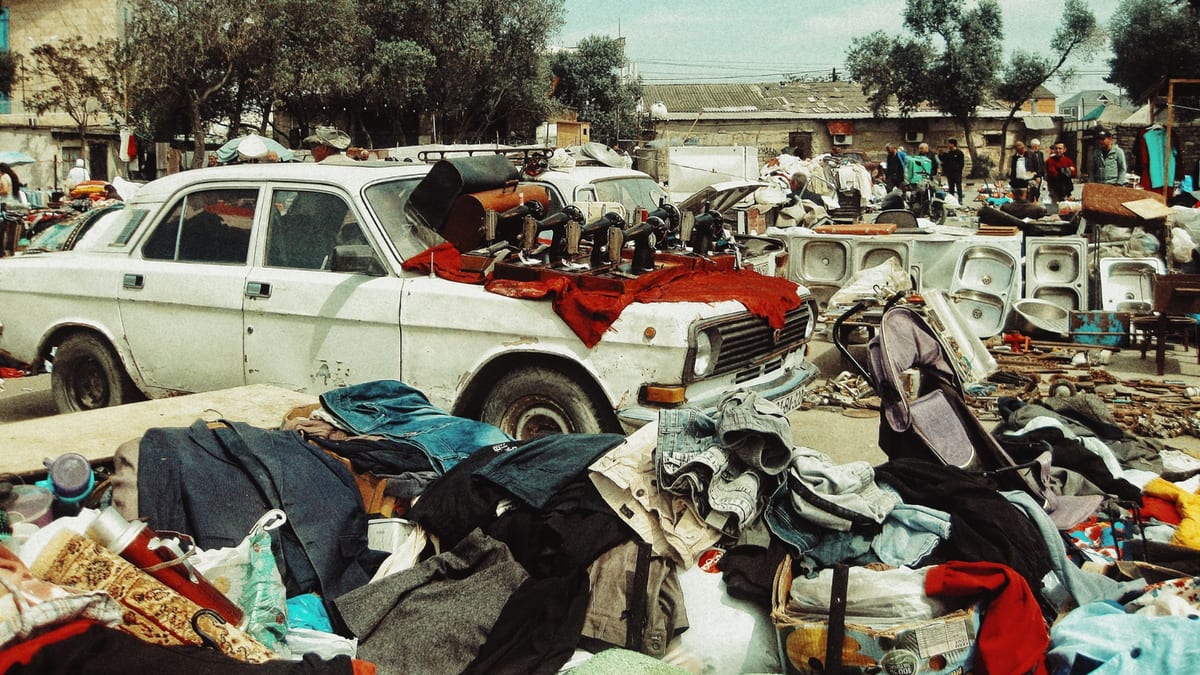
Ask any thrifter what they enjoy most about shopping second-hand, and they'll tell you the same thing: it's the thrill of the hunt. Browsing an online store is one thing, but wandering through the market, digging through a stall or a second-hand shop is like treasure hunting. You never know what you'll find, and that unpredictability is addictive.
Social media has only fuelled that fire. From thrifting hauls to "come thrifting with me" videos to styling reels, thrift shopping has became a content genre of its own. People show off what they found, break down how to spot quality products, and swap tips on where and how to get the best bargains. What used to be a quiet solo mission is now a team sport, with matching hauls and who found the better pair of boots.
There's a creative side to this, too. When you thrift, you're not following a trend cycle dictated by a brand. You're building your own look from whatever stuff you had found. A 90s windbreaker, a grandfather's blazer, a floral shirt from who-knows-when. Mix them together, and suddenly you have a style no algorithm ever could’ve predicted.
Fast Fashion's Awkward Mirror
Here's where it gets more intriguing. For many young people, thrifting isn’t a style choice; it’s a response to something bigger. Fast fashion has trained a whole generation to treat clothes as disposable, all the while disguising this overconsumption as a love for shopping. With new drops every week, prices so low that it justifies impulse buying, and a social system that tells you that your outfit is outdated almost as soon as you've worn it. The planet cannot sustain such waste - from textile waste to water use to overflowing landfills; it is hard to ignore, and the younger generation is more keenly aware of that.
Also, by buying second-hand clothing, people tend to attach value and meaning to something that has already lived a life and they derive pleasure from the fact that they are the ones giving it a second one. Of course, a single shopper buying a vintage jacket won't fix the fashion industry, otherwise won’t single handedly save the environment. But collectively, such actions can have an effect.
The Plot Twist: Thrifting Has Its Own Problems
Now for the uncomfortable part, because any honest conversation about thrift culture has to acknowledge it. As thrifting went mainstream, it got commercialised too. Resellers now are quick to buy up the best pieces from second-hand shops, mark there prices up, and sell them online at prices that defeat the original point. A ₹200 find becomes a ₹2000 "curated vintage" piece. For people who genuinely relied on shopping at thrift stores, this has been an infuriating development. The racks that gave them discounted items are now picked clean by people who see it as just inventory.
There's also a quieter irony at play here. Some young shoppers thrift in bulk, treating second-hand clothes as just another thing to binge on. So even if you buy twenty "sustainable" pieces and wear only ten of them, then you've replicated the fast-fashion problem, just with a vintage label on it. It’s easy to romanticise vintage shopping, but the reality is that it has the potential to create the same issues fast fashion did. And then there's the question of what happens to the clothes we don't want. A significant portion of discarded clothing from wealthier countries ends up in places that never asked for it, overwhelming local markets and creating waste problems elsewhere.
In conclusion, thrifting can appear as the perfect solution from a buyer’s perspective, but the bigger picture is hardly as glamorous as a short clip on social media.
Identity, Not Just Clothing
Beyond the economical and ethical aspects, thrifting also quietly reshapes the consumer culture of young people. When your wardrobe is built from pieces with history, you stop dressing to match a trend and start dressing to express yourself. Fashion becomes less about keeping up and more about creating. That’s a meaningful change. For years, fashion culture has dictated the shopping behaviour of younger generations and told them what to buy next and who they should be, but not anymore.
Now, thrift culture has flipped the script. It promotes the idea that personal taste matters more than the season's trend report. It also promotes a more fluid attitude towards gender norms, since second-hand racks don't care about "men's" and "women's" sections the way retailers do. People grab what they like and figure out the rest later. Additionally, thrifting changes the way shoppers look at clothes. They treat their second-hand clothes with more care; they mend it, restyle it or maybe pass it on, to someone. Clothes then stop being disposable and start feeling like objects with a past and a future.
So, Where Does This Leave Us?
Thrifting isn't a perfect solution, and its easy to jump on the bandwagon, cheer the idea of thrifting without asking any question but it can be exploited, over-consumed, and commodified, just like anything else that gets popular. But to dismiss it as just another trend is entirely missing the point. Asking what's happening is something that brings genuine change in values.
A generation is learning to ask, "Do I need this? Where did it come from? Will it last?" before just buying it. They're realising that style can come from curiosity instead of cash, and that being original often means being a little resourceful.
The real test is what comes next. It prompts us to ask a question : whether thrifting will remain a noble alternative or get swallowed up and incorporated into the very fast fashion system it unmasked. This heavily depends on the choices people make, from buyers to sellers to the attentive, gate-kept brands. The best thing thrifting has taught us goes beyond styling; it has the potential to teach us that things do not have to be new to be desired and that sometimes the most fashionable thing a person can do is give an old thing a new chapter.
So next time you're browsing through a rack and happen upon that perfect jacket, take a pause, because you’re not just shopping. You're part of a quiet shift in how a whole generation dresses, thinks, and chooses.