
India Orders States To Crack Down On Nicotine Pouches
Health Ministry directs enforcement against unauthorised nicotine pouches sold online, in tobacco stores and duty-free outlets
Synopsis
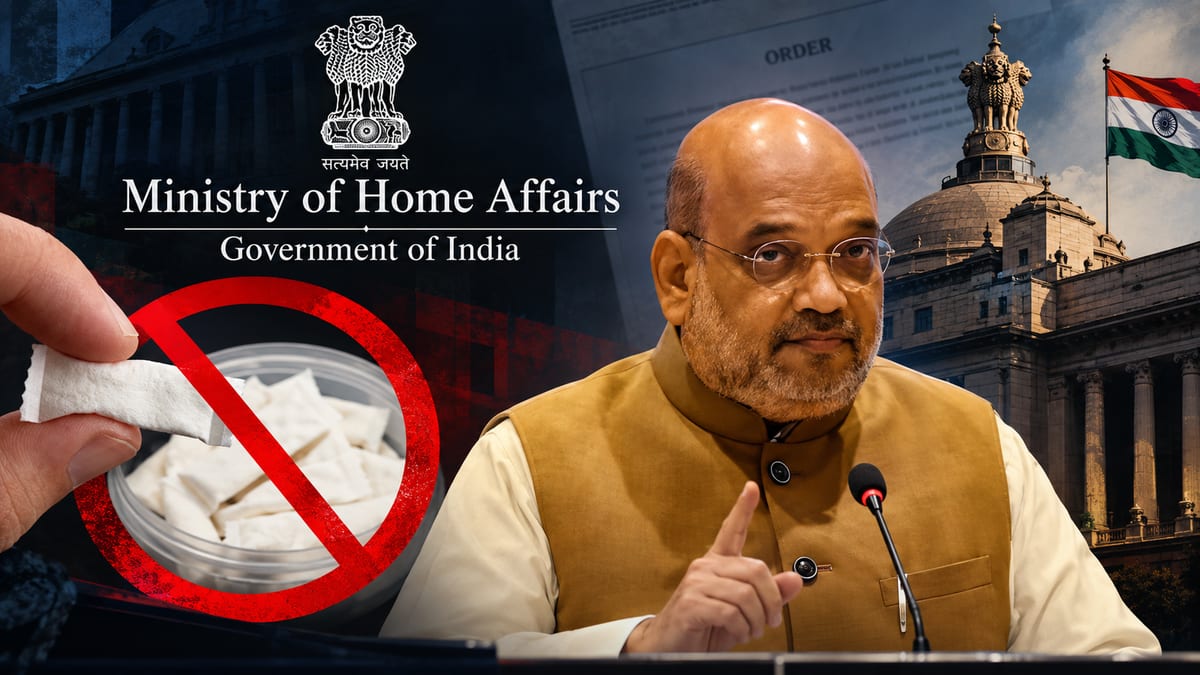
The Indian government's Health Ministry has advised all states to take measures to curb the sale of nicotine pouches in India due to the increasing availability of these products, both online and offline, and their addictive nature. A federal drug advisory board has voted against approving any new nicotine products which would complement India's ban on tobacco-alternative products, again.
The Directive
The government has sent letters to the State governments demanding a crackdown on the sale of nicotine pouches as they are a "serious health hazard", according to the health ministry, as globally popular brands are being sold illegally in the country.
Nicotine pouches, which are small packets of nicotine without tobacco, are still banned and not approved for use and are likely being smuggled into India to sell online and at local tobacco stores, according to a government source.
In a letter to all the states on September 19, the health ministry said “availability of oral nicotine pouches through online and offline channels in the country is of particular concern” specifically among children.
The Regulatory Backdrop
The government has also banned e-cigarettes in India, a country with 1.35 million deaths from tobacco use annually, but approved some nicotine alternatives, such as patches and chewing gum.
A federal study of nicotine pouches in June labeled them "a largely unregulated public health concern," and concluded that they are widely chewed by those aged 18 to 40, including Philip Morris' Zyn and Swedish Smokeless Solutions' White Fox.
Scale of the Problem
Research funded by the government indicates reasonably high availability. An independent study commissioned by the government revealed pouches could be found in seven out of 10 cities surveyed and 9 per cent of tobacco stores, with hundreds of flavours cited.
The Advisory Board's Position
The attitude of the regulators has been strengthened at the technical level. Minutes of the federal drug panel's meeting on September 16 say that the government considers "nicotine pouches" to pose independent health risks, to be addictive and not proven to help people quit smoking. In the public interest, the Drugs Technical Advisory Board recommended against approving any new nicotine formulation from now on.
Global Regulatory Divergence
This is not the stance taken by some of the Western regulators. The World Health Organization has urged increased protections for people who want to stay addicted to nicotine, especially minors, but the US Food and Drug Administration has stated that if smokers substitute all tobacco products for alternatives like pouches, vapes and heated tobacco, they can lower their health risks.
While India's strategy focuses on outright prohibition over harm-reduction, it places oral nicotine products in the same category as e-cigarettes, rather than separately as a regulated category of cessation products.
Duty-Free Scrutiny
The crackdown is not limited to traditional brick-and-mortar stores. The order comes after the government checked products at duty free stores at Adani-operated airport in Mumbai and the federal ban on new formulations of nicotine.
In an action that suggests the shops are not beyond the reach of domestic laws, an Indian court this week dismissed arguments that duty-free shops were outside the reach of domestic law and said the company in question was free to make submissions to the government.
What Comes Next
In anticipation of any nicotine sourcing, partnership or distribution agreement that crosses the state line to India, market watchers will be closely monitoring product legality and licensing, as well as the prospect of state-level enforcement actions, raids, seizures and penalties against online platforms, tobacconists and duty-free operators.
The order effectively rules out any regulatory route for the pouch products to be sold in India as smoking cessation products for now.