
Nvidia Controversy Explained: What Jensen Huang’s Exit Means for India’s AI Ambitions
With over 85% of India’s AI Mission compute reportedly running on Nvidia, the CEO’s exit exposes the reality: export controls, funding stress and the push for homegrown chips
Synopsis
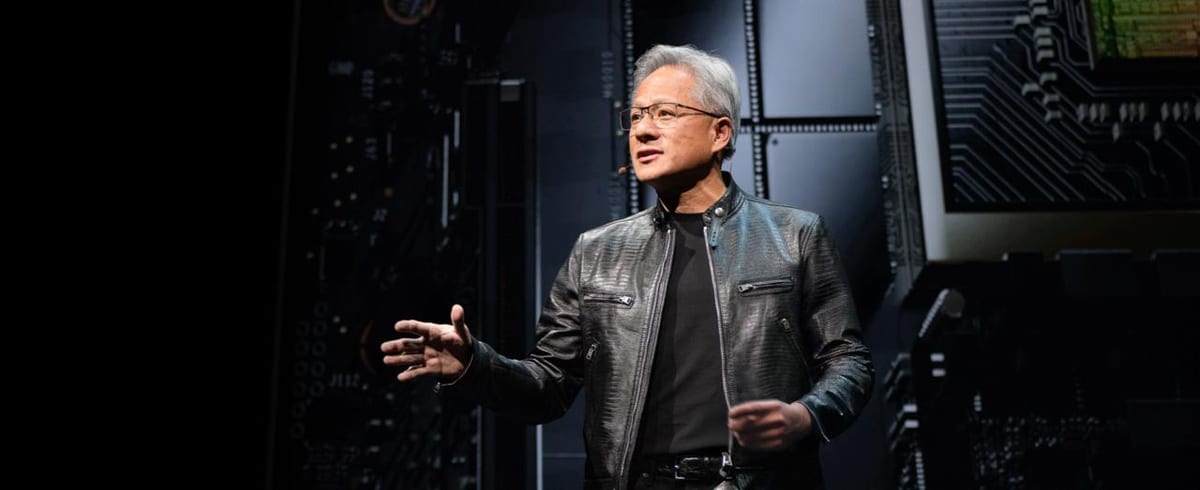
On November 12, 2026, Nvidia’s CEO stepped down when allegations of a suspected Chinese intelligence asset surfaced. Now Huang’s moment of weakness directly impacts India’s national AI programme, since its heavily powered by Nvidia technology. So far, there is no sign that India's chip supply is impacted. The actual exposure may be indirect though: tighter US export restrictions, nervous investors, and heavily indebted GPU (Graphics Processing Unit) clouds. This article covers the difference between what is alleged, what it means for India and what can be done about it.
What really happened that made Nvidia CEO Jensen Huang resign?
On November 8, 2026, Nvidia’s board initiated an independent investigation on suspicion of an extramarital affair between the CEO Jensen Huang and a woman who was said to be a spy for China. Later, Huang admitted to the affair, but the board had no reason to believe that national security or company secrets were ever put at risk. Huang subsequently stepped down and was replaced by interim CEO Colette Kress, who was the company's CFO before taking over this role. In just a week, Nvidia's market capitalisation has dropped from approximately $4.5 trillion to approximately $4.0 trillion.
Separate allegations and evidence suggest that the relationship may have enabled movement of at least $7.5 billion in shipments of chips to China since 2023. It was reported that a number of DOJ (Department of Justice) probes also took place, one of which was into Megaspeed, the woman's previous employer, and another into Super Micro. There is no adjudication of any of this, and the pertinent question still persists: how does this all affect India?
What role are Nvidia GPUs playing in India's AI Mission?
One supplier, tens of thousands of chips and very little to spare. According to reports at the India AI Impact Summit, Nvidia accounts for more than 85% of the common compute developed under the India AI Mission. By June 2026, the government said that it had more than 45,000 GPUs in total. Yotta has just announced more than $2 billion in funding for 20,736 Blackwell Ultra GPUs and is pledging more than 10,000 B300S to the mission. Nvidia CEO Jensen Huang in spy controversy: How could it impact India’s AI ambitions?
It may be brought up for questioning if the CEO’s spy controversy can impact India’s AI ambitions, but the first impression remains to be one of tranquility. There has been no evidence that suggests that the dispute has marred Nvidia's technology or impacted India's chip availability. The weakness is of a structural nature. The danger of concentration was present before this week too; the scandal has only brought it to the forefront.
GPU Cloud Providers in India Face the Fund Test
Indian GPU Cloud Providers are about to test their fundraising, but there is a second risk that comes with Indian “NeoClouds” (GPU-as-a-service providers). Since September 2026, US neocloud stocks like CoreWeave, Nebius and IREN have been on the selling side. Yotta will be using a $1.5 billion potential IPO to repay debt, anticipating spending more than $7 billion by FY27.
There's not much demand side, though. Yotta's base consists of 75-80% international customers. The IndiaAI Mission used less than half its FY26 outlay of ₹10,000 crore, and startups report allocation delays and hard-to-find suitable clusters. The GPU count looks good in a press release, but it says little about its utilisation.
The uncertainty comes with the fact that Nvidia itself is financing the project. In July, Nvidia began to provide NeoClouds with revenue sharing and credit support, but it halted some of its offerings, as per the Wall Street Journal reports. With a caretaker CEO, nobody knows who is writing the cheques.
India’s Nvidia Dependence: Can It Realistically Be Reduced?
There has been some diversification, but diversifying silicon is simple to say but difficult to do. The IndiaAI compute pool is not all Nvidia-only. A third tender reportedly brings another 1,050 Google Trillium TPUs on the stack, the company's first non-Nvidia accelerators. One expert urged increased focus on designing AI chips at home, and a broader group of technology partners. With Nvidia leadership issues coming to the fore, India's AI compute plans are in the spotlight.
A long game, although, can be treated as a homegrown alternative. It requires specialised manufacturing facilities, state-of-the-art technology, trained engineers and a significant amount of investment, as well as a software ecosystem that enables developers to utilise the local processors effectively. The latter is the most important one. CUDA lock-in is software as well as silicon.
In short, this scandal is not going to derail India's plans on Artificial Intelligence. It does reveal they have a lot on their plate. There are mainly two things to watch out for: the Nvidia earnings on November 17, 2026, and whether the proposals for export controls in Congress are made into law.
Will the US move to ban AI Chips in India next?
India has not been subjected to allegations, but it can still be involved as collateral. Under the AI diffusion framework proposed in January 2025, India was placed in a middle tier with volume caps on advanced GPU imports, before the rule was lifted in May 2025.
Now Congress is on the move. House Speaker Mike Johnson and Minority Leader Hakeem Jeffries all want to strengthen chip export restrictions, while Senator Mike Rounds would like to see more of them in the defence bill. On top of this, there’s also a transit angle.
Between 2022 and 2025, the analysis by C4ADS uncovered $13.4 million worth of restricted Nvidia GPUs being drop-shipped to China through Vietnam, India and Malaysia. That puts India in the running for stricter customer screening, even if it acts as a minor stop en route.
Analysts predict India will remain unaffected, citing it as a growth market for Nvidia, but they also urge not to take this fact for granted. The Indian government itself says chip availability, export controls, pricing or allocation changes could affect deployment schedules and project economics.
Latest News
- ◆FAA Ground Stop Explained: How a maybe Faulty Router Grounded Every Flight in America
- ◆Kylie Jenner Sued for the 4th Time in 7 Months: Do We Smell Legal Trouble?
- ◆Nvidia Controversy Explained: What Jensen Huang’s Exit Means for India’s AI Ambitions
- ◆Huang Resigns as Nvidia CEO; Shares End 4.3% Lower After Early Slump
- ◆Abu Dhabi Talks Yield Prisoner Swap; US Envoys Brief Putin, Then Zelensky
Read More
Huang Resigns as Nvidia CEO; Shares End 4.3% Lower After Early Slump

Gold Falls to ₹13,849 a Gram as Dollar and US Yields Climb