
Iran Agrees to Dismantle Nuclear Stockpile; US Lifts Sanctions in Landmark MOU
The Islamabad MOU trades Tehran's near-weapons-grade uranium for sweeping sanctions relief, but the thorniest details of Iran's nuclear future remain unresolved
Synopsis
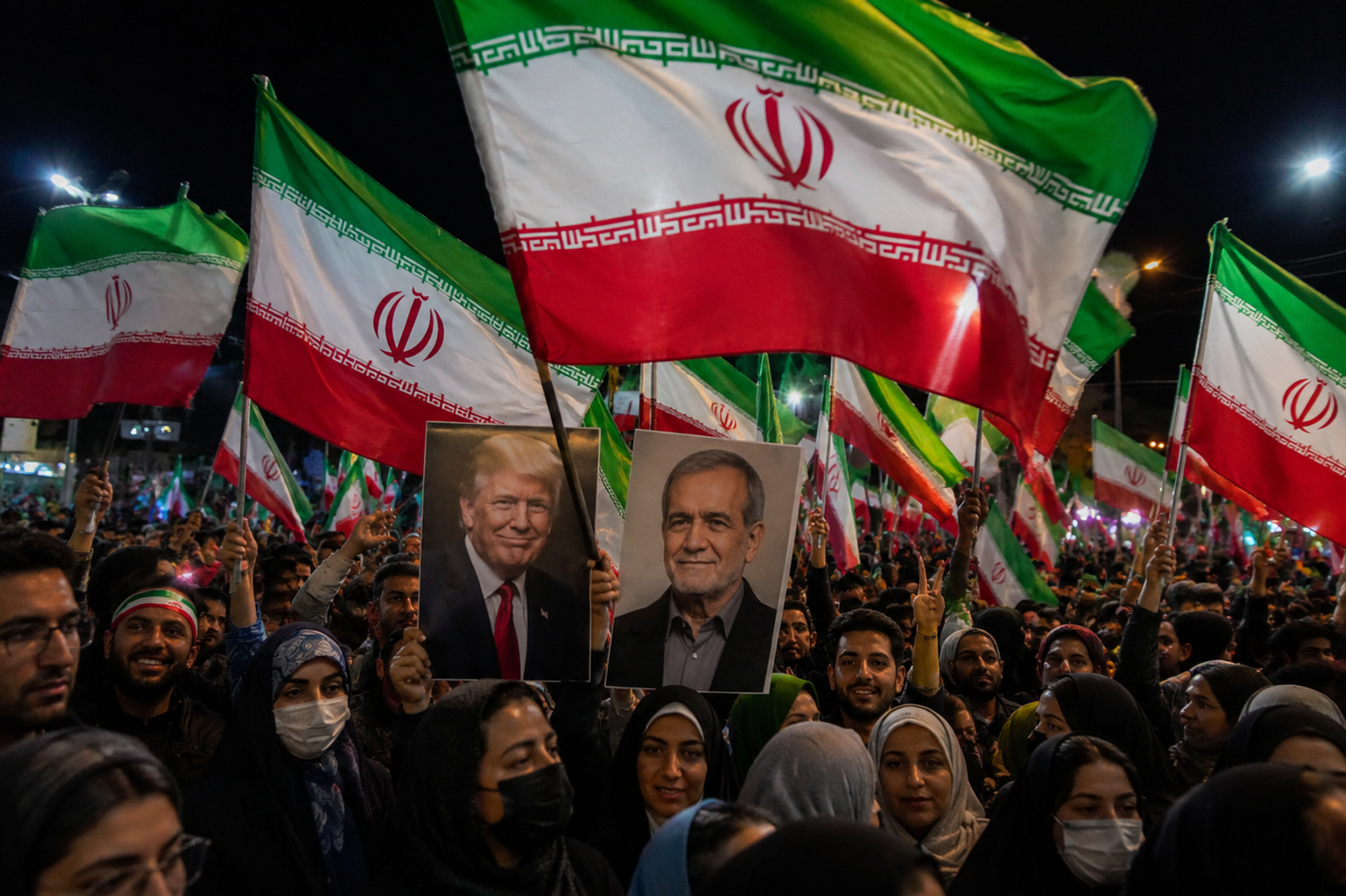
US President Donald Trump and Iranian President Masoud Pezeshkian signed an Islamabad Memorandum of Understanding on June 17, 2026 which goes well beyond a ceasefire. The deal's essence was Iran's reaffirmation that it will not pursue nuclear weapons and its agreement to reduce its quantity of highly enriched uranium to a lower level under the protection of the International Atomic Energy Agency. In exchange, Iran agrees to allow the lifting of decades of sanctions, unfreeze Iranian assets, and agree to a $300 billion reconstruction plan from the United States. But the final status of Iran's nuclear program is still open for negotiation in a 60-day period.
The question now is what is Iran surrendering: The Nuclear Question
The key non-proliferation provision of the MOU is for Iran to continue to hold back a stockpile of uranium enriched to 60 per cent — a level the IAEA has long considered to be close to weapons-grade.
By June of 2025, the time of the military strikes, Iran had produced 440.9 kilograms of uranium that was enriched to as high as 60 per cent of the fissile U-235, IAEA reports of verification and monitoring have revealed.
The strategic importance of this figure is stark: the separative work needed to further enrich this stockpile to weapons grade – 90 per cent – is only about 1 per cent of the separative work already expended in producing the stockpile.
The figure, translated in real terms, means that Iran would be able to process its 60-per-cent enriched uranium stockpile to produce enough for nine weapons in about three weeks; it would take a single cascade of centrifuges at the Fordow facility about 25 days to produce fissile material for a nuclear weapon.
This is the stockpile which the MOU is directed at. Point eight of the signed agreement reads: "Iran reaffirms that it will not develop or procure nuclear weapons, the two sides agree to resolve the disposition of Iran's stockpiled enriched material through a mutually agreed mechanism, with on-site down-blending under IAEA supervision as the base case, and will discuss Iran's enrichment activities within a framework to be agreed in the final deal.
Down-blending — the process for diluting highly enriched uranium with lower grade U to make it less concentrated — does not destroy the uranium, but only makes it technically unusable for weapons use if re-enriched.
The official told reporters at the G7 summit in Évian-les-Bains that the nuclear pledge was a "major, major win for the United States of America": "They're saying we will destroy the enriched stockpile, and this is how we're going to do it at a minimum. We will push for more than that.
In a March 2026 CBS interview, Iranian Foreign Minister Abbas Araghchi indicated Tehran's openness to this move. "I offered actually that we are ready to dilute those enriched materials, or down-blend them, as they say, into lower percentage. That was a huge concession, a huge offer, Araghchi said.
Iran's Unsigned Agreements
The MOU's critics have zeroed in on what is conspicuously unresolved. The agreement only ensures Tehran's continuing adherence to Iran's long-standing commitment to the Nuclear Non-Proliferation Treaty – a commitment made to it for five decades – and provides a mechanism for down-blending rather than dismantlement.
The MOU does not mandate Iran's removal of its enriched uranium from the country. The down-blending will take place on Iranian soil under the IAEA's supervision. Questions of Iran's future enrichment ceiling, the eventual development of the advanced centrifuge cascades and the shape and scope of its civilian nuclear programme are all explicitly deferred to the 60-day final negotiation.
As far as the final deal is concerned, there is Point nine of the agreement: "The Islamic Republic of Iran will keep the current status of its nuclear program, and the United States of America will not impose any new sanctions, won't send more troops to the region.
Without complete access to inspect and a clear implementation, down-blending is nothing but a piece of paper, said independent analysts. Since the military strikes in June 2025, Iran has limited the access of IAEA inspectors to some of the most important facilities.
The Sanctions Ledger is an account of Iran's Economic Gains
In return, Iran receives a large, immediate and conditional economic package, given its nuclear and military give-ups.
The US Department of Treasury will issue waivers for exports of Iranian crude oil and related petroleum products, derivatives, and all related services, such as banking transactions, insurance, and transportation, "immediately upon the signing of this MOU and until the termination of sanctions," says point ten of the MOU.
It's a quick cash infusion for a nation whose oil industry has been choked since 2018 by sanctions. Point 11 also adds that the US "will make available for use the frozen or restricted funds and assets of the Islamic Republic of Iran upon implementation of this MOU," which could mean that the US will also allow around $100 billion in Iranian frozen assets to be used.
The commitment in the longer time horizon is even greater. Article six of the MOU pledges the US, along with its regional partners, to create a "definitive, mutually agreed reconstruction and economic development plan for Iran worth at least $300 billion," with a mechanism for its implementation to be determined in the 60-day period.
Washington was careful to state that this would not be paid directly by the US, but would work by phasing out restrictions on sanctions that have kept third-country investment, especially from the Gulf countries, at bay. According to the officials, if the sanctions are lifted, "we will allow the UAE to construct a power plant in Iran.
There is clear conditionality in the UN Security Council resolutions, also in IAEA Board of Governors resolutions and unilateral US primary and secondary sanctions, in the sense that full sanctions termination will be contingent on the lifting of the restrictions.
In the signed text the US says it will lift all sanctions on Iran "schedules to be determined in the final deal" contingent on Iranian verifications.
The JCPOA Shadow: A Context the MOU cannot outrun
The MOU in Islamabad comes eight years after Trump ripped up the Joint Comprehensive Plan of Action, the Obama-era deal that, at its heart, had placed limitations on Iran's uranium stockpile, its enrichment capacity to 3.67 per cent purity and overall uranium production.
In those days of the JCPOA, Iran's estimated production time of enough uranium for one bomb was about a year. By the end of 2024, before the war had even started, that break out period for several bombs was already less than two weeks.
The Islamabad MOU does not bring back the JCPOA structure. It does not impose limits on enrichment levels, require a set number of centrifuges or impose ceilings on the size of the stockpile, all of which will be part of the final 60-day negotiation.
The key Iranian nuclear negotiator and Parliament Speaker Mohammad Bagher Ghalibaf, who attended the signing, made a sharp statement, saying, "If the United States fails to fulfill its obligations, there is no way Iran will fulfill its obligations.
The next six weeks will tell if the Islamabad MOU will be seen as the beginning of a new, enduring non-proliferation settlement or as another famous MOU whose verification regime failed.
Latest News
- ◆NSE's $2.3 Billion IPO Draws Over $10 Billion In Bids
- ◆India-New Zealand Free Trade Pact To Take Effect October 20
- ◆Tata Group Governance Feud Deepens Over Chandrasekaran's Term
- ◆India Reaffirms Push For Constructive Ties With Bangladesh
- ◆Teen Gang-Raped Near Delhi Temple, One Suspect Held In Encounter