
'It’s Done Bro' : Gen Z’s Punchline-Powered Political Protest
From plate-banging to placards, India’s youth-led protests show how a generation raised online is reshaping dissent
Synopsis
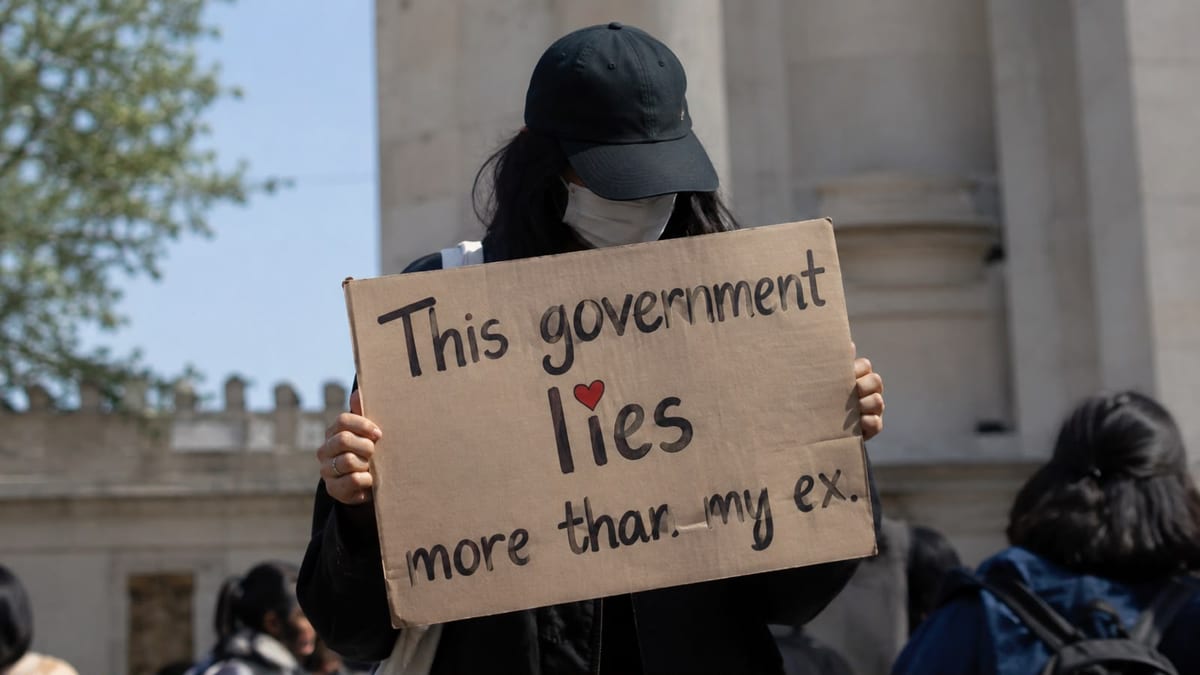
Picture this, a classic Indian protest poster, with thick black marker on a white sheet of paper, capital letters and a slogan that sounds as if it were written by a committee in 1974. Now imagine a student at Jantar Mantar holding a sign that says the government lies more than her ex, with a heart dotting the “i”. Same format, completely different mode. Two protests this year show the shift: the Cockroach Janta Party (CJP) campaign that ended with Education Minister Dharmendra Pradhan’s resignation, and the ongoing demonstrations against Chief Election Commissioner Gyanesh Kumar. Look closely at the placards and a pattern emerges. For this generation, the sign is not just a banner. It is a meme in hard copy, built to be read in a crowd and shared on a feed, portraying how young Indians talk to power.
Placards With Punchline
The older protest sign had to explain itself. The Gen Z sign assumes you are fluent. At the education protests, an 18-year-old attendee told The Free Press Journal that many people printed memes they had seen on Instagram, and the crowd laughed because the references were already familiar. Another placard read “Ache din kab leak honge?”, a pun that binds a well-known political campaign slogan and the NEET paper leak into one line. That trust in the audience is key. A reference that lands in half a second lets the joke do the work before the argument arrives.
There is a second audience, too. Because the crowd doubles as the content team, many placards seem designed to be photographed, posted and shared by evening. The minister is the target, but the social media feed is the real audience. The risk is that a photo can travel without its grievance. The joke survives; the explanation, alas, may not.
From Insult to Insignia
A quick recap for anyone who missed the plot. In May, a remark by the Chief Justice of India about unemployed youth was compared to calling them cockroaches. The internet did what it does best. Within a day, a satirical outfit called the Cockroach Janta Party existed, complete with a mascot, a manifesto and a name that parodies the ruling party. Its founder, Abhijeet Dipke, has said it began as a joke.
Then the NEET paper leak happened, and the joke got a job. The CJP took its demand for the education minister’s resignation to Jantar Mantar in June. After weeks of sit-ins, a march on Parliament and hunger strikes, Dharmendra Pradhan resigned. Round two followed in October, aimed at the Chief Election Commissioner and the revision of voter rolls. Different target, same energy. The cockroach is the template: take the insult and wear it.
Bro, Please Resign
Nothing shows the intended shift better than the October protest in Mumbai. Placards read “Gyanesh BRO, JUST RESIGN”, and the chant was “Gyanu it’s done, bro.” Another sign paired the jokes with a plain statement that the janta has a spine. Look at what the language is doing: Calling a powerful constitutional official “bro” and “Gyanu” is a deliberate demotion. You cannot really be intimidated by someone you have nicknamed.
It is also disarming: a “bro, just resign” sign is hard to dismiss as radical, because it sounds like what a tired friend would say. The tone says we are not your enemy; we are just done. Informality, though, should not be mistaken for ignorance. A short, funny slogan can carry a carefully considered criticism, but a catchy line does not prove that everyone repeating it understands the issue.
Loose Memes, Tight Messaging
Here is where the story gets interesting, because the jokes are not the whole picture. At the June protest, supporters banged steel plates with spoons, a sound as Indian as a pressure cooker whistle. Later, a CJP spokesperson asked protesters to stick to four approved slogans and avoid “negative” ones, because, as he put it, others were looking for a chance to build a narrative. The humour is loose, but the discipline is tight: memes online, structure offline.
Satire is the accelerator; message control is the seatbelt. Lazy commentary suggests that memes mean the anger is fake, but the evidence points the other way. Humour is how a generation facing a tight job market, inflation and a leaking exam system carries a rage it cannot afford to carry alone. Make it a joke, and it travels. Make it a speech, and it dies by the second paragraph. The state did not treat it as a joke either. During the October protest, roads around Jantar Mantar were barricaded, the internet was reportedly shut down near Connaught Place, and protesters were detained. Nobody barricades a punchline. They barricaded the people delivering it.
The Question After the Scroll
The placard has not replaced the political speech. It has gained a new job alongside it: compressing an argument into an image that can travel. This suggests a style of dissent that is fluent in memes, allergic to pomposity, obsessed with being recognisable and surprisingly disciplined when it counts. It treats humour as a front door, not a substitute for the room. A good placard is not a policy, and a viral protest still needs a plan for the day after.
The cockroach, after all, is the creature that survives everything. Whether the movement does too depends on what it builds once the jokes land. But if you are still wondering whether a placard with a pun can move a government, ask the former education minister.
Latest News
- ◆Nine Nights for the Goddess, What About the Other 356 Days?
- ◆'It’s Done Bro' : Gen Z’s Punchline-Powered Political Protest
- ◆INDIA Bloc Protests, Demands CEC's Resignation
- ◆Allahabad High Court Quashes Dowry FIR, Cautions Against Criminalising Failed Marriages
- ◆Nifty Snaps Eight-Week Losing Streak as Equities Rebound; 200-Week Average in Focus