
Nine Nights for the Goddess, What About the Other 356 Days?
Before the pandal empties, it’s worth asking who we honour once a year and who we overlook the rest of it
Synopsis
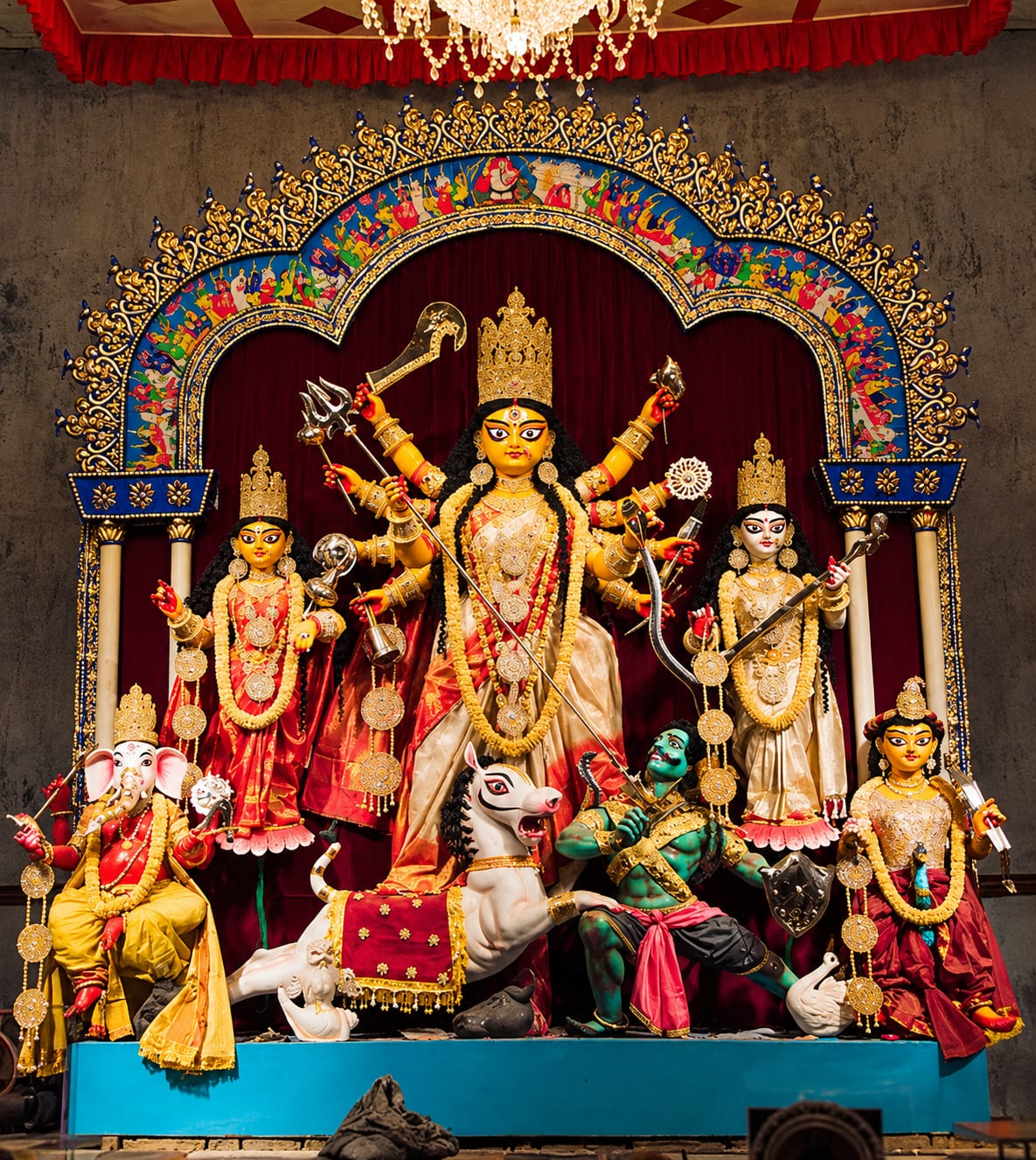
For nine nights, we light up an Akhand Jyoti. We fast, we sing, we dance till our feet ache, and we bow before Maa Durga and her various avatars. On the eighth or ninth day, we wash the feet of little girls, feed them halwa and puri, press a few notes into their little palms, touch their feet and call them devi. Then the festival ends, and the girl who was a goddess on Navami goes back to being ‘just a girl’, the day after. This is not an attack on anyone’s faith. I grew up with these festivals, and I love them. But I think the way to honour a tradition is to take it seriously. If we did, we’d have to admit something uncomfortable: We’ve become very good at worshipping the idea of a woman but fare abysmally when it comes to respecting the actual thing.
The Patrol Van Outside The Pandal
Here is a detail from this very Navratri. The Bhopal police have announced extra night patrols across all 38 police station areas from midnight to 5 am, with women personnel patrolling the markets, fairs, festivals and Garba-Dandiya venues. Other cities have made similar arrangements this year, with plainclothes women constables near pandals and special squads at the crowded spots. I’m glad they do it. Women do need this protection. But think about the subtext here.
The festival that celebrates female power needs a security plan, specifically, to keep women safe from the same crowd that came to celebrate it. We garland the goddess inside the pandal, and we deploy police outside it for the women walking home. Nobody guards a statue of Durga from the men praying to her. It's the women in the crowd who are the ones who need guarding.
The Patrol Van Outside The Pandal
Here is a detail from this very Navratri. The Bhopal police have announced extra night patrols across all 38 police station areas from midnight to 5 am, with women personnel patrolling the markets, fairs, festivals and Garba-Dandiya venues. Other cities have made similar arrangements this year, with plainclothes women constables near pandals and special squads at the crowded spots. I’m glad they do it. Women do need this protection. But think about the subtext here.
The festival that celebrates female power needs a security plan, specifically, to keep women safe from the same crowd that came to celebrate it. We garland the goddess inside the pandal, and we deploy police outside it for the women walking home. Nobody guards a statue of Durga from the men praying to her. It's the women in the crowd who are the ones who need guarding.
Devi On The Altar, Burden At Home
Look at how we treat women in an average household, on an ordinary Tuesday. She wakes up first and sleeps last. She cooks, packs the tiffins and manages the in-laws. Many women also hold full-time jobs, and still the house is ‘hers’ to run. If she’s tired, that’s just how it is. If she wants a career, we ask who will look after the kids. If she earns more than her husband, we call it a ‘delicate situation.’ We call her Annapurna when the food is hot, and we call her 'careless’ when the salt is off. Then there’s the girl child. We say ‘Beti is Lakshmi’ in speeches and WhatsApp forwards.
Yet families still quietly hope that the next one is a boy. We still spend lakhs on a son’s education and lakhs on a daughter’s wedding. We still ask a bride’s family about the dowry and call it “gifts”, so nobody has to say the real word. The goddess is welcome in the house for nine days, but the daughter often isn’t welcome as an equal for the other 356.
The Festival Of The Kanya
The Kanya puja is the part that stays with me most of all. We invite little girls home and touch their feet because we believe the divine lives in them. I think that’s a beautiful idea. But then the same girl is told to sit properly, to cover up, to come home before dark, and not to laugh too loudly. We worship her at eight and police her at eighteen. What if the divine takes residence in her laughter, her boisterous questions, her insistence on sitting cross-legged on the floor?. If a girl is divine only until she hits puberty, or only while she’s quiet and obedient, that isn’t worship; she’s just an ornament. We just treat her like a festival prop, taken out once a year, cared for during the nine nights and then put away again.
“But We Respect Women”
Everyone is aware of the usual reply. We respect women, we have so many goddesses, how can we not. It’s a fair point. Few cultures have as rich a tradition of the feminine divinity as ours. From Durga, who slayed demons, to Kali, who ends injustice, from Saraswati, who imparts knowledge, to Sita and Draupadi, who displayed enormous strength. But let's dissect what Durga actually does in the story. The gods couldn’t defeat Mahishasura, so they pooled their power and created her. She fought because the men had failed, and she won. This story is not about a woman who was asked to stay quiet, who served people, or the one who endured. It’s about the one who fought, who spoke up.
So if we really hold her in the esteem we claim to, then we should be comfortable with real women who fight too. We should be content with a woman who speaks up at work, who refuses an abusive marriage, who files a complaint when it would just be easier to stay silent, but instead, too often we call her ‘aggressive,’ ‘difficult’ or ‘too ambitious.’ We love Durga in the pandal, but we don’t love her in the family WhatsApp group when she disagrees.
What Respect Would Actually Look Like
I’m not asking anyone to give up their rituals. Keep the fasts and the garba and the kanya puja. But let me suggest a few things that would mean more than any of those. Share the work at home. If you can celebrate nine days of devotion, you can cook dinner or do the dishes on a Wednesday. Believe women when they speak. When a woman says she was harassed, don’t start by asking what she was wearing or why she was out so late. Stop treating safety as her job.
The advice shouldn’t be “come home early.” It should be “don’t be the man she needs to be afraid of.” Pay her fairly, promote her fairly, and listen to her in meetings. It sounds basic, yet it still isn’t normal in many offices. Teach your sons. The boy who grows up watching his father respect his mother will make a safer man than the one who only hears about Durga in a story.
The Real Test
Navratri ends, and Dussehra comes; Ravana burns, and the speakers go quiet. What matters is what we do on the tenth day and the days after it. Our respect for a woman shouldn’t be defined by when we touch her feet, once a year, but it should be defined in the small, humdrum moments; it is in these moments it's decided who gets heard at the dinner table, who gets a safe passage home, who gets to choose her own life.
So by all means, worship the goddess. But if you want to honour her, start with the women in your house, your office and your street, on the ordinary days when nobody is watching. Real puja should happen during those 356 days too.
Latest News
- ◆Nine Nights for the Goddess, What About the Other 356 Days?
- ◆'It’s Done Bro' : Gen Z’s Punchline-Powered Political Protest
- ◆INDIA Bloc Protests, Demands CEC's Resignation
- ◆Allahabad High Court Quashes Dowry FIR, Cautions Against Criminalising Failed Marriages
- ◆Nifty Snaps Eight-Week Losing Streak as Equities Rebound; 200-Week Average in Focus