
Lok Sabha Passes Births and Deaths (Amendment) Bill 2026
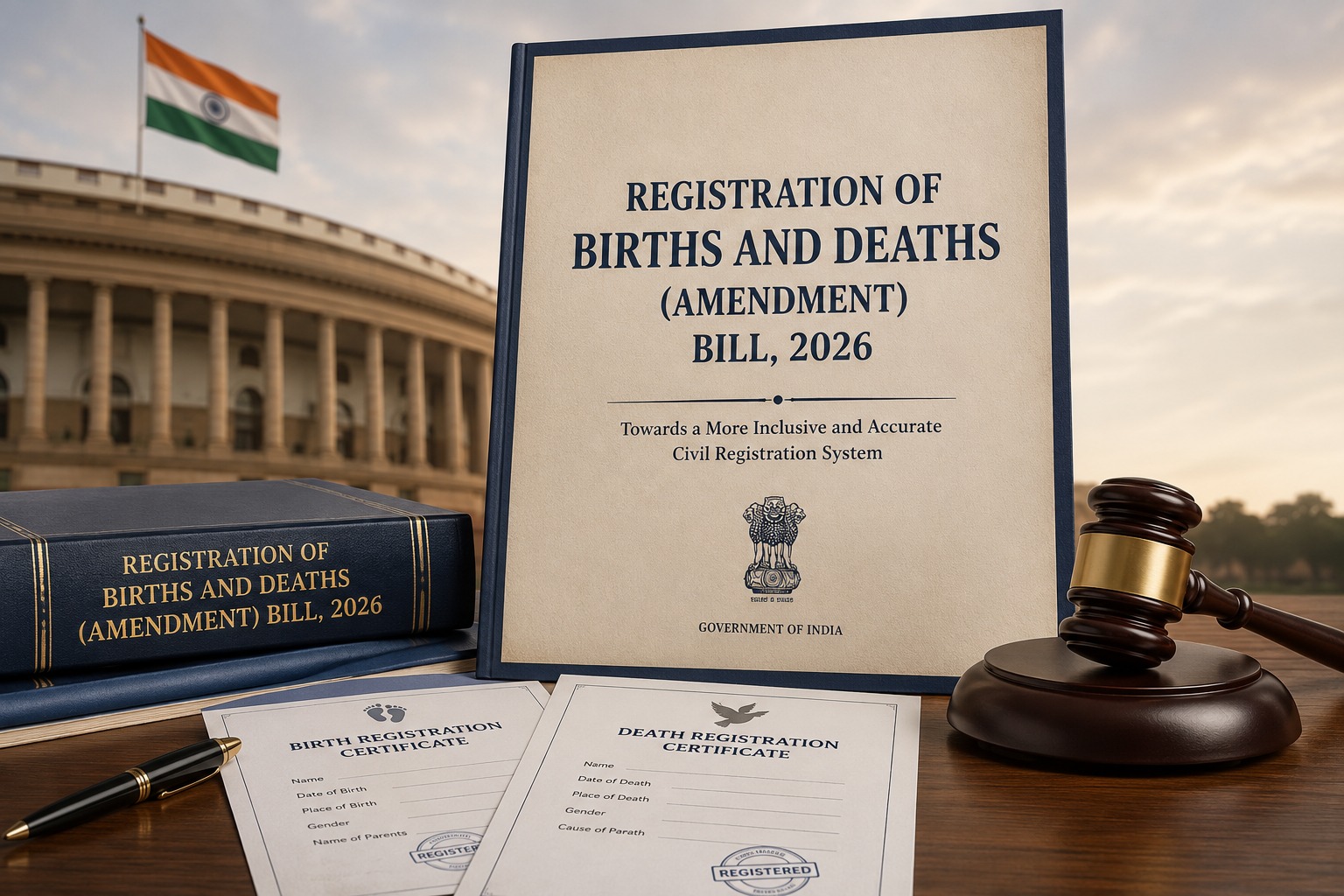
Registration of Births and Deaths (Amendment) Bill, 2026: What Changes?
Synopsis
Nityanand Rai, Minister of State for Home Affairs, introduced the Registration of Births and Deaths (Amendment) Bill, 2026. The Lok Sabha passed the Bill on July 31, 2026.
Why Was The Amendment Introduced?
The Registration of Births and Deaths (Amendment) Bill, 2026 is needed to make provisions for delayed registration more stringent, reduce fraud and add judicial oversight. This single-tier system applies regardless of how long the delay was.
The existing Registration of Births and Deaths Act, 1969, required approval from a District Magistrate, Sub-Divisional Magistrate, or an Executive Magistrate authorised by the District Magistrate, which demanded administrative scrutiny.
The same procedure applied regardless of whether the delay was two years or more. The Amendment Bill replaces this with a stricter framework by requiring the approval of a Judicial Magistrate First Class (JMFC) for registrations delayed by more than two years.
The 2026 Bill does away with this uniform approach and replaces it with a two-tier structure built around how late the registration actually is. For events reported between one and two years after they occurred, the existing framework broadly continues.
| Earlier Law | Amendment Bill, 2026 |
|---|---|
| One-year delay required approval from Executive Magistrate/DM/SDM | More than two years' delay requires approval from JMFC |
| Administrative Scrutiny | Judicial Scrutiny |
| Same process for all long delays | Two-tier verification system |
| Executive officers could approve | Only judicial authority for delays beyond two years |
What Does the Births and Deaths Amendment Bill Say?
The Bill requires every person responsible for reporting a birth or death to provide the Registrar with accurate information, or knowledge. The details must be furnished in the format prescribed by the State Government under Section 16(1) of the Registration of Births and Deaths Act, 1969.
In respect of birth and death in a house, hospital, jail, or choultry, the one in charge as a recognised authority will be the one answerable and legally obliged for registration.
Registration of births and deaths is mandatory, and the certificate issued under the Act provides legal identity to an individual
New Provision States: 1. The Bill further states that if a birth or death is reported to the Registrar after more than two years, it will be registered only on the order of a Judicial Magistrate of the First Class. 2. Under the Act, an order is required to register a birth or death for which information is given to the Registrar after one year of its occurrence. Such an order may be issued by: (i) a district magistrate, (ii) a sub-divisional magistrate, or (iii) an executive magistrate authorised by the district magistrate.
3. The order may be issued after verifying the correctness and on payment of a prescribed fee. The Bill instead provides that for a delay of more than two years, the order may be issued only by a Judicial Magistrate of the First Class. 4. Replaces executive administrative approvals with judicial orders for very late registrations. 5. The involvement of a Judicial Magistrate First Class (JMFC) adds a heavy layer of Judicial verification.
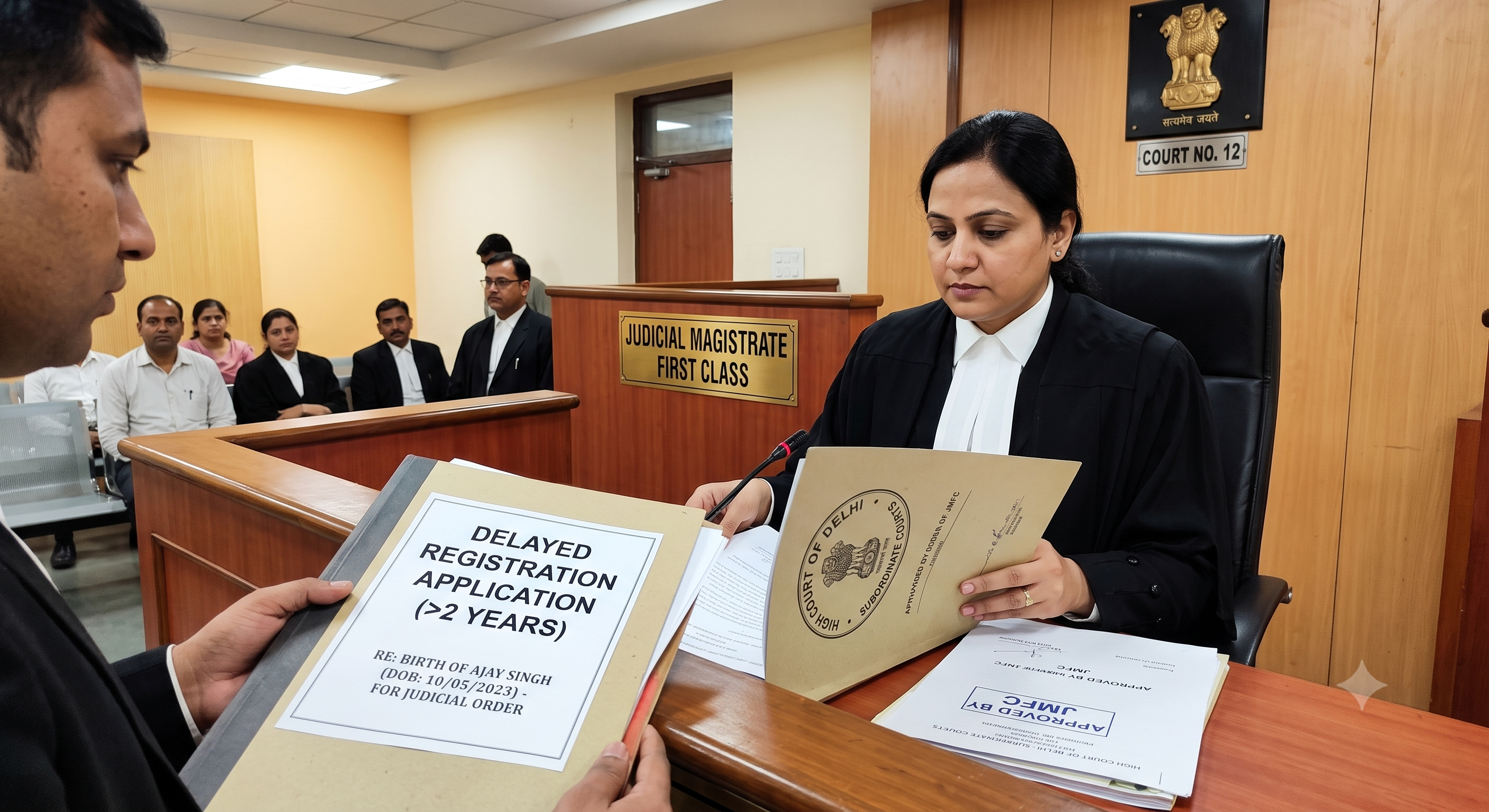
What is a Judicial Magistrate First Class (JMFC)?
A Judicial Magistrate First Class (JMFC) is a local criminal court judge who handles minor-to-medium criminal cases, grants bail and passes orders in accordance with the law. Unlike Executive Magistrates, they are appointed by the State High Court and work under the Delhi District Courts. The amendment introduces legal scrutiny before delayed birth or death registrations can be approved.
Why do Birth and Death Registrations Matter?
Registration of Births & Deaths is compulsory as per provisions of the Registration of Births & Deaths Act, 1969 and Delhi Registration of Births & Deaths Rules, 1999.
A Birth certificate is often required for admission to schools, the right to vote, obtaining a driving license, obtaining a passport and visas for foreign travel, and claiming the right to marry after attaining marriageable age.
Advantage of Death Registration to establish the fact of death for relieving the individual from social, legal and official obligations and to establish the claim on property, insurance and social security benefits etc.
What Happens Next?
The Bill was passed in the Lok Sabha amid disruptions by opposition members protesting against Union Home Minister Amit Shah over the deployment of police during the Cockroach Janta Party (CJP) and the latest controversy over Shri Ram Janmabhoomi Teerth Kshetra Trust ‘Chanda Chori’. The Bill is scheduled to be taken up in the Rajya Sabha on August 3. If passed there and after receiving Presidential assent, the amendments will come into force on a date notified by the Central Government.
Latest News
- ◆NSE's $2.3 Billion IPO Draws Over $10 Billion In Bids
- ◆India-New Zealand Free Trade Pact To Take Effect October 20
- ◆Tata Group Governance Feud Deepens Over Chandrasekaran's Term
- ◆India Reaffirms Push For Constructive Ties With Bangladesh
- ◆Teen Gang-Raped Near Delhi Temple, One Suspect Held In Encounter