
Supreme Court Leaves Rotation of Reserved Seats to Parliament
The Court declined a plea for mandatory rotation of SC/ST constituencies, saying courts cannot direct legislation and upholding the Allahabad High Court’s earlier refusal
Synopsis
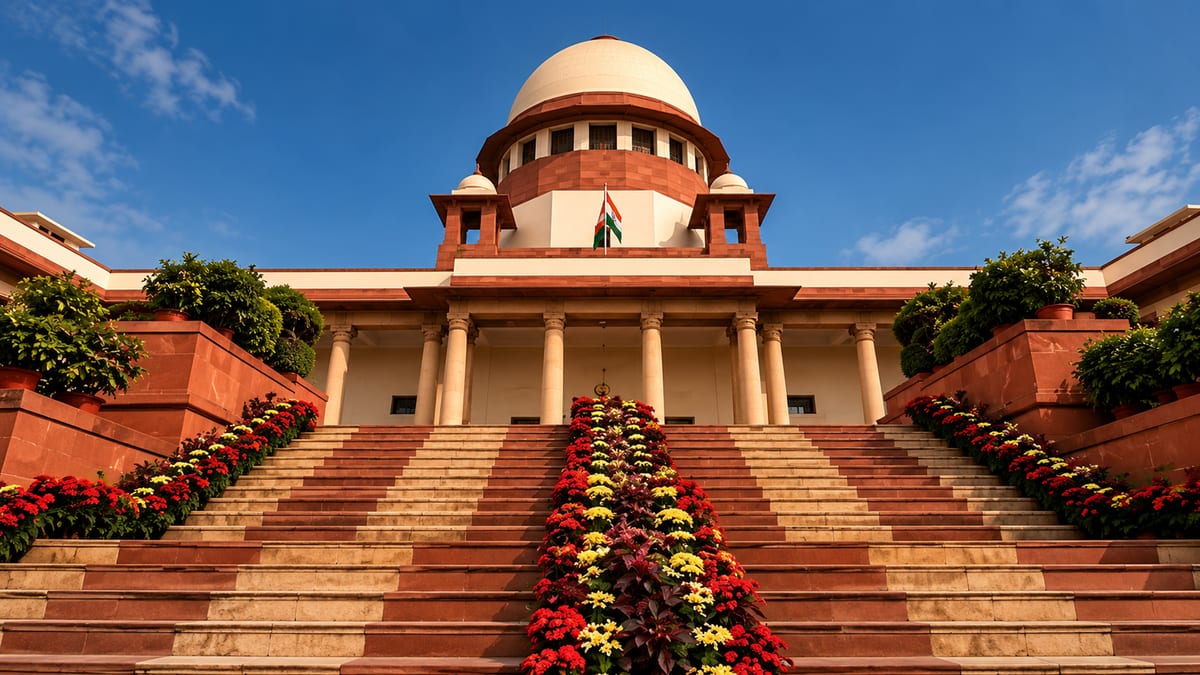
On November 4, the Supreme Court denied a petition asking for compulsory rotation of the seats for the Scheduled Castes (SCs) and Scheduled Tribes (STs) in the Parliament and State Assemblies. A Bench of Chief Justice Surya Kant said the demand should be raised by the elected representative, and not through the judiciary. This petition had come from Uttar Pradesh and attacked one of the provisions for delimitation of the UP Assembly. The decision does not affect the current agreement and asks Parliament to consider whether to change the status quo – which would require new legislation.
The Court ruled that the plaintiff should not be awarded damages
The Supreme Court on Wednesday refused to consider a PIL filed by the petitioner seeking rotation of reserved constituencies for the Scheduled Tribes and Scheduled Castes in Parliament and state assemblies as this is a matter of the legislature. The Court also had no doubt that it was not empowered to issue a mandamus for Parliament to pass a law for such rotation.
A hearing was held on November 4, 2026. Chief Justice of the Supreme Court Surya Kant had called upon the petitioner to approach the elected representatives over the issue. One report has him claiming to have called the wrong number” from the petitioner.
The competition from Uttar Pradesh
The plea was related to the Assembly constituencies of Uttar Pradesh. The Supreme Court pointed out that the Allahabad High Court had rejected the challenge to section 9(1)(c) of Delimitation Act and also refused to allow the rotation, saying that the issue of rotation was in the jurisdiction of the legislature. The petition had thus completed the journey up to the apex court having failed in the High Court.
At the hearing, the Bench asked probing questions on the petitioner's argument. It wondered if withholding the choice of electing candidates of SC/ST communities to Assembly seats for decades in UP would be considered as a restriction on electoral choice. The observation of the Court, "a majority community cannot be presumed to vote along caste/community lines" was also quoted in the same report.
The significance of the question
Reserved constituencies are those in which only the SC or ST candidates can contest; however, all voters in the constituency can vote. They are predetermined by delimitation, the process of creating electoral boundaries. The crux of the petition was that seats that are not filled for many years create a smaller pool of candidates and voters. The Court did not decide the merits of that claim, it declared that the cure was legislative.
The order is in keeping with a long-established rule: courts interpret and test laws, they do not demand the creation of them by Parliament. A writ of mandamus may be used to compel an official to do what it is their duty to do. It cannot, as the Court suggested, force the legislature to enact legislation. The Bench upheld the High Court's decision and thus preserved Section 9(1) (c) of the Delimitation Act. LiveLaw said the ruling was a confirmation of the validity of that provision.
What happens next
An amendment in Parliament or a new delimitation exercise would be needed if there was a change. The reports show that there is no proposal before the House. The petitioner can appeal to lawmakers, as suggested by the Chief Justice.
The decision comes amid a broader discussion of seat allocations and frequency of seat changes. For the time being, that discussion heads inside the legislature.
Latest News
- ◆Punjab Stubble Burning: Cases Tally Hits 2787; 710 FIRs Registered
- ◆Supreme Court Leaves Rotation of Reserved Seats to Parliament
- ◆Supreme Court Allows Green Crackers in Delhi-NCR for Two Days
- ◆Indian IT Stocks Hold Firm Amid Global AI Sell-Off
- ◆Brent Dips Below $100, Then Edges Back Above as Hormuz losses Stability
Read More
Supreme Court Allows Green Crackers in Delhi-NCR for Two Days
Supreme Court Presses RBI to Make Banks Compensate Digital-Arrest Fraud Victims