
Modi’s Five-Nation Tour Yields $40 Billion, New Partnerships
India and Italy forge a Special Strategic Partnership in Rome, as Modi’s sweeping European and Gulf tour closes with 15-plus agreements
Synopsis
The Prime Minister has completed his six days, five country tour on May 20, 2026, in the UAE, the Netherlands, Sweden, Norway and Italy. The visit resulted in investment pledges of nearly $40 billion, over 15 Memorandums of Understanding were signed and importantly, India-Italy relations were elevated to the highest level of the Special Strategic Partnership, between the two nations. The visit also reaffirmed India's emerging importance as a partner of the advanced Western economies.
A Tour with a strategic width
The relentless pace of the diplomacy signalled by the itinerary — the United Arab Emirates, the Netherlands, Sweden, Norway and Italy in just six days — was unprecedented when Prime Minister Narendra Modi set off for the UAE on May 15, 2026. When his aircraft left Rome on May 20, the results had surpassed expectations that had been anticipated before he started the tour.
According to official Indian government figures, the visit led to nearly $40 billion in new investment pledges and plans for business expansion in the country. Over 15 Memorandums of Understanding were inked in various areas such as energy, semiconductors, and agricultural transformation, green hydrogen, and defence.
In addition, Prime Minister Modi was also honoured with the Food and Agriculture Organization's (FAO) Agricola Medal 2026, which is one of the most prestigious awards of the United Nations organization.
Stop by Stop: What Was Secured
The tour began in the UAE capital of Abu Dhabi, where Modi discussed and reinforced the Comprehensive Strategic Partnership between India and the UAE with UAE President Sheikh Mohammed bin Zayed Al Nahyan.
India has extended its support for stability in the region of West Asia, and the two countries agreed to continued cooperation on infrastructure, energy and digital connectivity. The outcomes of the visit will “further strengthen our friendship and contribute to growth and prosperity,” Modi said.
The Netherlands: semiconductors and strategic alignment
The Netherlands and India inked a strategic partnership plan for trade, defence, semiconductor supply chains, artificial intelligence and green hydrogen in the Netherlands.
In the Netherlands, home to ASML, the only company in the world that makes extreme ultraviolet lithography machines that are vital for advanced chip production, the country is also a key partner for India's aspirations in the field. The two governments also agreed to take a joint stance on the financing of terrorism.
The Nordic Elevation is found in Sweden and Norway
India and Sweden also put their bilateral ties on a new level by agreeing to strengthen the partnership to a strategic partnership, with the trajectory of cooperation evolving in areas of clean energy, innovation, and defence.
Modi participated in the third India-Nordic Summit in Norway where he held bilateral talks with Nordic leaders. The summit was originally slated to take place in the wake of the serious tension between India and Pakistan in early May, but it ended up being a discussion about high technology, investment in renewable energy, and multilateral governance systems.
Rome: The Crown of the Tour
India-Italy tied up as Special Strategic Partners
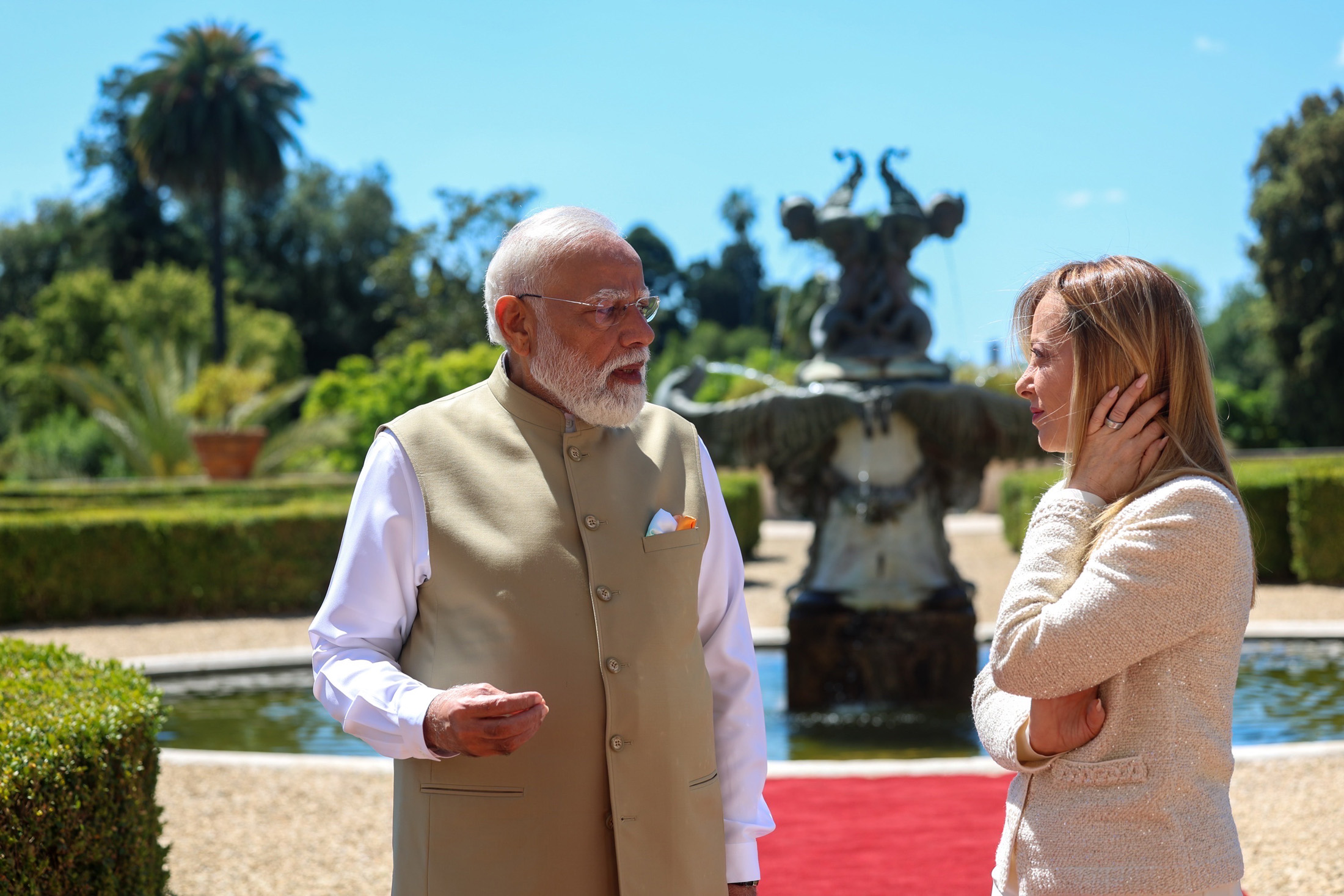
The last and most significant one was with Prime Minister Modi making detailed bilateral discussion in Rome with Italian Prime Minister Giorgia Meloni. The two leaders elevated India-Italy ties to the “Special Strategic Partnership” – the highest level of diplomacy ever seen in India-Italy relations.
The partnership comes on the heels of a bilateral Strategic Partnership in 2023, and takes the relations forward to sustained high level engagement during the G20 Johannesburg summit in November 2025 and culminates in this formalisation.
The India-Italy Joint Strategic Action Plan (2025-2029) signed during the Rome meeting offers a time-bound plan in sectors such as trade, investments, technology, defense, blue economy, connectivity, education and people-to-people relations.
Trade, Technology and the Innovation Corridor
Bilateral trade is moving towards a 20 billion euro goal by the two leaders in economic content. During the G20 Johannesburg bilateral in November 2025, it was revealed that current bilateral trade between India and Italy is valued at approximately $15 billion for the year 2023-24, and that since 2000, Italian foreign direct investment in India has increased to about $4 billion.
Technology and innovation were given special attention at the Rome meeting as drivers of the bilateral relationship. Modi said that joint efforts in areas like artificial intelligence, quantum computing, civil nuclear energy and space presents “infinite possibilities.” The two governments also announced plans for an India-Italy Innovation Centre which will help to link up startups, research institutions and businesses from the two countries.
The episode of a Moment of Public Diplomacy is "The Melody
A snarky conversation between Modi and Meloni on the sidelines of formal talks in Rome captured a world's attention that is far beyond the scope of standard diplomatic communiqués.
As done at the previous bilateral talks, Modi gave Meloni a box of Indian chilled sweet ‘Melody' as a symbol of their personal rapport, which was confirmed at the G7 Summit to which they gave the informal name ‘Melodi' for their talks. One short video, posted on social media, garnered more than 100 million views in a matter of hours.
The gesture wasn't meant to have any policy significance, but it did signal a facet of Indian foreign policy that is gaining traction: the use of cultural familiarity and informal warmth as a lasting addition to the formal diplomatic edifice. Both sides have attributed the impetus and the quantum of bilateral elevation in the last two years to the personal rapport between the two leaders, Modi and Meloni.
Security Implications: India's growing western frontiers
The five-nation tour comes on the heels of a slew of heavy diplomatic activities that have marked India's foreign policy in 2025 and 2026. The nature of the itinerary, Gulf, northern Europe and the Mediterranean, was a carefully worked-out process to bring together partnerships where they have traditionally not worked in tandem from an Indian perspective.
There was a strong technological imperative in many bilateral talks between the two sides, as evidenced by the focus on semiconductors, artificial intelligence, green energy and defence.
Such Indian interest in Dutch semiconductor expertise, Swedish clean technology, Norwegian maritime and energy innovation, and Italian aerospace and defence manufacturing is not a coincidence — it aligns directly with industrial policy priorities defined under India’s domestic production-linked incentive policies, and its broader strategic autonomy doctrine.
The Indian side's previous description of Indian approach to European partnerships was "diversified depth", which meant that instead of issue-based relations, a structured, multi-domain framework should be established that can accommodate new fields of cooperation. The India-Italy Joint Strategic Action Plan 2025-29 is a reflection of that.
The Outlook is designed to maintain momentum in the business
However, institutional follow through will be necessary to make the Joint Strategic Action Plan's aspirations real on the ground in the context of India-Italy ties being elevated to a Special Strategic Partnership. Both governments have agreed to a time-bound approach to implementation, with periodic reviews built into this approach.
On the European side, Italy's backing for the India-European Union Free Trade Agreement (ITACCI), a deal towards which Meloni has been persistently advocating at G20 summits and at bilateral meetings, is now incorporated into the architecture of the Special Strategic Partnership. The development of that deal would be the most impactful economic effect for both economies with India and Italy aligning.
In the context of India's ongoing five-nation tour, the combined impact of the investments worth $40 billion, the various high-level engagements and a slew of signed pacts is a tangible reinforcement of India's role in the restructuring of the supply chains of the advanced industrial economies, as the world's trade architecture is being massively reconfigured.