
NSA Doval in Riyadh to Secure India's Energy Lifeline
India's National Security Advisor visits Saudi Arabia to reinforce energy security partnerships as Strait of Hormuz tensions disrupt global oil supply chains
Synopsis
Energy Security as National Security The decision to deploy the National Security Advisor — rather than a trade minister or oil ministry official — for the Saudi engagement is itself revealing. It reflects New Delhi's recognition that, in the current environment, energy security is not merely an economic policy question but a matter of national security in the fullest sense. The disruption of India's energy supply chains, if prolonged or severe, would have consequences not merely for fuel prices but for industrial output, agricultural inputs, transportation networks, and ultimately for the social and political stability that underpins India's development trajectory. Ajit Doval's visit to Riyadh is, in this reading, an act of proactive statecraft — an effort to use India's diplomatic weight and the depth of its bilateral relationship with Saudi Arabia to insulate the country's energy supply from a geopolitical conflict that it did not create and cannot resolve, but whose consequences it cannot afford to absorb passively.
In this scenario, Geopolitics is threatening the Fuel Supply.
In a large way, India's economic trajectory depends on its energy security. The country now imports about 85% of its crude oil needs, making New Delhi highly vulnerable to any disruption of oil supplies from the Gulf countries in terms of reliability or cost. India's energy economy was brought into focus when the United States (US) and Iran clashed, leading to the partial closure of the Strait of Hormuz, which is the vital sea passage through which a significant share of India's energy imports is carried.
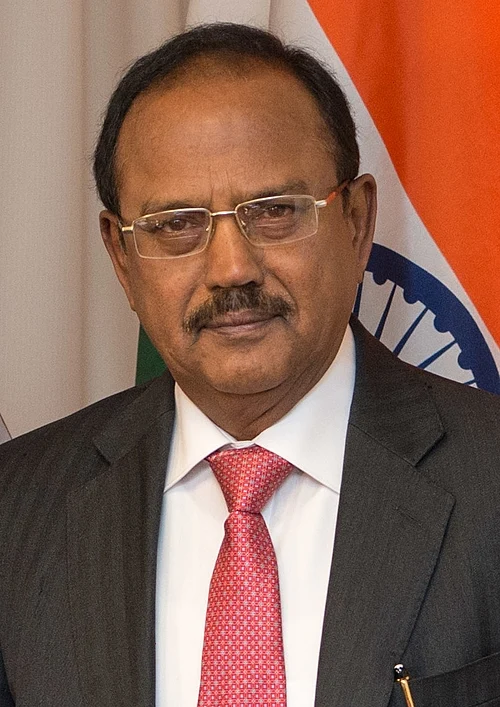
In this context, the visit of the National Security Advisor, Ajit Doval, to Saudi Arabia has to be seen. The visit, which has been described as part of India's wider outreach diplomacy to its major energy suppliers, is a positive step in energy diplomacy, a strategy to keep energy supply relationships with its primary oil suppliers intact, diversified and unaffected by the worst of the regional geopolitical storm.
This paper explores Saudi Arabia's strategic importance for India's energy matrix.
Saudi Arabia has been a top importer of crude oil from India, and is consistently one of the top two or three countries in this category, behind only Iraq and the UAE. The Kingdom's contribution to India's energy security is not just in terms of volume of trade, but also in terms of the role Saudi Aramco plays in setting price benchmarks for Asian buyers, supply continuity and reliability, even at times of regional tension, and the political relationship between New Delhi and Riyadh that establishes a framework for energy cooperation.
Over the last decade, the relationship between India and the Kingdom of Saudi Arabia has seen considerable leap forward, not only in the field of energy transactions, but also in the sector of investments by Saudi Arabia in India's infrastructure and technology, India's sizeable migrant community in the kingdom with remittances making a significant contribution to foreign exchange earnings, and the strengthening of defence and security co-operation between the two countries. The visit of NSA Doval, which is of a high-level nature, and not that of a lower-ranking diplomat, reflects the importance New Delhi gives to this bilateral relationship in a period of increased stress in the energy markets.
The Strait of Hormuz Disruption: Quantifying India's Exposure.The Strait of Hormuz Disruption: Quantifying India's Exposure
The partial blockage of the Strait of Hormuz has proven to have measurable effects on India. Forex traders quoted by PTI pegged the price of Brent crude at around Rs 110 a barrel by early May 2026, which would put a strain on the trade balance and currency of the nation. On May 4, 2026, the Indian rupee reached a new low of 95.23 against the USD, with there being a lot of reasons for that, including the uncertain foreign capital outflows and crude prices.
From a macroeconomic perspective, high oil prices are likely to exert several negative effects on the Indian economy: raise fuel inflation; lower consumption expenditure; increase the current account deficit (CAD) and limit the room for the Reserve Bank of India (RBI) to accommodate monetary policy due to CAD.
In the near term, the USD/INR rate is likely to stay under pressure, as global geopolitical risks are anticipated to weigh on investor sentiment driving the rupee higher towards 95.35 and 95.70, says "persistent dollar demand". The S&P Global Indexes also offer investors transparency.
"Persistent dollar demand is expected to keep the pressure on the rupee in the short term, driving the USD/INR rate higher toward the 95.35 and 95.70 levels, as global geopolitical uncertainties continue to weigh on investor sentiment." — Dilip Parmar, Senior Research Analyst, HDFC Securities
Alternative Supply Routes & Diversification Strategy
One of the items on Doval's agenda in Riyadh is meant to be to ensure that Saudi Arabia has alternative shipping routes that avoid the Strait of Hormuz whenever possible. Saudi Arabia has heavily invested in its East-West pipeline, called the Petroline, that transports crude oil from the Eastern Province to the Red Sea port of Yanbu, bypassing the Strait of Hormuz altogether. The route is of interest to India because of its direct role in the use of the route if it is disrupted in the Hormuz area.
On a wider scale, India's energy security policy has always focused on diversification, be it from a geographical, supplier, fuel or transport perspective, as a key measure to mitigate the risk of energy supply disruption. The trip to Saudi Arabia is part of the NSA's efforts to engage in parallel diplomacy with the UAE, Iraq and perhaps other Gulf producers to bolster India's energy supply lines. The political geography of India and India's balancing act with West Asia.
The Geopolitical Dimension: India's balancing act between West Asia
The diplomatic outreach to Saudi Arabia goes beyond the bilateral context, and needs to be handled with great skill. New Delhi has striven to keep relations with both Washington and Tehran alive and has been caught up in the middle by the conflict between the two powers, and the pressure on India to do more to take the American side. The current binary confrontation in West Asia is testing India's traditional strategic policy of strategic autonomy, which entailed engaging all major powers without tilting towards any particular one.
The initiative to reach out to Saudi Arabia is not solely to fetch crude oil supply. It is also about maintaining India's wide spectrum of diplomatic engagement in a region where every major power is on one side or the other of the fence, and India has to avoid being drawn into one side or the other with the right sort of diplomatic effort on all fronts to ensure that no single relationship falls to the level of creating trouble for India.
Latest News
- ◆NSE's $2.3 Billion IPO Draws Over $10 Billion In Bids
- ◆India-New Zealand Free Trade Pact To Take Effect October 20
- ◆Tata Group Governance Feud Deepens Over Chandrasekaran's Term
- ◆India Reaffirms Push For Constructive Ties With Bangladesh
- ◆Teen Gang-Raped Near Delhi Temple, One Suspect Held In Encounter