
Piyush Goyal Slams EU's Carbon Tax
He also said the EU is "shooting" itself in the foot
Synopsis
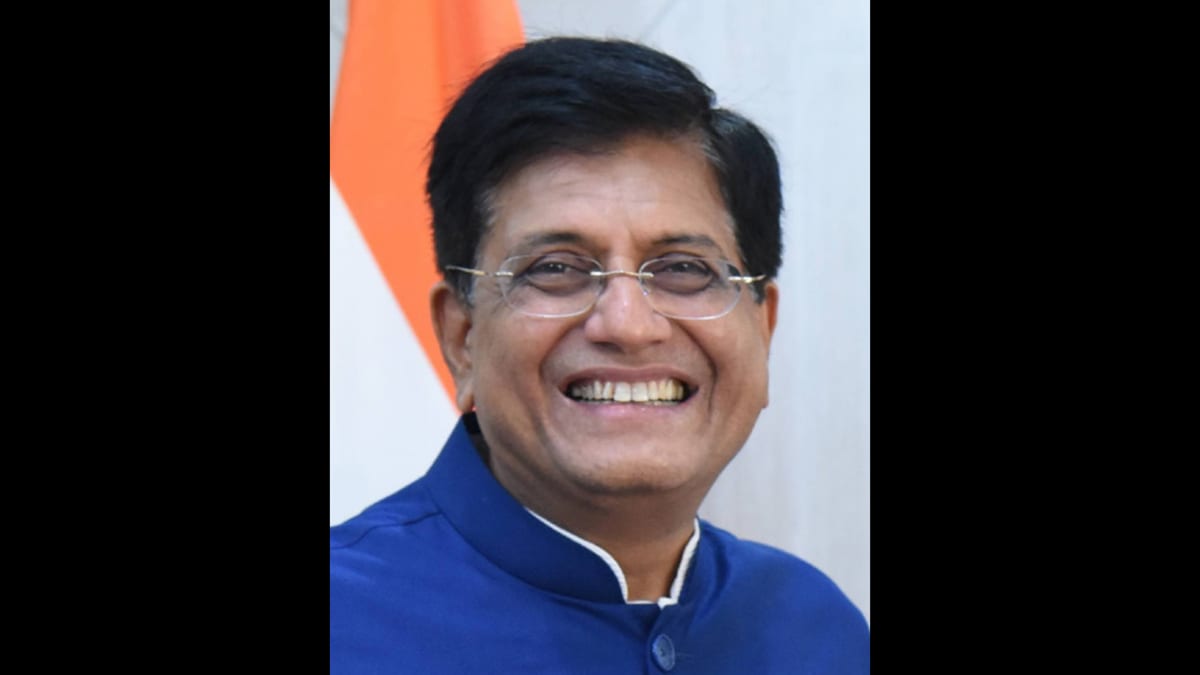
Union Commerce and Industry Minister Piyush Goyal on Thursday, 22 October, 2026, launched a sharp criticism of the European Union's carbon tax and restrictions on steel imports, warning that the bloc was "inviting disaster" by imposing regulations that could drive up the cost of living, fuel inflation and erode the competitiveness of European industries.
Questioning the EU
Speaking at the Berlin Global Dialogue in Germany, Goyal questioned the economic rationale behind the EU's Carbon Border Adjustment Mechanism (CBAM) and its 50 per cent tariff on steel imports that exceed prescribed quotas, arguing that such measures would ultimately harm European businesses and consumers.
"You put a CBAM on yourself. You put a 50 per cent import duty on steel entering your country. You're inviting disaster. Your cost of living will go up," Goyal said.
The minister accused the EU of continuously adding regulatory burdens on its industries, warning that excessive restrictions were making European manufacturers increasingly uncompetitive in international markets.
"We've lost count. You keep adding to your regulations, add to the burden on your industry, make yourself uncompetitive," he remarked.
Goyal argued that the consequences of these policies would extend beyond industrial production, with higher prices of essential construction materials potentially increasing the cost of infrastructure development across Europe.
He cited ports, airports, highways, expressways and public utilities as examples of projects that could become more expensive because of rising steel, aluminium and cement prices.
"Now, imagine going forward, every infrastructure, whether it's a port or an airport or your autobahns in Germany or your expressways, your utilities, your water pipelines, you name the infrastructure with costlier steel, costlier aluminium, costlier cement, with all the overlay of CBAM and deforestation rules," he said.
Words of Caution
The minister also cautioned that Europe's growing reliance on regulatory barriers could provoke retaliatory measures from trading partners, potentially creating additional obstacles for European exporters.
"And in this reciprocal world, you bring in a regulation and stop some other country from working with you. They'll bring in two regulations, which will hurt your businesses," Goyal warned.
He maintained that the cumulative impact of these restrictions could leave European companies struggling to compete globally, pointing to the difficulties already confronting the continent's automobile industry.
"You will not be able to compete in global markets. Your auto industry is suffering that already," he said.
The EU's CBAM, which entered its definitive phase on January 1, 2026, is designed to impose a carbon price on certain imported goods based on emissions generated during their production.
The mechanism covers carbon-intensive sectors, including iron and steel, aluminium, cement, fertilisers, electricity and hydrogen.
Under the framework, eligible EU importers must comply with carbon-emissions reporting requirements and purchase certificates corresponding to the embedded emissions of covered products. The EU maintains that the mechanism is intended to prevent carbon leakage and ensure that imported goods face carbon costs comparable to those borne by domestic producers.
Separately, the bloc's steel import safeguards, effective from July 1, 2026, provide for a 50 per cent duty on imports exceeding specified tariff-free quotas.
Effect on India
India has repeatedly expressed concerns about CBAM, particularly its potential impact on exporters from developing economies, which could face additional compliance costs and trade-related disadvantages.
Goyal's remarks also highlighted the wider disagreement between developed and developing economies over the distribution of responsibilities for tackling climate change.
The minister pointed out that India accounts for only around 3-3.5 per cent of global carbon emissions despite supporting approximately 17 per cent of the world's population.
His argument underscored India's position that climate-related trade measures must account for differences in development levels and should not become barriers to the economic growth of developing countries.
Contrasting the EU's regulatory approach with India's trade strategy, Goyal said New Delhi was focused on strengthening domestic competitiveness and building partnerships based on mutually beneficial economic interests.
"We've got fair, equitable, and balanced agreements with every one of the partners with whom we are working," he said.
He emphasised that India was pursuing trade relationships built around complementary strengths and competitive industries rather than excessive regulatory restrictions.
The remarks come as India and the European Union move towards concluding the formalities for their free trade agreement, with Goyal indicating during his Germany visit that the agreement could be signed before the end of 2026.