
PM Modi’s ‘Critical Minerals’ Message on Day 2 of BRICS
The presidency focused on resilience, innovation, cooperation and sustainability
Synopsis
On Day 2 of the BRICS Summit 2026, Prime Minister Narendra Modi addressed the session and said that India's term as BRICS chair has been a ‘win-win collaboration.’ He highlighted several issues, including the global supply chain, critical minerals, and BRICS as a bloc in a multipolar world.
The Focus of This Year’s BRICS
Prime Minister Narendra Modi also said that under India's BRICS presidency, the grouping had focused on four pillar: resilience, innovation, cooperation and sustainability and had worked to turn a shared vision into mutually beneficial collaboration. He highlighted initiatives aimed at strengthening preparedness against pandemics and disasters, making supply chains more resilient and promoting innovation through startups, digital agriculture and technology.
PM Modi said India had sought to expand BRICS cooperation beyond governments by involving entrepreneurs, farmers, researchers, women, youth and ordinary citizens.
“India has advanced the spirit of friendship, partnership, and cooperation through the BRICS platform. We have endeavoured to ensure that BRICS cooperation is not limited to governments alone; we want our entrepreneurs, farmers, researchers, women, youth, and ordinary citizens to become active participants as well. I am pleased that, with your cooperation and support, we have been able to transform our shared vision into a win-win collaboration."
Modi Pushes AI, Digital Agriculture
Modi highlighted the proposed BRICS Network on Digital Agriculture, which will use artificial intelligence, geospatial technology, and digital public infrastructure to address farmers' needs.
He also backed stronger support for innovation through the BRICS Incubator Network, which will connect startups and incubators. A proposed BRICS Startup Innovation Fund is aimed at supporting innovative and scalable solutions.
Modi cautioned that the weaponisation of technology and critical minerals could hinder shared global progress and stressed the need to ensure that technological development remains inclusive.
New Disaster Management Guidelines
The Prime Minister said BRICS countries had reached a consensus on Early Warning Data Integration Guidelines for disaster management.
He said the growing impact of pandemics, climate-related disasters and supply-chain disruptions showed that no crisis remains confined to one region in an interconnected world.
Modi said BRICS must identify challenges early, remain prepared and respond quickly to emerging crises.
Early Warning System for Infectious Diseases
India also announced a consensus on a BRICS Integrated Early Warning System aimed at strengthening prevention and response to infectious diseases. The initiative is intended to improve preparedness and cooperation among member countries in dealing with potential health emergencies.
Global South Confidence in BRICS Has Increased
Modi said confidence in BRICS among countries of the Global South had increased, with the grouping seeking to strengthen cooperation across areas including technology, innovation, agriculture, logistics and sustainability.
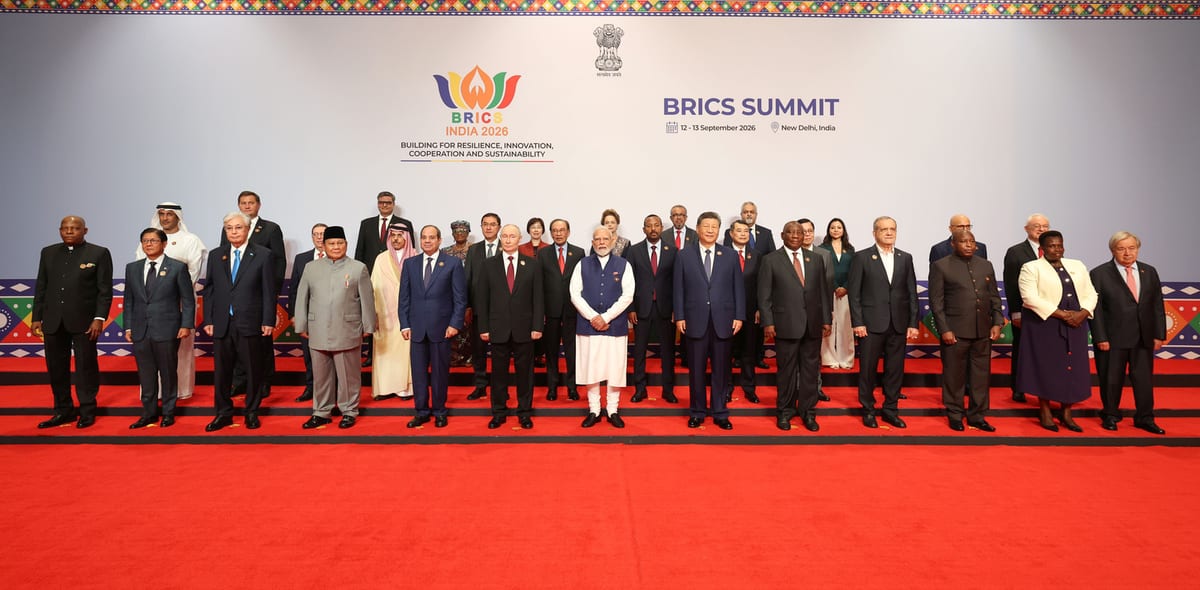
The second day of the summit began with leaders arriving at Bharat Mandapam and posing for a family photograph before the main session on “Resilience, Innovation, Cooperation and Sustainability.”