
Powell's Eight Years at the Fed: A Tenure in Full
Jerome Powell departs the Federal Reserve having navigated pandemic collapse, four-decade-high inflation, and sustained pressure on the institution's independence
Synopsis
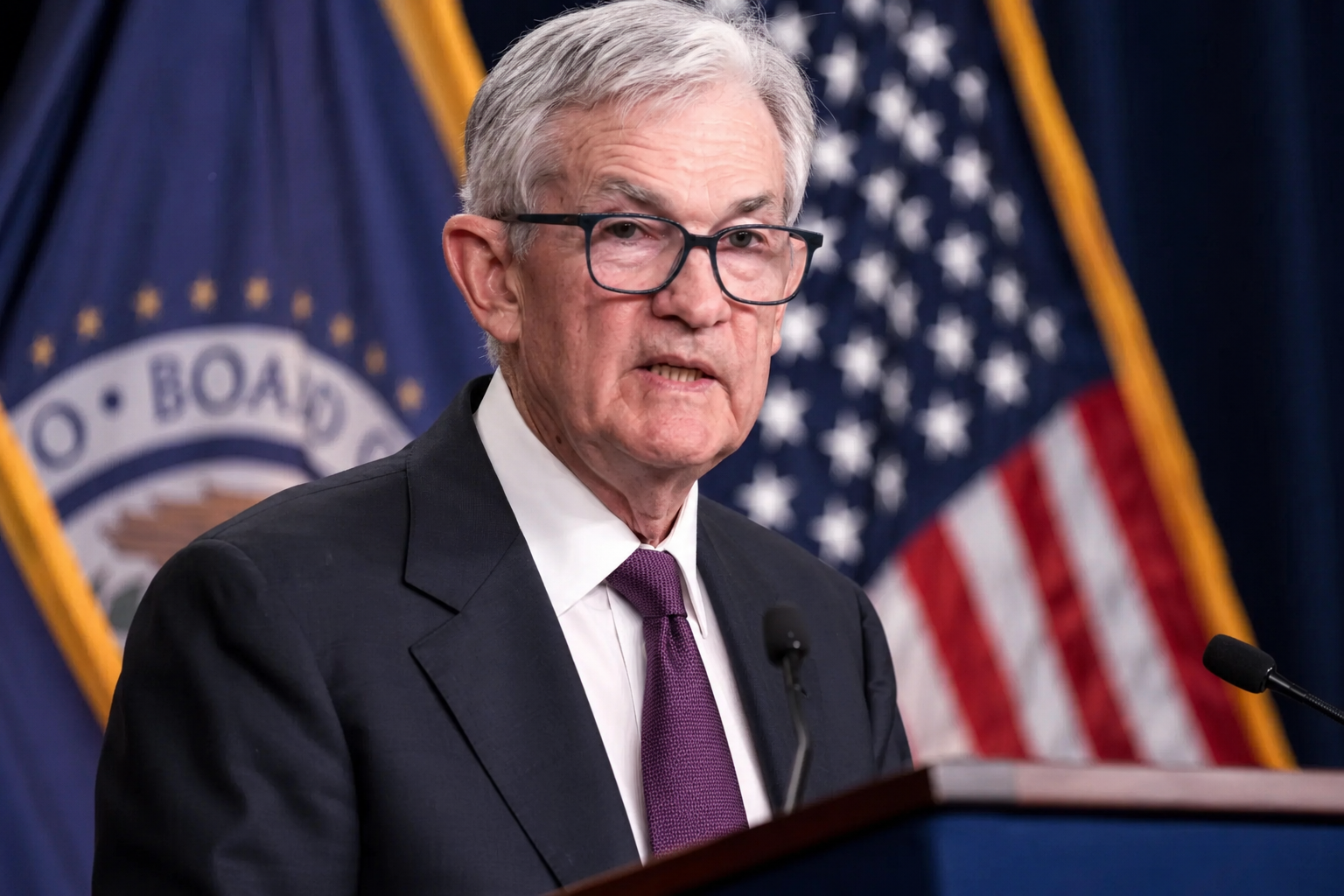
Jerome Powell's tenure as Chair of the United States Federal Reserve has come to a close, marking the end of an eight-year stewardship that encompassed the sharpest economic contraction since the Great Depression and the highest inflation in four decades. His departure — with Trump ally Kevin Warsh awaiting Senate confirmation as his successor — arrives at a moment of relative economic stability but considerable institutional uncertainty around the Federal Reserve's independence.
The Day Powell Left
As he officially came back to his Washington D.C. home for the last time as Chair of the Federal Reserve, he would leave behind a Fed that was very different from what he had found in 2018 — and an American economy that, despite its remaining cracks, had not turned into the worst nightmare many had envisioned.
The eight years in which he directed the world's most powerful central bank witnessed some of the most hurried conditions in history: a worldwide pandemic, a Great Recession unlike any previous, a sharp rise in consumer prices not seen since the Carter era, and a level of political pressure on the independence of the central bank like never before. The Making of a Crisis Manager
The appointment of Powell to Fed Chair by President Donald Trump in February 2018 was a fairly routine change, as Yellen had been in place since 2014. A lawyer who had been previously a private equity partner at The Carlyle Group, Powell served on the Federal Reserve Board since 2012. He was seen as a "pragmatic centre," neither to change the policy dramatically nor upset it.
The following was anything but ordinary
Powell took a fast Fed move in March 2020, when the COVID-19 pandemic caused a sudden halt to economic activity in the U.S. It cut the benchmark federal funds rate, the rate that banks charge each other for overnight loans, from 1.75% to a range of 0% to 0.25% at two emergency Fed meetings. At the same time, the Fed implemented a broad range of asset purchase programs, credit facilities and emergency lending tools that altogether pumped trillions of dollars into financial markets.
Conventional measures of the economy bounced back strongly. As bad as the 3.4% contraction in 2020 GDP was, it was not as catastrophic as the 25% decline during the Great Depression. The unemployment rate reached its maximum of 14.7% in April 2020 before falling sharply and quickly as the recovery accelerated.
The inflation chapter: Transitory No More
The pandemic years of Powell's tenure proved his ability to move quickly, while his decision during the inflationary years was put to the test. Consumers' prices in the United States started to increase rapidly in 2021, as the supply chains broke down and demand grew. The Fed's initial description of inflation as “transitory” led to continued criticism from both economists and market participants, who questioned whether the Fed was missing the true facts that inflation pressures were building.
In mid-2022, the CPI's annual rate stood at 9.1%, the highest level since 1981. The Fed has implemented the most aggressive tightening cycle in 40 years, hiking interest rates by 11 percent since March 2022, as it moved the federal funds rate from near zero percent to 5.25 percent to 5.50 percent.
The gamble paid off, in so far as it was successful. Inflation hit around 3% by mid-2024, and the Fed started to gradually lower rates. The economists' predicted recession failed to materialise in 2022. The U.S. enjoyed what economists termed a "soft landing"—inflation brought down without mass unemployment.
The story of a chair that was brought to a halt by politics
Perhaps in an unusual way for a central banker, Powell faced long-running tensions with the executive branch. President Trump, who originally named him to the Fed, made pointed comments about the interest rate policies of the Fed, even suggesting at one point that he would seek to remove Powell from his job.
The Federal Reserve Act also protects the Fed chair by allowing his or her removal by “for cause,” a rule that has proved to be a high-court safeguard of Fed independence. It was important that Powell never wavered from an assertion that the Fed's policy-making decisions were not political.
As Trump made his return as President in 2025, the question of independence resurfaced with reports that the administration was aggressively looking for ways to curb or oust Powell before his term expired. Powell's service was uninterrupted.
The Warsh Succession and What It May Portend
President Trump has nominated former Federal Reserve Governor Kevin Warsh to replace Powell at the institution, which is currently a senior fellow at Stanford University's Hoover Institution. From 2006 to 2011, Warsh was a member of the Federal Reserve Board, and has since been a prominent skeptic of expansive monetary accommodation, broadly identified with a philosophy of conservative economic policy.
He must be confirmed by the U.S. Senate. Assuming this is the case, Warsh will inherit an economy in which inflation has been brought down significantly from its peak, but not quite to the Fed's 2% target level, and where interest rates are still much open to debate between economists and market participants.
In its April 2025 World Economic Outlook, the International Monetary Fund (IMF) pointed to continued risks from “a sudden turnaround in the U.S. Federal Reserve's policy announcement” from a “consequential” effect on global financial conditions, sovereign debt costs and currency stability in emerging markets.
What Powell Leaves Behind
As in politics, economist opinions on Powell's chairmanship are divided. Leftists complain the Fed was too slow on inflation during 2021 and that the interest rate increases were too hard on the poor. Some right-leaning critics argue that the Fed's balance sheet growth throughout the pandemic has sowed the seeds of the new normal of monetary stimulus. His defenders, and there are many from the mainstream economics community, say that Powell managed to operate in truly unprecedented times, and did it with a clear sense of communication and a readiness to take strong action when it was necessary.
Necessarily, some numbers stand out loud and clear: the job of chairman of the Federal Reserve came to Powell with unemployment at 4.1%, and he left with unemployment at 4.2%. Between that there was a pandemic, the worst inflation in forty years, and a prolonged and unrelenting attack on the independence of the Fed by the political system that it has weathered with its basic purpose intact.
Central banking seldom has times of unmistakable success. Jerome Powell's time did not provide such a tidy ending — but it did stave off the abyss.
Latest News
- ◆NSE's $2.3 Billion IPO Draws Over $10 Billion In Bids
- ◆India-New Zealand Free Trade Pact To Take Effect October 20
- ◆Tata Group Governance Feud Deepens Over Chandrasekaran's Term
- ◆India Reaffirms Push For Constructive Ties With Bangladesh
- ◆Teen Gang-Raped Near Delhi Temple, One Suspect Held In Encounter