
Exam Bill Tabled Amid Lok Sabha Uproar
The legislation increases jail terms and fines for examination fraud while empowering fast-track courts, amid repeated disruptions in the Lok Sabha over the July 20 protest crackdown.
Synopsis
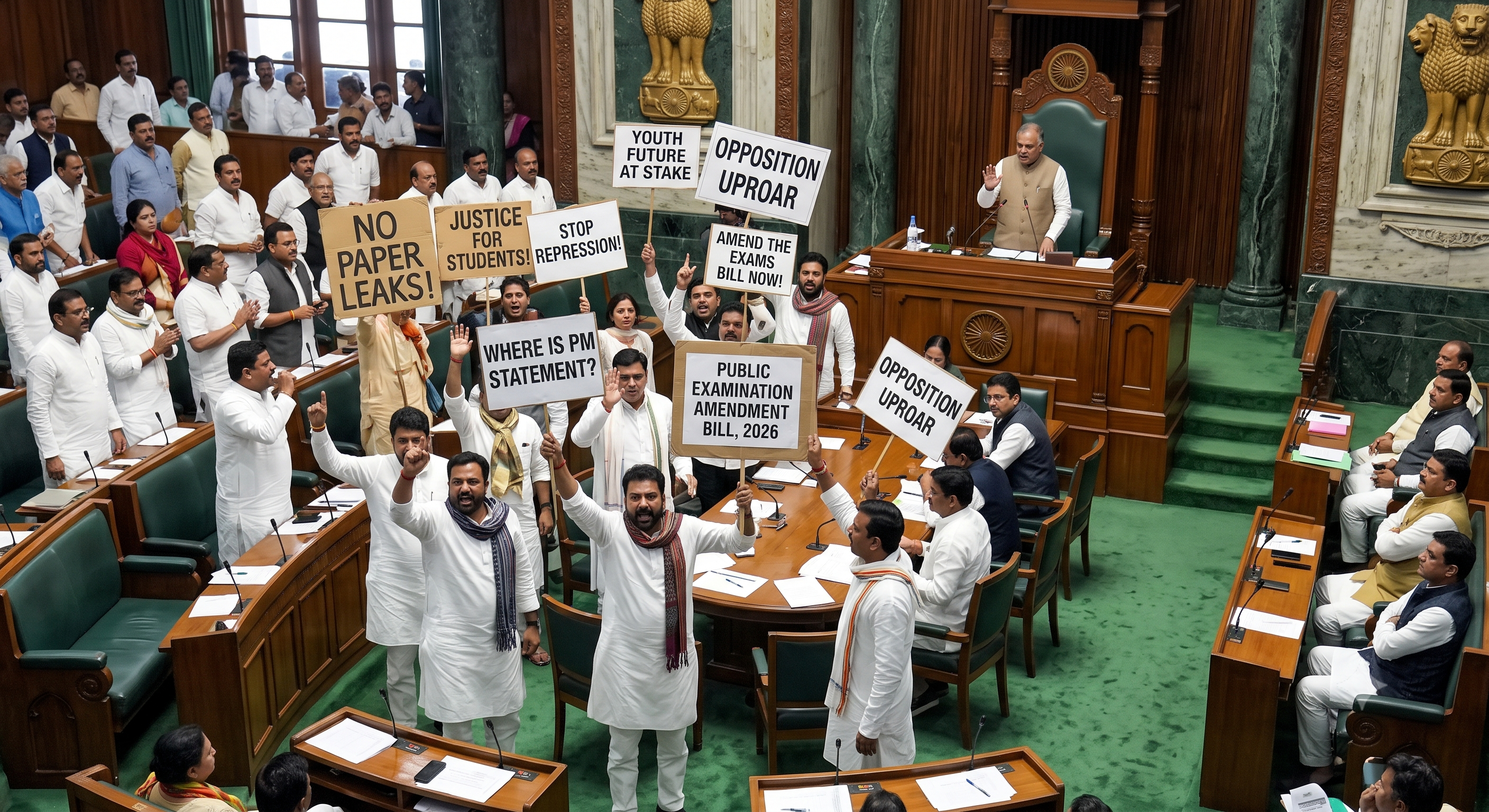
Union Minister Dr Jitendra Singh introduced the Public Examination Amendment Bill in Lok Sabha on the sixth day of the Monsoon session in the Parliament House. Opposition MPs raised questions about the excessive use of force against Jantar Mantar protestors.
What does the Bill Propose?
The Bill aims to make paper leaks, cheating networks and examination fraud much more serious offences by fast-tracking punishments, speeding up investigations and creating stronger enforcement mechanisms.
It amends the existing Public Examinations (Prevention of Unfair Means) Act, 2024, which was to prevent unfair practices in government recruitment and entrance examinations.
New Provisions: Fast-Track Investigation: We must investigate paper leak cases within two months, replacing the earlier system that often led to delayed accountability and transparency. Punishments: Individuals involved in unfair means, such as leaking question papers, helping candidates cheat or manipulating examination processes, with imprisonment increased from 3-5 years to 5-10 years; fine also increased from ₹10 lakh to ₹50 lakh. If the offence is found to be organised crime, a group or a network running paper leak operations, the minimum imprisonment is up to 7 years, and the fine is ₹10 crore.
Expanded list of offences: The Bill classifies activities such as leaking question papers, tampering with OMR sheets, creating fake examination websites, issuing fake admit cards and other fraudulent practices.
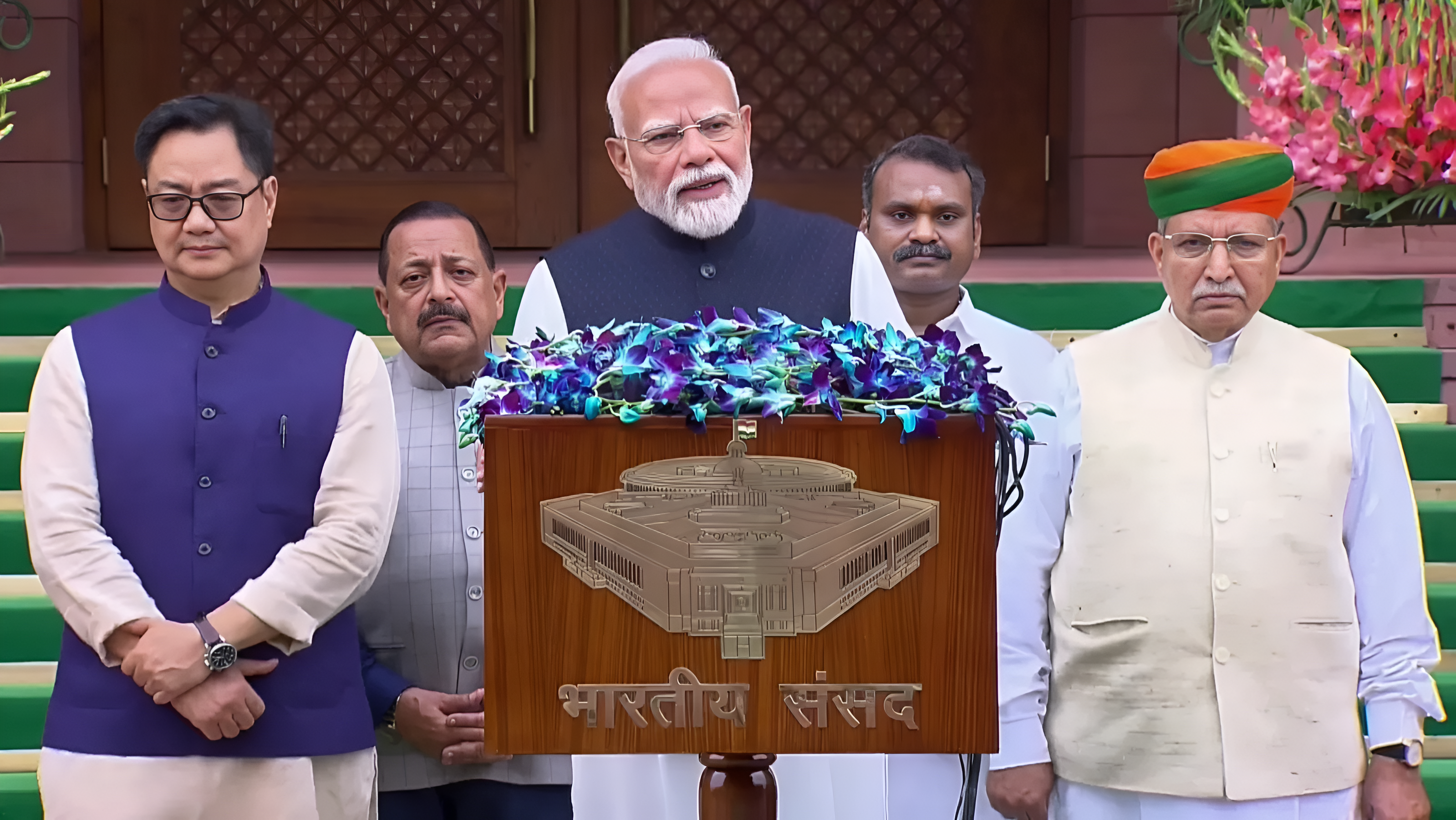
PM Modi announces fast-track courts and reform task force
Ahead of the Bill’s introduction in the Parliament House, Prime Minister Narendra Modi stated that the government has decided to set up fast-track courts to ensure swift and stringent punishment for those involved in paper leaks.
"The future of our youth cannot be compromised. Those who attempt to destroy it will not be spared," PM Modi said while announcing the initiative.
PM Modi unveiled a high-level examination reform task force headed by tech entrepreneur Nandan Nilekani to overhaul India's examination system, The panel has been tasked with recommending technology-driven reforms to strengthen transparency, security, and credibility in India's public examination system following widespread concerns over repeated paper leak incidents.
Bill Overshadowed by Opposition Protests
Opposition continues protest demanding a statement from PM Modi and Home Minister Amit Shah over the use of force on protestors in Delhi. Krishna Prasad Tenneti, in the chair, asks for the Opposition to allow a discussion on the Public Examinations (Prevention of Unfair Means) Amendment Bill, 2026. Meanwhile, the Opposition continues its sloganeering and protests inside the House. Mr Tenneti asks, “Do you not want this discussion?”, The Opposition refuses to yield.
Lok Sabha Speaker Om Birla allocated over six hours for discussion on the Public Examinations Amendment Bill. However, repeated interruptions and sloganeering by Opposition MPs prevented substantive debate.
As the protest continued, the Lok Sabha adjourned for the day without completing the scheduled discussion on the Bill.
Latest News
- ◆NSE's $2.3 Billion IPO Draws Over $10 Billion In Bids
- ◆India-New Zealand Free Trade Pact To Take Effect October 20
- ◆Tata Group Governance Feud Deepens Over Chandrasekaran's Term
- ◆India Reaffirms Push For Constructive Ties With Bangladesh
- ◆Teen Gang-Raped Near Delhi Temple, One Suspect Held In Encounter