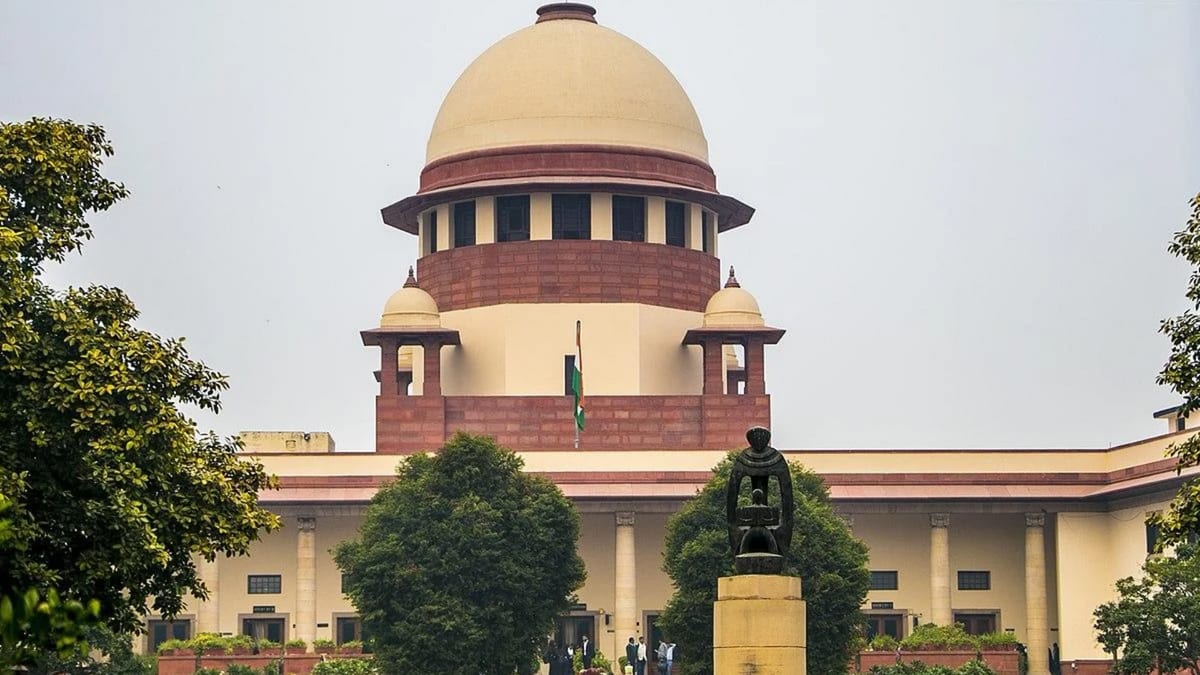
Supreme Court: Consensual Intimacy Cannot Become Rape Merely Because a Relationship Ends
A Bench led by Justice B.V. Nagarathna discharged a Kerala man of rape and cheating charges, distinguishing deception-vitiated consent from post-breakup regret

Synopsis
The Supreme Court on Friday discharged a Kerala resident of rape and cheating charges, concluding that "physical intimacy" during a "subsisting relationship" cannot be considered rape later on since the relationship is terminated. In the words of a Bench of Justices B.V. Nagarathna and R. Mahadevan, the offence should be restricted to sexual violence, coercion or manipulated consent and a difference could be seen between consent given due to a wrong impression and regret in a later stage. The ruling comes on top of previous rulings that have been made on failed relationships.
Ruling came on limits of rape law
The Supreme Court Friday spoke out against the growing tendency of broken relationships being turned into criminal cases and said that consensual intimacy in a subsisting relationship can't be decried as rape in the light of the fact that the relationship has come to an end.
The two Justices, B.V. Nagarathna and R. Mahadevan, while discharging a Kerala resident of rape and cheating charges, observed this. After the Kerala HC rejected his plea to have the criminal case dismissed and a plea to set aside the proceedings, he had moved the apex court.
The allegations
The prosecution had stated that the complainant, who was divorced from her former husband, had deceived her petitioner by telling him that she had no husband in mind, got him to agree to enter the marriage and had the marriage performed. The two lived together from 1996 to 2003, which followed their marriage in Mysore, and alleged the man raped her, cheated on her and committed a breach of trust.

Consent, deception and hindsight
The charge of rape, a heinous offence, should be reserved for actual sexual violence, coercion or manipulation of consent, the Bench said, separating consent which was 'vitiated by deception' from post-breakup regret. The Court said that treating each failed relationship as rape “destroys the man's agency altogether” as at some time, he would have wished to participate in that relationship, but then feared that the same would be considered rape later on.
The Bench questioned if it was possible to say that a man had no right to withdraw from a relationship and whether such withdrawal constituted deception or fraud. As ANI reports it has said in its reply, “Clearly not.” It said that it would “dilute the gravity of the offence alleged” if all the sour relationships are turned into rape allegations.
The notion of "precedent" and its boundaries
In an earlier judgment in Samadhan v. State of Maharashtra (2025), the same Bench had ruled that physical intimacy cannot be a retrospective crime of rape simply because a relationship did not lead to marriage. As per Prashant v. State of NCT of Delhi (2024), a consensual relationship which does not lead to marriage cannot be imbued with the colour of criminality.
The Court has not dealt with all complaints in the same manner. It refused to drop a rape FIR filed by the victim in 2024 saying allegations did not show that victim continued to agree. Under Section 69 of the Bharatiya Nyaya Sanhita, sexual intercourse by any means or with any person where the necessary consent is obtained through deceit, by false promise of marriage, is an offence separate from the offence of rape.
The ruling is a clear message about
The judgment adds to a series of rulings by trial courts and police that judges should follow to determine if a case should be put on hold or charges should be dropped. The Bench restated the criminal law's focus on the means of consenting, rather than the end of a relationship.
Latest News
- ◆PM-KISAN’s 24th Instalment Sends ₹18,690 Crore to 9.34 Crore Farmers
- ◆Heavy Rain Brings Delhi Its Cleanest October Air Day in Four Years
- ◆Reliance Industries Posts Record Quarterly Profit of ₹29,550 Crore on Refining Strength
- ◆Jio Platforms Reports 13.7% Profit Growth in First Results After Listing
- ◆Brent Crude Settles at Six-Month High of $117.64 After Hormuz Tanker Attack
Read More

Supreme Court Presses RBI to Make Banks Compensate Digital-Arrest Fraud Victims
Supreme Court Directs EC to Examine Bulk Voter-Deletion Forms in Uttar Pradesh