
Supreme Court Declines to Suspend CEC Gyanesh Kumar, Seeks Responses on Decision-Making
A bench led by the CJI issued notices to the Centre and the Election Commission on petitions alleging decisions were taken without unanimity
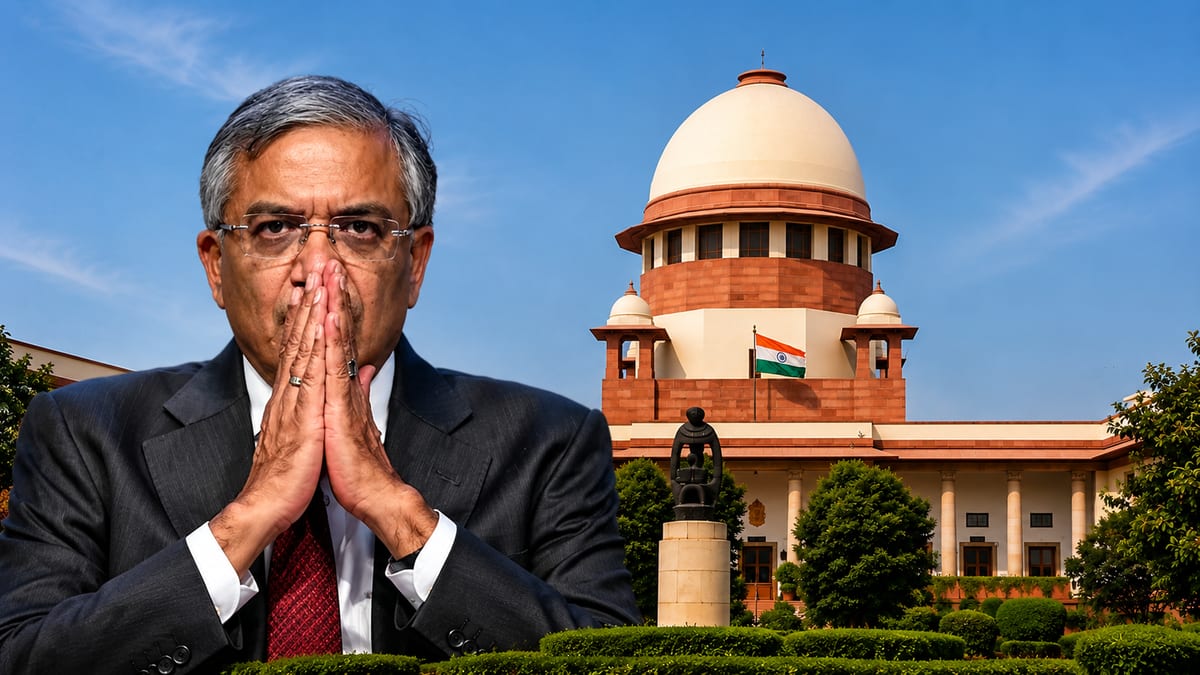
Synopsis
The Supreme Court on Monday refused to put on hold Chief Election Commissioner Gyanesh Kumar's suspension, after receiving the notice, but did take notice of two petitions, seeking his intervention in the case of Special Intensive Revision, which was allegedly taken by the two election commissioners without the consent of the third. A bench presided over by Chief Justice Surya Kant said any decision that is against the law will be null and void. The Centre and the Commission are given a week to reply.
Court refrains from suspending
The Supreme Court on Monday refrained from issuing a prima facie interim order to halt the removal of Chief Election Commissioner Gyanesh Kumar, preferring to hear from the Election Commission of India (ECI) and other respondents before passing any interim order.
Chief Justice of India, Surya Kant and Justices, Joymalya Bagchi and V. Mohana formed the bench. It had asked the Centre and the Election Commission for responses within a week. Mr. Kumar and Election Commissioners Sukhbir Singh Sandhu and Vivek Joshi were also informed.
What are the claims of the Petitions?
The pleas came in the wake of a report carried out in The Indian Express. The ECI has made 14 decisions against the objections of the other two Election Commissioners (ECs) in the electoral roll in respect of the Special Intensive Revision (SIR), it said. Those objections are part of the petitions and were made between Oct. 2025 and Aug. 2026.
Rakesh Kumar Singh's petition seeks a declaration that the multi-member Commission can't act unilaterally. It also asks for the Commission's records to be examined and, as interim relief, Mr. Kumar's suspension.
Advocate Shailendra Mani Tripathi's petition seeks to quash the 14 decisions. It also demands a Judicial Inquiry Commission or an Special Investigation Team with a retired Supreme Court judge as the Chairperson. That petition states that 13 crore names were removed from rolls in 30 States and UTs during the SIR. This is the petitioner's claim and has yet to be put to the test in court.
Arguments Before the Bench
Senior Advocate Vikas Singh, on behalf of Mr Singh, invoked Section 18 of CEC Act, 2023. It says the Commission's decisions should, as far as possible, be unanimous, and otherwise by majority.
He also referred to the protection conferred on CEC by Section 16, where he pointed out that Supreme Court judges are not similarly protected. Mr Singh said that the interim orders were necessary as voters had a fear of their voting rights being compromised and also that the Court was not going to set aside an election.
The bench wondered who would conduct elections if the CEC were suspended. Mr. Singh recommended the other two commissioners could. Justice Bagchi asked if the Court could make ex-parte that all decisions were unilateral. The CJI told Mr Singh that it would be an admission by him to read the ECI press release in the context of what had been printed in newspapers.
The bench assumed that the Commission's decisions were lawful, but would set aside any decisions that were not the same as the law. The CJI also stated that the Court will consider the record to find out "who has altered it".
The Legal Backdrop
In December 2023, the CEC and Other Election Commissioners (Appointment, Conditions of Service and Term of Office) Act was passed. In another petition, the petitioners allege it has replaced CJI with a Union Minister in the selection panel.
Under the Act, Mr. Kumar was appointed as the CEC in February 2025. The bench told Mr Singh that the challenge against the appointment process is pending before a larger bench.
What Happens Next
The question that is immediately before them is procedural. Both Centre and the ECI have to submit responses, the bench has stated it will review argument whether there was a consensus on any decision.
The ECI's formal response is yet to be placed on record. For the time being, the Court requests that the Commission respond on the record without any further action.
Latest News
- ◆Delhi High Court Dismisses Riots, Jamia Pleas Seeking Independent Probes and FIRs
- ◆Supreme Court Refuses to Cancel Bail Over Accused's 'Money and Power' Video
- ◆Supreme Court Declines to Suspend CEC Gyanesh Kumar, Seeks Responses on Decision-Making
- ◆Case Filed Against CJP Supporters over Unauthorised Shivaji Park Gathering
- ◆Israeli Strike on Gaza City Apartment Block Kills Five, Officials Say