
Supreme Court Refuses to Cancel Bail Over Accused's 'Money and Power' Video
Justices Vikram Nath, A.G. Masih and Sandeep Mehta left undisturbed the Punjab and Haryana High Court's bail order, granted on the accused's fifth plea
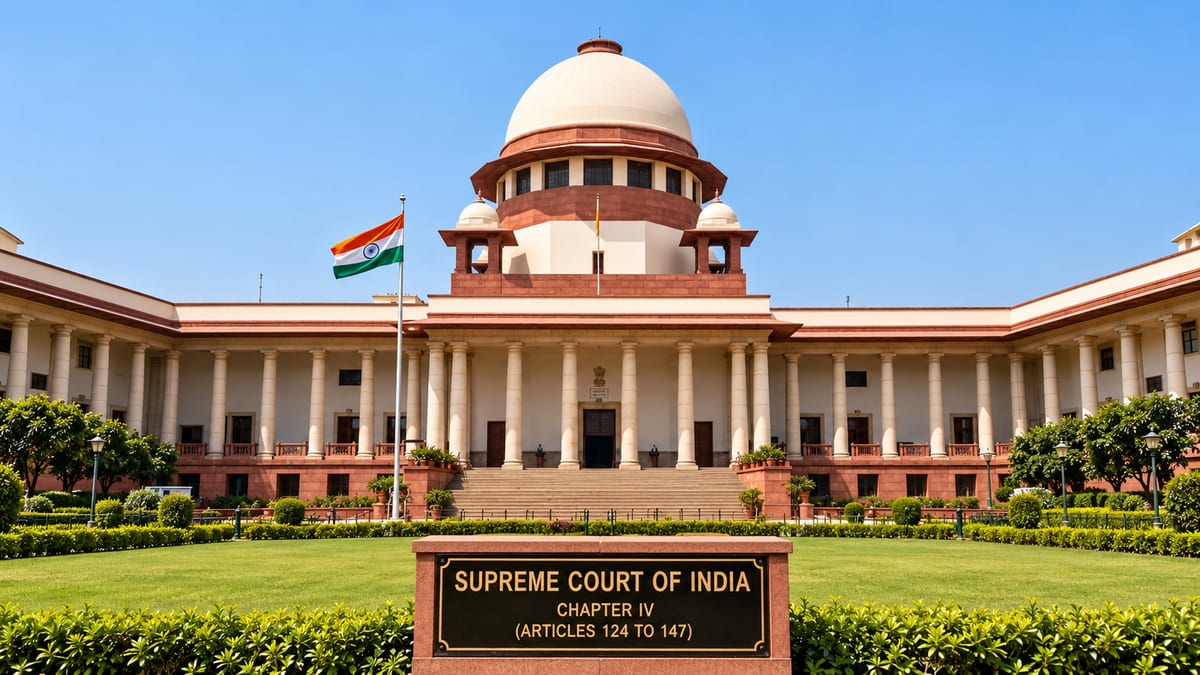
Synopsis
The Supreme Court on September 21 dismissed a complainant's plea to cancel the bail of Vishal, accused of murder, who had posted a social media video claiming money and power could get anything in the country. Justice Vikram Nath, the presiding officer of the bench, remarked that he seemed to be enjoying the freedom. Petitioner had also referred to a fifth bail plea and alleged witness intimidation. The accused is presumed to be innocent.
A video is posted after completion and becomes a Best Practice at the top court
The Supreme Court has rejected a bail plea filed by the accused in the murder of a police officer who claimed after his bail was granted that "money and power can get you anything in this country" in a social media video.
Complainant Rajbala's appeal was rejected by a bench of Justices Vikram Nath, Augustine George Masih and Sandeep Mehta. It was an appeal against the Punjab and Haryana High Court's bail order issued to the accused, Vishal. The case was heard on 21st September 2026.
The Case Against a Bail Order
In the FIR, Vishal is mentioned and is alleged to have been involved in an attack by an unlawful assembly on Gajanand, inflicting the fatal blow with an axe. The petitioner also pointed out that the High Court had stated the similar during granting bail to co-accused Sahil in January 2024. The accused is presumed innocent and these are charges brought by the complainant side.
The procedural history was the key issue in the dispute. In February 2024, Vishal's bail plea was rejected by an Additional Sessions Judge and the High Court rejected the bail application four times in succession.
On April 23, 2026, Justice Rajesh Bhardwaj allowed him to be granted regular bail on his fifth bail plea. The petitioner contended that there was no change in the facts or circumstances which rendered the earlier refusals inappropriate.
In her plea, she cited the Ram Govind Upadhyay vs Sudarshan Singh case and stated that the reasons to give, and cancel bail, are different and if a bail was denied earlier, it had to be explained why it was revoked in this case.
Allegations of Intimidation
The plea said that the cross-examination of prosecution witness Dharmender, son of the deceased, was incomplete and it was due to the accused. Earlier, Dharmender had filed an FIR against Vishal's father under Section 506 of Indian Penal Code alleging threats, it said.
It also noted that a celebratory convoy followed Vishal after he was released, and that Facebook posts indicated bribery and influence would get Vishal out of criminal cases. That caused fear for prosecution witnesses, the complainant wrote.
The Bench's Response
The Court was not convinced of post's misusing bail. In a lighter vein, Justice Nath added, "If someone had money and power, he would not be in custody for this long. The money was the lawyer's fee, the Court said in a statement. The Court did not call into question the order of the High Court. The observations made are verbal and there is no detailed written reasoning included in the reports.
Why The Ruling Matters
The case addresses an often asked question in bail law: What happens to a person afterwards when they need to be taken back into custody? Social media activities are frequently used as ‘evidence of influence' by complainants.
The ruling indicates that in this instance there was a need for something more than a boastful or celebratory post. Does not preclude cancellation when there is evidence of witness interference. The petitioner had clarified his apprehension of witnesses in the plea and the same was not considered by the Court so the trial court can keep a watch on the proceedings.
Latest News
- ◆Delhi High Court Dismisses Riots, Jamia Pleas Seeking Independent Probes and FIRs
- ◆Supreme Court Refuses to Cancel Bail Over Accused's 'Money and Power' Video
- ◆Supreme Court Declines to Suspend CEC Gyanesh Kumar, Seeks Responses on Decision-Making
- ◆Case Filed Against CJP Supporters over Unauthorised Shivaji Park Gathering
- ◆Israeli Strike on Gaza City Apartment Block Kills Five, Officials Say