
Tata Group Governance Feud Deepens Over Chandrasekaran's Term
Tata Trusts calls the board's reappointment of N Chandrasekaran "illegal," setting up a legal clash over control of the $185-billion conglomerate
Synopsis
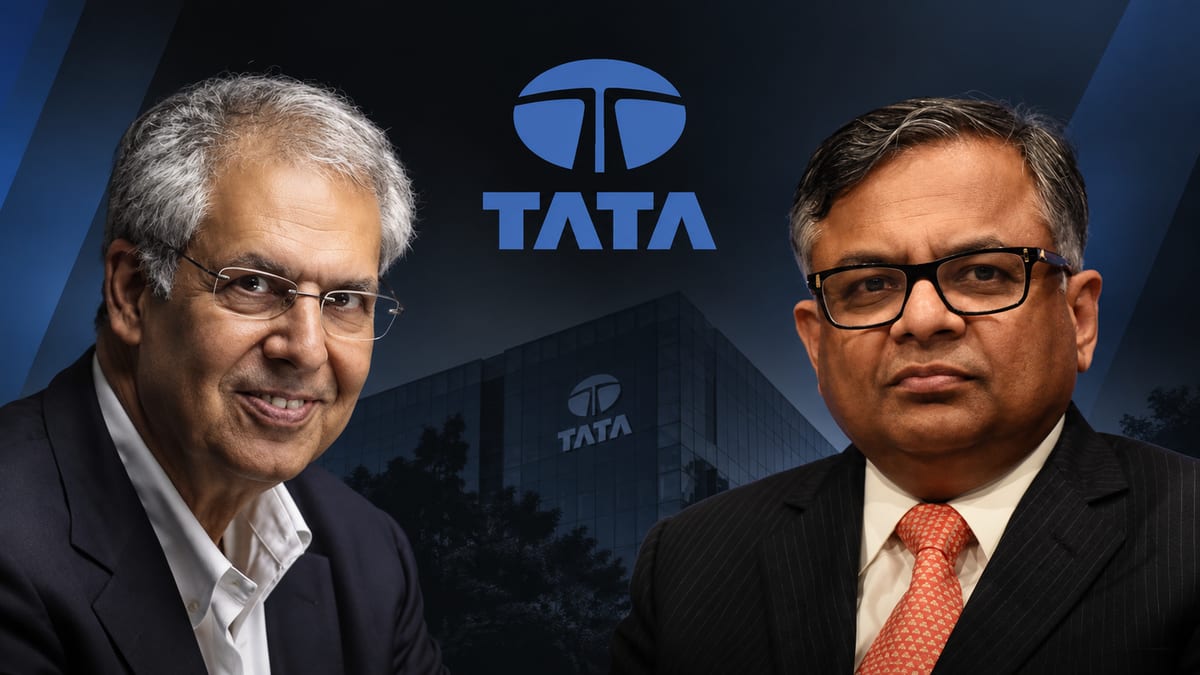
The Tata Group is facing its biggest internal governance scandal in decades as the Tata Sons board voted 4-1 on September 17 to reappoint N Chandrasekaran as Executive Chairman of their company Tata Sons for another five-year term — a decision that Tata Trusts, which owns 66% of Tata Sons, described as "illegal". The argument is wrapped up in an argument over a stock listing demanded by the RBI that the Trusts have been fighting for a long time, which could embroil them in a legal tussle.
The Board Vote and The Trusts' Objection
The Tata Sons board on Tuesday approved the reappointment of N Chandrasekaran for five more years as the Tata group's Executive Chairman by a majority of 4-1. Tata Trusts Chairman Noel Tata immediately objected, stating the decision to be “illegal”.
The Tata Sons board is embroiled in a tug of war with its controlling shareholder, Tata Trusts, which is the owner of approximately 66% of the company, over who controls the $185 billion group, as the trusts own the right to appoint and have a say over key decisions such as the chairmanship, as per the group's Article of Association.
How the dispute escalated
The dispute has been going on for over a year. The resolution on the Trusts was unanimously approved by the Tata Sons board in July 2025 and the board approved in principle in September 2025 with formal approval to be considered in February 2026.
It frayed in February 2026 and was postponed multiple times in May and June before Chandrasekaran indicated in August that he would not be seeking reappointment. The board's nomination committee then requested that he reconsider on September 3, which he did at the meeting on September 17.
The Listing Question
This is on top of a long-overdue regulatory deadline. Tata Sons had been trying to voluntarily give up its registration as a non-banking financial company (NBFC) of upper layer to avoid mandatory listing, but that was refused by the RBI in a letter dated 11 September 2026, which has made public listing mandatory, as one report had it the RBI wants it by February 2027.
About 66% of Tata Sons equity is held by Tata's charitable trusts, 18.37% is held by the Shapoorji Pallonji family and roughly 13% is held by Tata group companies, of which the two largest are Sir Dorabji Tata trust and Sir Ratan Tata trust at about 28% and 23.6% respectively.
The Trusts are worried of loss of their control position if they list, while the Shapoorji Pallonji group which has its stake pledged as loan security has welcomed the RBI move.
“It is not about which framework works better for Tata Sons or how Tata Sons is being governed, it is about who is speaking for the millions of underserved and excluded Indians who have been at the heart of Tata Trusts' philanthropy,” said a statement from Tata Trusts
Market And Legal Fallout
Most of Tata group shares fell with the conflict going up a notch and the prospect of a legal battle looming as Tata Chemicals fell the most and Tata Power, Tata Capital, TCS and Tata Motors were also impacted.
The conflict has already helped to adjourn Tata Sons' annual general meeting after the company could not form a quorum, and legal experts say the Trusts can use other processes like the trust selection committee as well as Article 118 to formally register their dissent or request an injunction by the deadline of December 31 2026.
Outlook
The Tata Group is grappling with two battles at the same time — one is about who will lead the group, and the other is whether the group — India's most storied conglomerate for the first time — has to answer the questions of the public shareholders.
Latest News
- ◆NSE's $2.3 Billion IPO Draws Over $10 Billion In Bids
- ◆India-New Zealand Free Trade Pact To Take Effect October 20
- ◆Tata Group Governance Feud Deepens Over Chandrasekaran's Term
- ◆India Reaffirms Push For Constructive Ties With Bangladesh
- ◆Teen Gang-Raped Near Delhi Temple, One Suspect Held In Encounter