
The 16th India-EU Summit and the Birth of a Strategic Super-Corridor
Implications of the 'mother of all deals' on both nations
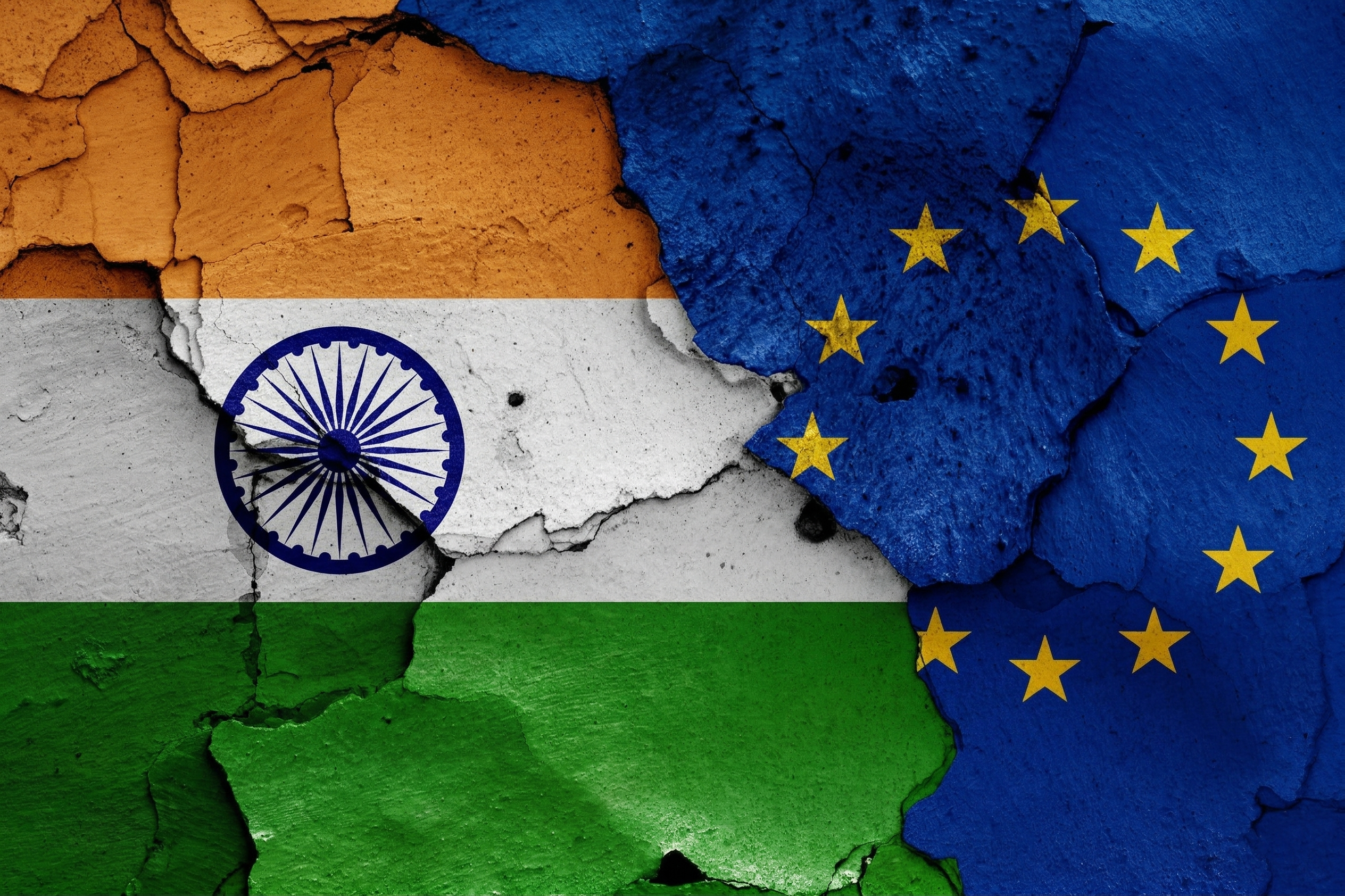
AI generated image
The 16th India-EU Summit and the new Strategic Super-Corridor. January 27, 2026, was the date of the sixteenth India-European Union Summit that marked a turning point in the relations of the two entities. In attendance were Prime Minister Narendra Modi, European Commission President Ursula von der Leyen, and European Council President António Costa and marked a shift in a decades-old trade partnership to a highly structured, many-dimensional strategic alliance.
The summit took place against the background of global fragmentation and transatlantic volatility, which is the importance of the summit, where Presidents von der Leyen and Costa were invited as head guests on the Republic Day of India, the seventieth-seventh. The very image of a combined EU Military Staff and naval group marching in the procession gave a bright demonstration of the new strategic intent uniting Brussels and New Delhi.
The Mother of all Deals: A Economic Revolution
The signing of the India-EU Free Trade Agreement (FTA) was the most important structural highlight of the summit. Connecting the economies of more than 27 trillion in a GDP, the deal forms a single corridor between almost 2 billion people.
Key trade metrics
Tariff liberalisation: The agreement does away with or lowers tariffs on 96.6 per cent EU goods and provides zero-duty access to virtually 99 per cent of the Indian trade value.
Gains to the Indians: Gujarat, Maharashtra, Tamil Nadu, and Karnataka will gain a lot as traditional hubs. Some of the industry sectors like textiles, apparel and footwear that were formerly taxed at 17 percent have zero-duty entry, which is set to create 2 to 3 million jobs.
European access: India has opened its ecosystem of Make in India. Automobile tariffs (as high as 110 executives before) will be phased out to 10 percent in ten years and wine taxes will be reduced to 75 percent and finally to 20 percent.
Geopolitical triggers: Outside the Trifecta
The positive pace of this union can be related to the failure of the previous European prosperity model that relied on the cheap Russian energy supply and American security assurances. Both powers have tried to find a compromise in the wake of the re-election of Donald Trump and punitive 50% tariffs on steel and automotive exports in the event of a June 2025 diplomatic break with Washington.
In the case of India, the EU has become an important ally in her strategy of not depending on the power of one, and this has substantially raised the position of Brussels in the pecking order of New Delhi.
Defence and the “SAFE” Fund
The summit was a historic event that saw the signing of the India-EU Security and Defence Partnership (SDP). This framework institutionalises the dialogue every year and realizes that Atlantic and Indo-Pacific security cannot be separated.
The transformative outcome is the India-EU Defence Industry Forum that is concerned with unmanned aerial systems (UAS) and maritime surveillance. Importantly, India has now been proposed to have access to the prospective access to the EU Strategic Autonomy for Europe (SAFE) fund of 150 billion Euros to carry out joint research and development works.
The Bridge of Sustainability and CBAM
The two powers are working on decarbonisation of industries under the Clean Energy and Climate Partnership.
Green hydrogen: India aspires to achieve 10billion investment by 2030 to develop 10GW of electrolyser capacity, and significant green ammonia hubs in the east coast will be bound European markets.
Carbon taxation: In order to deal with the EU Carbon Border Adjustment Mechanism (CBAM) that would impose on Indian exporters between 2 and 4 billion dollars a year a technical bridge was put in place. India received a guarantee as the Most-Favoured-Nation (MFN), which is to benefit any other country then Indian steel and aluminium will similarly benefit.
Connection and human-to-human relations
The summit also repeated the India-Middle East-Europe Economic Corridor (IMEC) as a clear alternative to the BRI model. With the support of the EU and its 300 billion global Gateway plan, the urban rail projects such as the one in India (funded at 2.2 billion Euro) are already in implementation.
Lastly, the agenda of 2030 agenda give a boost to human mobility. It will have a new all-inclusive framework that will facilitate the flow of professionals and students so that the people who are referred to as the strategic enablers of this collaboration can easily explore this new axis.
By the end of the summit, it was apparent that the India-EU axis has turned out to be a stabiliser with fractured world, bringing about joint prosperity to almost a third of the global population.