
The Cult of Power and Politics: Gurmeet Ram Rahim
Religious Leader Gurmeet Ram Rahim has been released from prison for the 17th time since his conviction in 2017
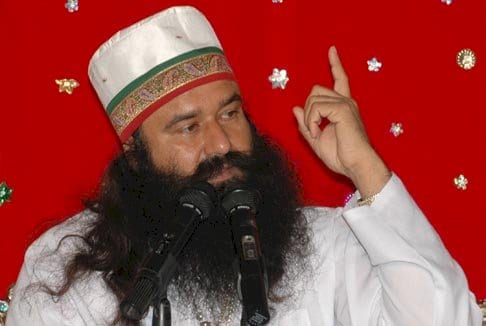
Synopsis
How did Gurmeet Ram Rahim Singh, the head of Dera Sacha Sauda, become a major player in business and politics from a local religious leader? And how did a letter by an anonymous Sadhvi set off the chain of events that led to his conviction in the year 2017.
Why in the news?
Gurmeet Ram Rahim Singh is a major political and religious leader. He was guilty of two rape cases which date back to 2002 of his own disciples. For this, he was convicted in 2017 to 20 years of rigorous imprisonment. Recently, he was released on furlough for the 17th time.
What Exposed Gurmeet Ram Rahim Singh?
The dark history of Dera Sacha Sauda started to come to light in April 2007 when a scared, anonymous person called Tehelka journalist Anurag Tripathi. The caller said he was in danger and pointed Tripathi to Sirsa, Haryana, where the sect’s leader, Gurmeet Ram Rahim Singh, controlled everything. During a secret meeting in Greater Kailash, Delhi, the informant gave Tripathi a key piece of evidence: a real letter written in 2002 by an anonymous female follower (sadhavi) and sent to then Prime Minister Atal Bihari Vajpayee.
The letter exposed the harsh reality inside the Sirsa headquarters, where hundreds of young women were forced to work 16 to 17 hours a day without breaks. The letter revealed a system of severe mental and physical abuse, where the self-proclaimed godman allegedly convinced his followers that their thoughts and bodies were completely his. According to the letter, young women were often asked to go to the leader's private underground room under the pretense of spiritual gatherings, only to be repeatedly exploited.
The Rise of the Dera Sacha Sauda
To understand the strong social and political power of the Dera Sacha Sauda, it's important to look at the situation in Punjab and Haryana after independence.
In this region, traditional religious groups often left out the poorer and lower caste communities, leaving them without recognition and support. These mainstream religious groups were closely tied to upper-caste leaders, which made it hard for people from lower castes and the rural poor to gain respect and spiritual acceptance.
New religious groups started to fill this gap by providing a message that didn’t follow strict caste rules. These groups promised equality and support to those who had been ignored by society.The Dera Sacha Sauda was started in 1948 by Shah Baluchistani. It quickly grew in Haryana, Punjab, and Rajasthan by mixing ideas from Sikhism, Hinduism, and Sufism. Its main goal was to offer help and focus on the value of human life.
Ram Rahim showed his leadership in a dramatic way, launching big programs for social welfare, blood donations, and helping during natural disasters, which made him seem like a person who cared about people. At the same time, he built a large network of businesses including schools, hospitals, farmland, buildings, and factories. By the year 2000, the Dera wasn’t just taking donations anymore; it had become a powerful business with a lot of money and a strong group of followers who were very loyal.
How did the Dera escape allegations?
As the Dera's influence grew, anyone who questioned it or tried to investigate faced severe punishments. In 2002, an anonymous letter revealed that there was serious abuse happening.The leaders quickly tried to find who had sent the letter and punished them with great cruelty. The Dera also used fear to keep people under control.
In 2012, a man named Hansraj Chauhan came forward and said that hundreds of men were being castrated at the Dera's orders.
He claimed that the men were told it was a spiritual sacrifice to get closer to God and that it helped them obey completely and cut off family ties. Despite these serious accusations, Ram Rahim's public image kept rising. He even entered Bollywood, acting in movies like "MSG: The Messenger of God." Courts often ignored censorship rules to let his films be shown.
How the 2017 Landmark Verdict ended Dera’s Rule?
A major change came when the Punjab and Haryana High Court, led by judges like Justice A.K. Goyal, ordered a special investigation by the Central Bureau of Investigation (CBI) into the murders and abuse. The CBI investigators faced a lot of pressure, including threats from politicians from different parties, and a lot of silence from the Dera's followers. However, the investigators kept going, supported by victims who were brave enough to speak out despite the trauma they had suffered, and the families of the victims who refused to give up.
The big break came on August 25, 2017, when a CBI judge, Jagdish Singh, ruled that Ram Rahim was guilty of raping two of his followers. His conviction caused a huge reaction as thousands of followers went on riots in Panchkula, Sirsa, and parts of Delhi. Over 40 people were killed and a lot of damage was done. The authorities quickly moved to protect the convicted man by flying him to a high-security jail in Rohtak, where he was given a 20-year prison sentence.
Repeated Releases and Vote Bank Politics
Despite a definitive judicial pronouncement and a lengthy prison sentence, the implementation of justice in India's complex socio-political landscape often finds itself compromised by the altar of vote-bank politics. The Dera Sacha Sauda commands an enormous, highly disciplined vote bank across Haryana, Punjab, and Rajasthan, making its electoral endorsement a coveted asset for political parties seeking to tilt tight electoral contests.
Consequently, a disturbing pattern has emerged over the years wherein the convict enjoys repeated temporary liberty whenever assembly or general elections approach in the region. The 17 temporary releases, facilitated under the guise of statutory furlough and parole provisions, have transformed a high-security prison term into a revolving door.
When the sacred trust of justice can be so effortlessly traded for vote bank politics, how long can a democratic society sustain the illusion of equality before the law?
Latest News
- ◆Allahabad High Court Quashes Dowry FIR, Cautions Against Criminalising Failed Marriages
- ◆Nifty Snaps Eight-Week Losing Streak as Equities Rebound; 200-Week Average in Focus
- ◆Riyadh Airport Attack Kills 12, Deepens Saudi–Houthi Conflict; Trump Weighs US Role
- ◆Northern Railway Restores 214 Passenger Trains; 30 Still Cancelled After Delhi Protest
- ◆Supreme Court Bars Illegal Detention of Peaceful Protesters, Orders Normal Delhi Transit