
Trump, Pezeshkian Sign Islamabad MOU to End US-Iran War
A 14-point memorandum of understanding, signed at Versailles and Tehran, sets a 60-day framework to finalise peace and dismantle the Strait of Hormuz blockade
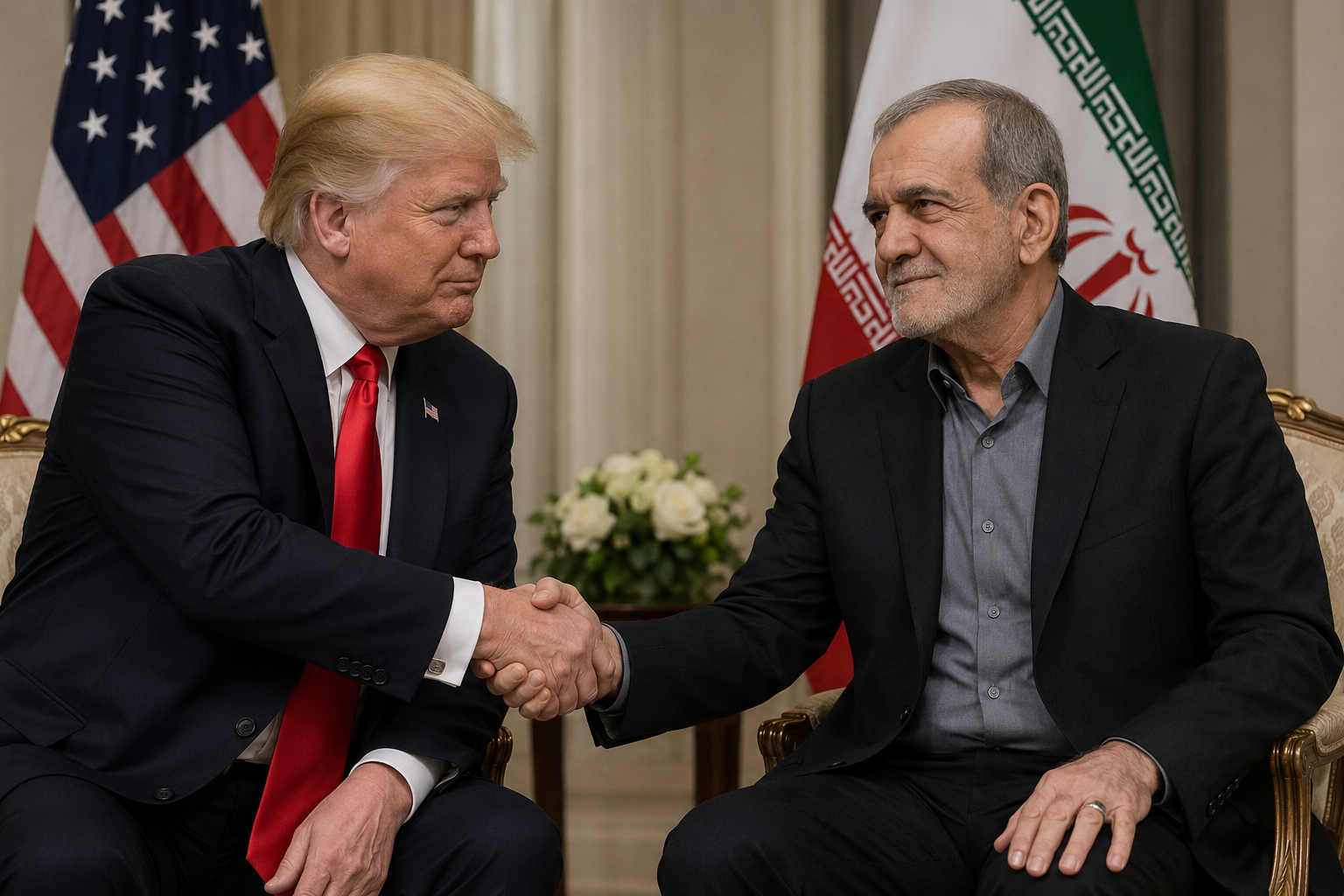
Synopsis
On June 17, 2026, the Islamabad Memorandum of Understanding was signed by the U.S. President Donald Trump and Iranian President Masoud Pezeshkian, a 14-point agreement to bring the U.S.-Israel war in Iran to an end, which started in late February. The deal, which was signed at the G7 summit in Versailles and digitally signed by Pezeshkian in Tehran, is supposed to call for an instant halt to hostilities and reopening the Strait of Hormuz for 60 days, as well as sanctions relief and a restatement of Iran's pledge under its nuclear non-proliferation treaty. Issues surrounding Iran's enriched uranium holdings have been postponed until a final stage of a treaty.
How a 4-month War was translated to a Signed Page
On February 28th, 2026, the United States and Israel launched the 2026 Iran war, changing the tides of the Middle East in just a few days. One of its first and most significant impacts was the effective closure of the Strait of Hormuz, which used to routinely pass 20 per cent of global oil supplies before the war.
The war was terrible in its human toll. HRANA, a rights organisation based in the United States, reported over 3,600 deaths, including over 1,700 civilian, in Iran since the US and Israeli air raids started in late February. In Lebanon, over 3,700 people died, in the Gulf states 36 and in Israel 20. Thirteen Americans serving in the war were killed in action and two others died of non-combat causes.
Pakistan played a pivotal role as the key mediator all along. The United States and Iran have completed a memorandum of understanding, which will be signed on June 19 in Switzerland, Pakistan's Prime Minister Shehbaz Sharif announced on June 14. Trump, within minutes, shared the news on Twitter that the United States naval blockade against ships in Iranian port had been lifted.
Then the pace picked up, mid-summit at Évian-les-Bains, France.
The Signing: Versailles, Tehran and a Digital Countersignature
The Islamabad MOU was signed by Trump in a hardcopy during a dinner on the evening of June 17 at the Palace of Versailles, at the sidelines of the G7 summit. Then this signed document was sent to Iran. Iranian President Masoud Pezeshkian signed the document digitally; Iranian state media IRNA released photos in which Pezeshkian is holding the Farsi-language document with both his and the other country's signatures.
Trump had been notorious for his indecision when it came to the form of the signing. In an interview with reporters at the summit earlier in the day, he asked if the MOU was "the kind of document that I should be signing," and said that Vice President JD Vance may go to Switzerland for a formal signing. "If it works out, I'm going to take the credit. I think if it's not going to work out, I'm blaming on JD," Trump told reporters, adding: "I think it's a good idea.
In fact, the two leaders signed an agreement prior to the end of the G7 summit. The "Islamabad MOU" was entered into immediately by Pakistan, it confirmed.
The 14 Point MOU actually contains:
According to the Islamabad MOU, the military operations cease immediately and permanently, even in Lebanon, where more than 3,700 people are dead and over one million have fled since the conflict between Israel and Hezbollah rolled back on March 2.
Regarding the entrance to the Strait of Hormuz, Iran promised to let commercial ships pass through the Strait safely without charging any fees for 60 days, at the end of which period negotiations with Oman will be the deciding factor in the management of the waterway. The U.S. will also end all forms of sanctions, release all Iranian funds and assets held in frozen accounts and start lifting its naval blockade of Iranian ports.
Iran is to develop a $300 billion reconstruction plan with regional partners in the period of 60 days for finalisation. Washington would not have to fund the relief, which would be in the form of sanctions being lifted to allow third-country investment, U.S. authorities said.
With regard to nuclear issue: Iran reiterated its commitment to not acquire or build nuclear weapons and a plan for the mutual agreement on the enriched material stockpile.
A senior U.S. official, referring to the agreement to destroy its enriched stockpile, said it was "a major, major win for the United States of America" and that the easing of sanctions would be contingent on Iran doing what it has undertaken in the nuclear accord.
A mechanism for implementation of the agreement will be put in place at the executive level, and the MOU will be approved by a binding resolution of the UN Security Council.
Israel's Position: Sceptical and Unbound
Israel is not a direct signatory to the Islamabad MOU, but is directly implicated by the MOU. The MOU expressly provides that Israel will end the war in Lebanon as a part of the overall ceasefire — Lebanon occurs three times in the first few paragraphs of the MOU.
A senior US official told reporters: "We made it very clear to Iran this will not be a one-sided ceasefire; they must put a collar on their dog in Hezbollah; and if Hezbollah attacks Israel, Israel will be able to retaliate. An Israeli official told reporters Prime Minister Netanyahu was looking to meet with Trump in Washington to discuss the deal's ramifications.
Iran's stance on Lebanon has also been unshakable. Under the accord, Israel is supposed to pull its troops from southern Lebanon, where almost 4,000 people have died since the conflict started last year and more than 1 million have been displaced. Israel has been saying publicly that it will defend itself but that it has not promised to pull all its troops out.
The demand for a Republican Dissension and International Endorsement
The deal wasn't universally popular at home. Republican Senator Bill Cassidy of Louisiana said that the deal was "the worst foreign policy blunder in decades" and that "former President Ronald Reagan was rolling in his grave. North Carolina Senator Thom Tillis pointed out the first time the U.S. attacked Iran it cost $100 billion.
Reception overseas was quite varied. During a meeting in France, leaders of the G7 countries have issued a declaration that described the agreement as a "historic opportunity to prevent Iran from acquiring any nuclear weapon" and that they are ready to play their part in its implementation.
French President Emmanuel Macron said in a letter that the deal "paves the way for lasting peace" and "permits the reopening of the Strait of Hormuz. China's top diplomat Wang Yi told his Iranian counterpart on the phone that the dawn of peace has arrived.
Oil markets reacted quickly, with the price of US crude dropping by over 4.5 per cent to $80 per barrel, its lowest level since the first week of March.
The most important issue that has yet to be resolved, Iran's nuclear programme, is now under a 60-day deadline for finalization.
Whether the framework agreed upon at Versailles on June 17 will serve as a basis for lasting peace or simply the latest in a series of treaties rending to the breaking point, will depend in large part on what occurs during that period.
Latest News
- ◆NSE's $2.3 Billion IPO Draws Over $10 Billion In Bids
- ◆India-New Zealand Free Trade Pact To Take Effect October 20
- ◆Tata Group Governance Feud Deepens Over Chandrasekaran's Term
- ◆India Reaffirms Push For Constructive Ties With Bangladesh
- ◆Teen Gang-Raped Near Delhi Temple, One Suspect Held In Encounter