
Turkey Passes Pardon Bill For PKK Militants
Parliament approves conditional amnesty legislation contingent on full PKK disarmament, advancing a peace process ending four decades of insurgency
Synopsis
Thousands of Kurdish militants in Turkey are given a conditional pardon after parliament passes legislation as part of the country's peace initiative with the PKK. The bill passed with a clear margin will come into force after the authorities confirm the militants are completely disarmed, but will not apply to top leaders, such as Abdullah Ocalan, who is jailed.
The Voting in favor
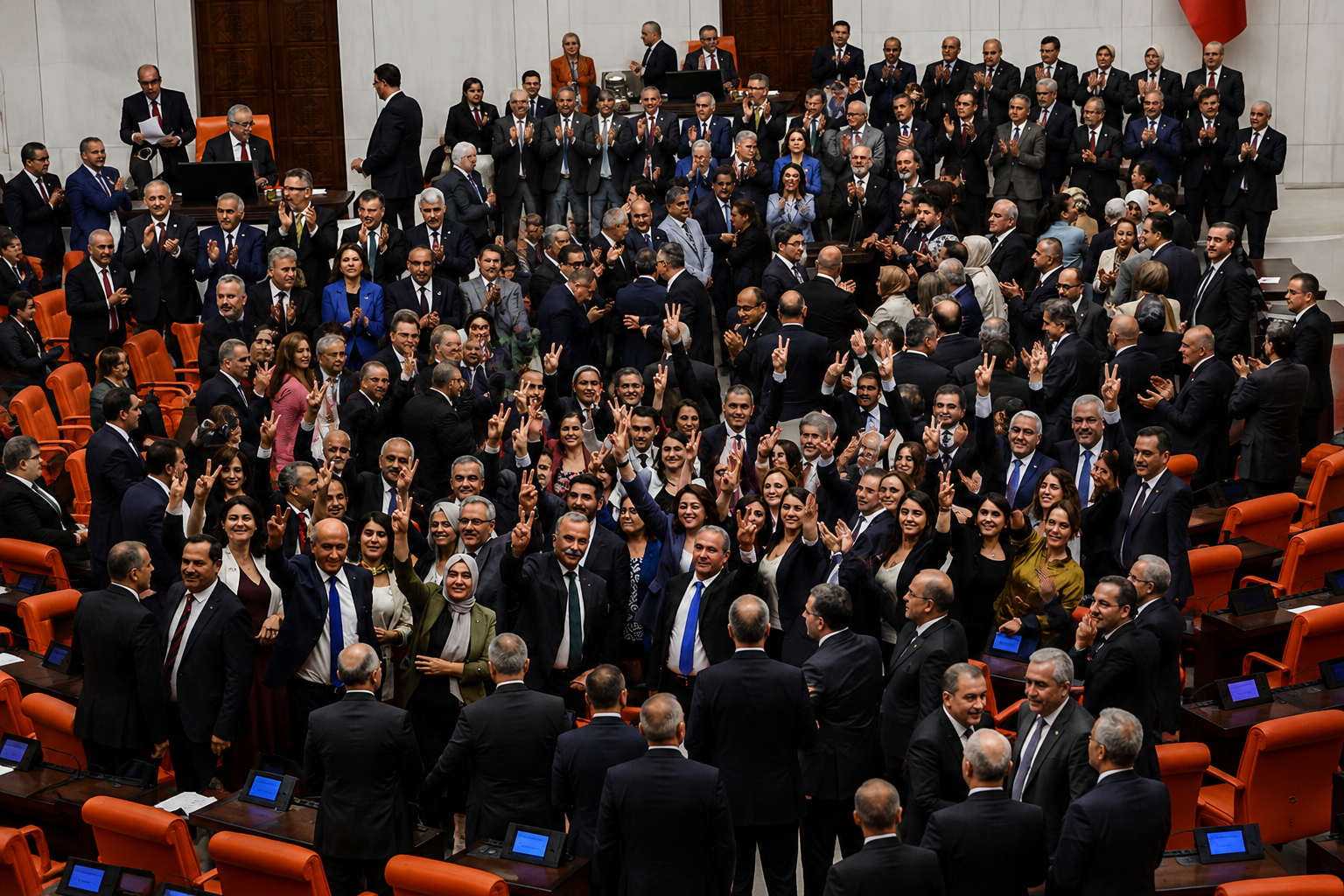
Thousands of Kurds who are members of the separatist group in the war-torn Turkish region were granted a conditional pardon by Turkey's parliament on Monday in an attempt to further the government's peace process with the Kurds. The bill, which won 468-88 votes on the floor of the legislature, would take effect after Turkish officials confirm the Kurdish separatist group Kurdistan Workers' Party (PKK) has completely disarmed.
Summary of the legislation
The measure, which consists of 12 articles, provides rules for the disarmament of the group and the rehabilitation of thousands of members of the PKK.
It will also suspend the jail sentences of those already convicted of being members of the PKK and delay current investigations and prosecutions against them by five or ten years, contingent upon whether they are involved in terror-related offences or not; if they do not engage in terror-related crimes during that time, the case will be dropped.
Interestingly, the provisions of the bill do not extend to militants who are convicted of “intentional killing” nor to people who were sentenced to life terms before 2005 – including Ocalan himself and other high-ranking members of the PKK.
The route that led to this spot
The PKK group, which has been active with armed actions against the Turkish state for decades, announced last year that it was putting an end to that campaign and dissolving itself as part of the peace process, the group's call following a similar announcement by Ocalan, its imprisoned leader.
The group then held a symbolic disarmament ceremony in the northern Iraqi city of Kirkuk and declared it was removing its forces from key areas inside Turkey to Iraq.
The PKK's 'Reserved Response'
The militant group itself has responded in a measured way, not one that celebrates. The PKK-affiliated ANF news outlet released a statement by the group saying that the legislation in Turkey was the "first step" in the "solution" of outstanding issues, but had "serious shortcomings and deficiencies.
The statement demanded Ocalan's release from the prison and stated that the peace process could not be considered as a process if he wasn't allowed to live and work freely, and that the law had not been sufficient in meeting demands for democratic reforms and Kurdish rights.
It added that if PKK militants were "prosecuted and imprisoned for their views and the organisations they form," it would be impossible to get them to hand over their weapons and return to Turkey.
But the pro-Kurdish politicians sounded more positive. Gulistan Kilic Kocyigit from the pro-Kurdish party of the Peoples' Equality and Democracy (DEM) told reporters: "Now the people of Turkey, who have suffered for many years, have a chance to consolidate the peace and establish the democracy".
The Political Calculus
The legislation also provides President Recep Tayyip Erdogan with the chance to woo the backing of the pro-Kurdish DEM party to stay in power beyond the two-term cap on presidential power, as would be the case if parliament called an early election during the current presidential term, analysts note.
This dimension makes for a more nuanced humanitarian interpretation of the bill, which seems to indicate that domestic political calculation is also a part of the stated peace-making purpose.
Regional Ripple Effects
The move will have ramifications beyond Turkey, and might set the stage for better relations between the two countries and Iraq. It might also be used to assist the Syrian government in reclaiming territory it lost to the so-called Syrian Democratic Forces (SDF) – a PKK-affiliated group of Kurds.
Why This Matters
Such a permanent solution to the PKK conflict, which is one of the Middle East's longest running armed conflicts, would also dramatically alter the domestic security landscape of Turkey, and would also open up room for Turkey to focus more on diplomacy and military operations in northern Iraq and Syria.
What to Watch
The key now is verification: will the Turkish government declare disarmament as it is expected to, and will the PKK's complaints about the failure to resolve political rights and the continued imprisonment of Ocalan be enough to stall disarmament before it takes off?