
US DOJ Permanently Drops All Charges Against Gautam Adani
The Department of Justice moves for dismissal with prejudice in a securities and wire fraud case; the SEC settles its civil suit and OFAC imposes a $275 million fine on Adani Enterprises for Iran sanctions violations
Synopsis
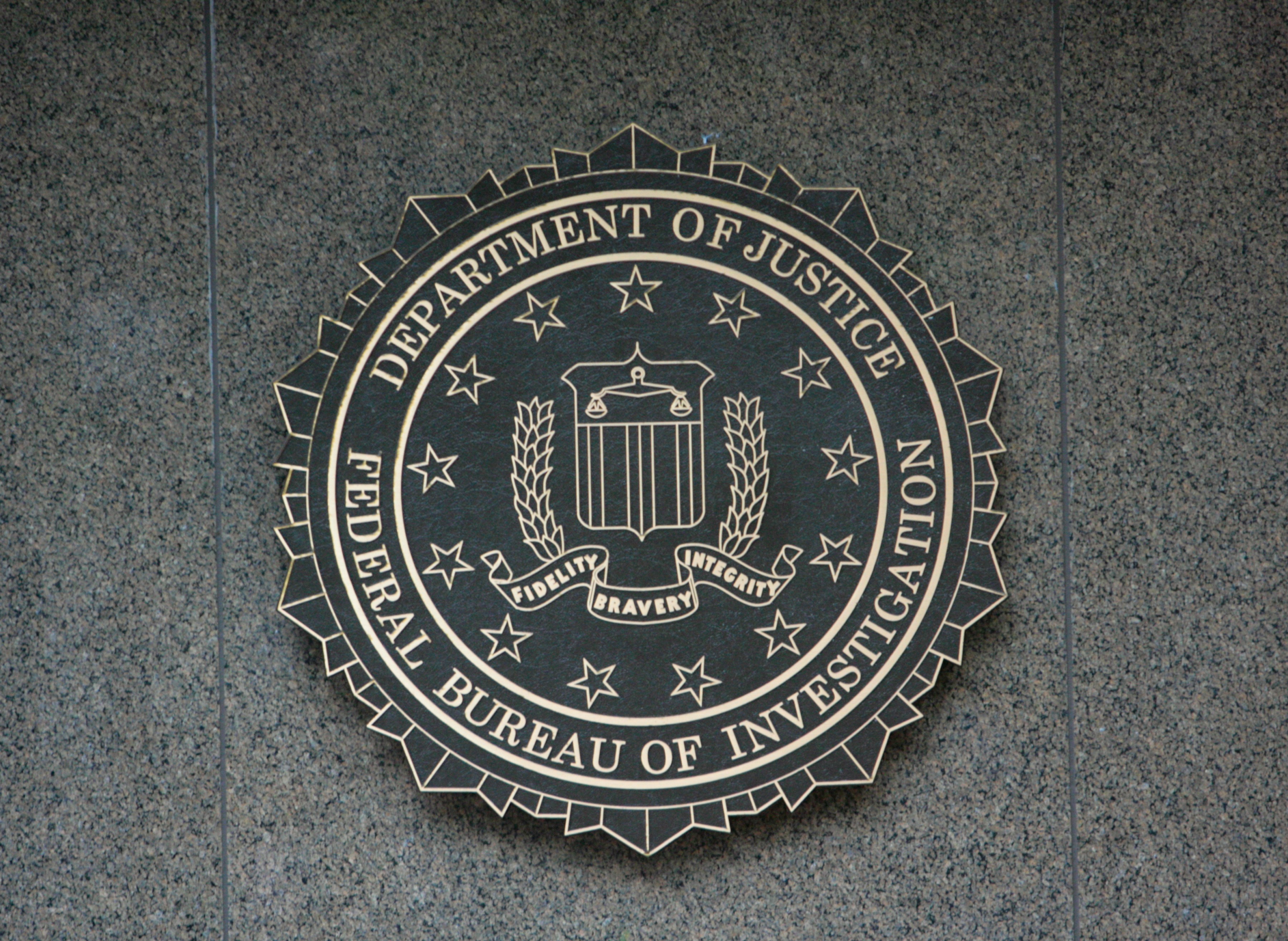
On May 19, 2026, the United States Department of Justice in New York permanently dismissed all criminal charges against billionaire Gautam Adani and his nephew Sagar Adani from India in a securities and wire fraud case stemming from alleged bribery of Indian officials for solar energy contracts. At the same time, the US Securities and Exchange Commission settled its civil action without admitting to any wrongdoing, and the US Treasury Department's Office of Foreign Assets Control levied a $275 million fine on Adani Enterprises for alleged breaches of sanctions against Iran — bringing the three concurrent US cases against the company to an end.
The impact of the US Department of Justice's indictment of Gautam Adani on the Indian capital markets was immediate and profound in November 2024. The stock prices of Adani Group companies tumbled across the board, a $600 million international bond sale by Adani Green Energy was withdrawn hours after charges were unsealed and international lenders started looking at the terms of their investment in one of Asia's biggest conglomerates. The chapter was formally closed on May 19, 2026, which coincided with the chapter's inception in November. The DOJ moved to dismiss all charges with a judge in the Eastern District of New York, which was granted 'with prejudice,' or without prejudice, meaning that the indictment can be filed no more.
What Was Charged
In November 2024, Gautam Adani, his nephew Sagar Adani and Adani Green Energy executive Vneet Jaain were charged with securities fraud and wire fraud. One of the key points the defence would argue throughout the case would be that none of the three were charged under the Foreign Corrupt Practices Act (FCPA) — the main U.S. law concerning bribery of foreign officials by individuals or organisations with U.S. connections. Gautam Adani, Sagar Adani and Jaain were charged with just the securities and wire fraud charges.
Prosecutors' evidence in the case stated that Gautam Adani and Sagar Adani had made promises to officials of Indian state electricity distribution companies of payments in excess of $250 million to secure deals for solar electricity which they had previously balked at due to its cost. These contracts were a key component of Adani Green Energy's significant solar development initiative, as part of an extensive tender from the Indian government. At the same time, the accused was allegedly raising more than $3 billion from US and international investors to finance the programme, while falsely assuring investors that the company had strict anti-bribery and anti-corruption policies.
The Jurisdictional Challenge
The defence took an aggressive stand, attacking the geographical and legal basis of the prosecution from the start of the publication of the indictment. The team of law firms, Sullivan & Cromwell, Nixon Peabody, Hecker Fink, Norton Rose Fulbright and Bracewell, argued that all the alleged scheme was Indian in every material respect — the accused were nationals of India, companies belonged to India, the officials allegedly bribed were Indian government officials, the contracts were governed by Indian law, and none of the securities in question were traded on the US exchanges.
The defense argued that the prosecution's 'method was an impermissibly extraterritorial application of US securities laws'. In addition, court documents indicated that the alleged misrepresentations did not cause any investor loss that could be traced back to the misrepresentations. Over the years, legal scholars had come to believe that federal securities fraud laws had been over-extended to areas where they were not originally intended. When it came to filing the DOJ's motion for dismissal, the government's filing referenced the decision's rationale of 'not to expend further prosecutorial resources' — but offered no acknowledgment that the accusations themselves were untrue.
The SEC Settlement, Civil Cases Cleared Up
On the eve of the DOJ's dismissal, SEC asked for ‘final judgment by consent' in its parallel civil suit against Gautam Adani and Sagar Adani. The proposed settlement (pending approval by the court) does not admit or deny anything by either man of the SEC's allegations, which were largely the same as the criminal allegations. The fine for the settlement is a civil penalty of $18 million.
The amount of the fine is relatively small compared to over $3 billion raised on the investments that led to the SEC’s complaint, legal analysts pointed out. The settlement is aimed at closing the case, not to admit or announce guilt.
The OFAC Settlement is valued at $275 Million worth of Iran Sanctions
In a third and legally independent matter that doesn't relate to bribery and fraud allegations, the US Treasury Department's Office of Foreign Assets Control (OFAC) has announced a $275 million settlement with the Adani Group's flagship listed entity, Adani Enterprises Limited.
Adani Enterprises imported liquefied petroleum gas (LPG) from November 2023 through June 2025 through a Dubai trading intermediary who sourced from Iran (under the pretext of Oman/Iraq). About $192 million of the 32 dollar transactions made by US financial institutions for these shipments were linked to US energy sanctions against Iran, which are comprehensive, OFAC said, the statistics revealing how unwittingly US banks became “engines” of US energy sanctions. Adani Enterprises did not plead guilty to the wrongdoing in the OFAC settlement.
Investment Diplomacy & Market Access
The US-India Strategic Partnership Forum, a bilateral business organisation, with some high corporate representation on both sides, put a strong economic and geopolitical context around the legal closure. Dr Mukesh Aghi, the chief executive of the company, has been quoted in the New York Times report as saying the Adani Group had made the offer to enter the American economy for $10 billion and create about 15,000 jobs in the settlement talks with the DOJ, which its law firm had allegedly secured. Aghi cited US Ambassador Sergio Gor who said the Indian companies are making plans to invest over $20.5 billion in the different sectors of the United States.
The demise of the New York proceedings is likely to directly open up the doors for the Adani Group to tap into international capital markets, which had been closed since November in 2024. International capital markets (global bonds, syndicated loans and international equity placements) make up about 41 per cent of the group's net debt, which stood at about 2.78 trillion rupees (about $32 billion) as of September 2024. The bond, worth $600 million that Adani Green Energy had issued and later withdrawn, is likely to be the first to be put to the test of granting access to the market again.
What the Adani Group Said
In a statement, the Adani Group said that the DOJ's withdrawal was a 'complete vindication' as it had denied all allegations of bribery since the indictment was unsealed and the Group claimed no entity or executive had been charged via the FCPA. The group's statement described the result as a confirmation of an 'absent of any credible basis' to the criminal charges.
The OFAC settlement is somewhat more complicated, though. While not directly related to the bribery charges, Adani Enterprises' $275 million was pledged in response to alleged violations of US sanctions against Iran, which US regulators deemed "problematic" even if it did not formally admit that violations occurred.
The Larger Questions
The prosecution of Adani in the United States, which started with an indictment in November 2024 and ended with an acquittal almost a year and a half later, has been criticized by legal and governance experts. Several have commented that the case highlights the limitations of US jurisdiction in corporate fraud cases where the conduct, parties and harms are all abroad. But some have wondered whether large investment deals—rumored to have been put on the table during settlement negotiations—affected the handling of the case by prosecutors, and the DOJ has declined to comment on that question.
It is not that there is no overhang anymore to be removed — none of the three US proceedings (criminal investigation by the DOJ, civil action by the SEC and the OFAC sanctions action) was in place for more than a year, and this eliminates that overhang — but there are more and more indications that this is indeed the beginning of a deepening strategic and economic partnership between both governments as it was described publicly so far.
Latest News
- ◆Nobel Prize in Chemistry Awarded to Kagan and Soai
- ◆Saudi Arabia Steps Up Yemen Campaign as Houthi Fighting Reaches Bab el-Mandeb
- ◆Sensex Sheds 429 Points, Nifty Falls 0.8% After RBI Rate Hike
- ◆Forex Reserves Fall Over $50 Billion From Peak as RBI Defends Rupee
- ◆Rupee Hovers Near Record Low as RBI Governor Cautions on Market Irrationality