
US Missiles Disable Ship Defying Iran Blockade
A Navy helicopter fires Hellfire missiles into a cargo vessel's engine room after it allegedly ignored warnings to stop, as Washington's blockade of Iranian ports intensifies
Synopsis
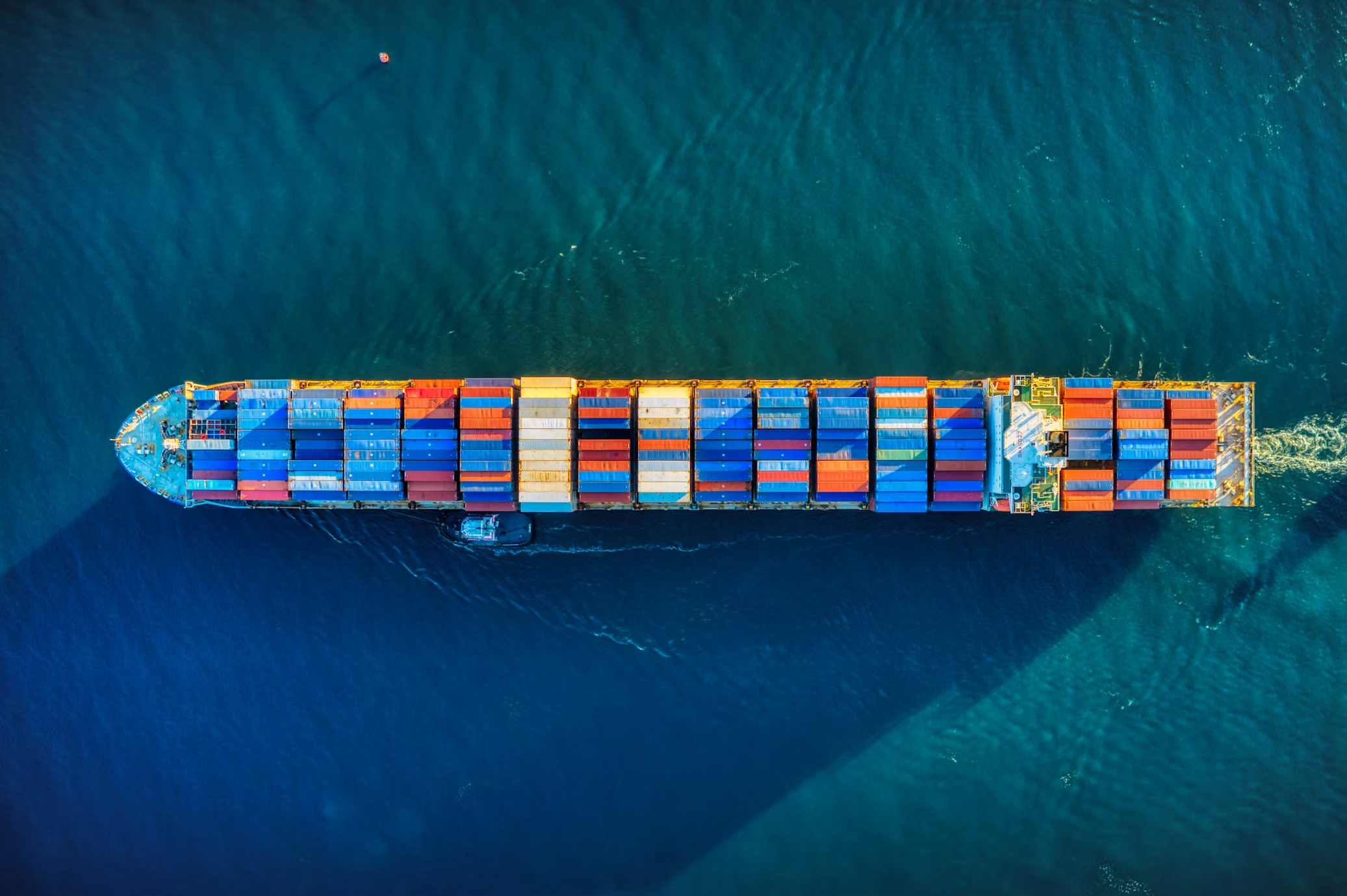
In the Gulf of Oman, US troops have shut down the steering gear of a Panama-flagged cargo ship that was allegedly trying to enter Iran's ports and then make its way to the Gulf of Oman following Washington's naval blockade of the region, after the vessel fired two Hellfire missiles from a helicopter. The strike highlights how many vessels have been boarded or disabled, and how many have been redirected during an enforcement campaign which has been ongoing for some time now.
Background of the Incident
An American naval force disables the steering system of a Panamanian-flagged cargo ship on Tuesday after it is alleged to have tried to pass through Washington's naval blockade on Iran en route to an Iranian port.
The American ship's civilian crew "refused" repeated orders from American forces to leave its engine room, which is where a Navy MH-60 helicopter fired two Hellfire missiles, according to a US Central Command statement.
CENTCOM stated the ship is not transiting toward Iran and noted that the maritime restriction is still in force. According to the report, the U.S. forces used Hellfire missiles to destroy an Iranian-bound vessel.
Wall Street Journal reporting quoted by MarineLink says the incident took place before dawn when the US forces were trying to dissuade the ship from continuing its voyage. No immediate casualties were reported and the crew later seemed to be getting ready to move to another civilian ship.
The Vela Nova was hit as it was moving westbound through the Gulf of Oman, about 71 nautical miles (131 kilometres) off the coast of Pakistan, said maritime security firm Vanguard.
The size of the Blockade Campaign
This strike is not a one-off occurrence, it's a single data-point in a continued enforcement campaign. As of Tuesday, CENTCOM said it had diverted 55 commercial vessels trying to run the blockade, disabled three ships that were not compliant and boarded two ships.
In public statements about the incident, CENTCOM was crystal clear: "U.S. forces in the Middle East are very alert, very lethal and very prepared.
Wider Regional Turbulence
The strike occurred on the same day that the number of deaths from another Houthi attack on a cargo ship in the Bab el-Mandeb strait, another vital shipping route, increased to six.
Pakistani and Yemeni authorities said four crew members, three from Pakistan and one from Indonesia, died in the attack, while two Yemeni rescuers from an anti-Houthi military unit were killed after they were targeted by Houthis in the aftermath of the attack, according to Yemen's Coast Guard.
What Factors Led Up to the Blockade?
The US has been imposing a blockade on Iranian ports since it and Israel began the war on February 28 with failed efforts to end the war. In reply, Tehran struck Israel and US allies throughout the gulf.
The blockade is one measure in a wider US plan to apply sanctions and naval interdiction to bring Tehran to its knees economically — but one some regional peacekeepers privately fear could be a dangerous game to play, as force is met with force and the slightest miscalculation could trigger more such incidents.
Which Reporting Discrepancies are worth Noting?
There has been some variation in how the vessel has been covered, with most outlets, such as that for CENTCOM, calling the vessel the “Vela Nova,” and Al Jazeera-backed wire service coverage from Daily Sabah using the vessel's name “Bellanova.”
This looks like a transliteration variation, not a different incident, as all reports report the same time, tonnage data and CENTCOM attribution; for this reason, the spelling, "Vela Nova" was used in this article as it is the spelling used directly in the public statement by CENTCOM.
Why This Matters
Such "naval blockade enforcement" with live military gunfire on civilian-freight ships has the potential to escalate in one of the world's most strategic waterways used by a significant portion of the world's oil imports.
Premiums for vessels passing through the Gulf of Oman and Strait of Hormuz corridor will probably rise even more, impacting on shipping costs in the region and likely the price of energy.
What to Watch
Iran has yet to officially react to the Vela Nova attack. The analysts will see if Tehran considers the incident to be one more piece of the puzzle, or if they see it as an excuse to retaliate against the US or allies' shipping operation in another part of the Gulf.