
US Pushes Nations to Pick Sides on AI-War
Washington is preparing to tell dozens of countries that joining a China-led AI framework will exclude them from its Pax Silica coalition, per Reuters
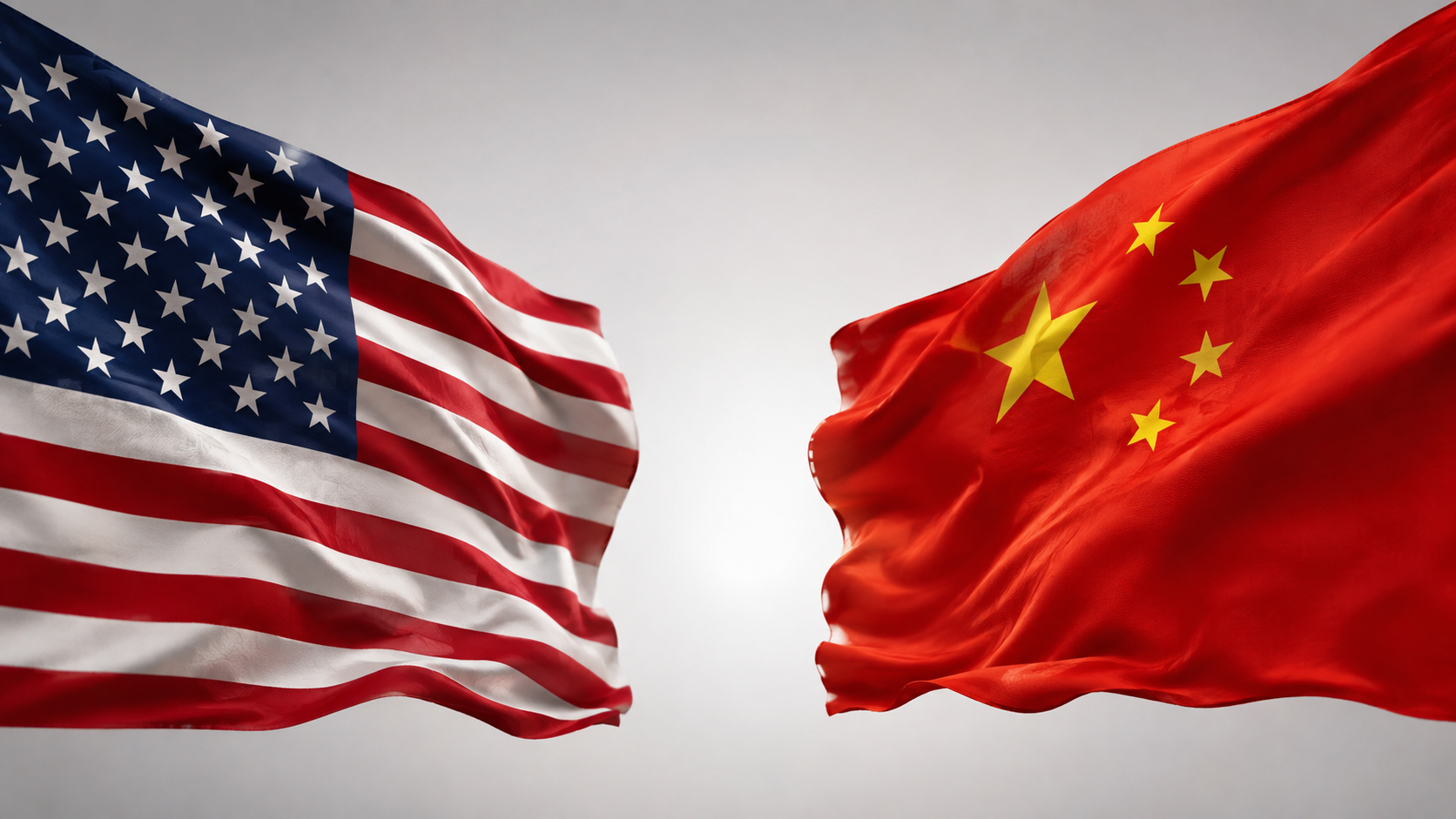
Washington is stepping up a race for supply chains and pacts in the area of artificial intelligence, aiming to alert dozens of nations to decide whether to join its Pax Silica alliance or China's rival, as the United States moves to warn, according to a Reuters report citing a U.S. official and an internal draft letter.
A Letter to 35 Signatories
The United States is poised to urge dozens of nations to decide whether to join a group of countries led by the United States to develop an AI system or sign up to Beijing's competing framework, according to a Reuters report citing a U.S. official and an internal U.S. draft. The State Department has drafted a letter to send to the 35 countries that have signed onto the US-led initiative.
Last year, Washington began the Pax Silica concept, which was meant to be a move to guarantee supply chains for AI models, semiconductors and critical minerals in a challenging technology battle with Beijing. To date, some two dozen nations, including close U.S. allies like Japan, Australia, South Korea, and Kazakhstan — a key potential source of critical minerals that has also signed onto China's rival alliance — have been involved.
Operating under the false assumption that participation is the same as “all or nothing.”
Reporting on the contents of the letter, the draft's authors call the membership in Pax Silica an exclusive one, adding language that the initiative "cannot be joined with participation in duplicate projects whose objectives stand in opposition to ours," and that it is a choice that needs to be made by governments.
The obvious US calculation is that it will be possible to force partner countries to choose sides in order to limit China's access to the key technologies and resources where they might choose to hedge between both blocs.
Walls of Non-Aligned Economies
By making this move, it puts pressure on other countries — especially resource-rich or strategically located countries — who have so far attempted to engage both Washington and Beijing on AI and critical-mineral cooperation without exclusivity.
The ultimatum may compel Kazakhstan, and other countries, to make a major shift in foreign and industrial policy, as critical minerals are integral to the manufacturing of AI. It highlights the growing nature of the AI competition, which was originally about the power of the models, but has now shifted to alliance formation, supply chains and geopolitical positioning.